Spoon & Suitcase

Exploring life through food and travel

Menu
  • Home
  • Recipes
    • Appetizers
    • Breads
    • Breakfast
    • Desserts
    • Drinks & Wine
    • Fruit
    • Gluten-Free
    • Olive Oil
    • Preserved Food
    • Salads & Soups
    • Seafood
    • Vegetarian
  • Travel
    • Austria
    • Canada
    • Colorado Rockies
    • European Markets
    • France
    • Germany
    • Travel Tips
    • Italy
    • New Mexico
    • Portugal
    • Santa Fe
    • Sicily
    • Spain
    • Restaurant Reviews
  • Garden
  • Stories From My Heart
Menu

Seafood

Sicily, Seafood and Sunsets

Posted on August 15, 2018August 5, 2024 by Mary

“I’m taking you to the best seafood restaurant on the island of Sicily, maybe the entire world!” Roberto proclaimed. Roberto’s insistence that EVERYTHING in Sicily is the best is irritating at times. How can the  food be better than the meals I’d eaten in southern France, Tuscany and Puglia, my favorite places for food adventures? I was anxious to find out.
We drive north from Catania, for about 30 minutes, through narrow, winding neighborhood streets that hug the coastline to arrive in the tiny paese (village) of Santa Maria La Scala.

Santa Maria La Scala sits cradled in a storybook harbor, overlooking a tranquil Ionian Sea. Houses colored ochre, pistachio, melon and granite perch on volcanic rock facing small, bobbing fishing boats. Trattoria Scalo Grande’s location is its decoration. Simple pumpkin colored tablecloths, trimmed in white, and black chairs to match the railing keep the focus on the food. The sun is setting as we sit down at an outdoor table hovering over the harbor. The view is enchanting. The warm breeze invites me to relax into the Sicilian vibe. I glance at the menu but defer to Roberto to order the crudo I’d so anticipated. “Vino?” our waiter states more than asks. “Si! Vino Bianco Locale,” I respond. The wine comes in a recycled green bottle, is cool and delicious. We’ve mostly been drinking white wine on this vacation – weather driven – and its crispness pairs beautifully with the fish and lighter pasta dishes. The Sicilians fill their tumbler glasses a quarter full and drink slowly unlike their food which they inhale like its their last meal.

Loving every minute of this dinner.
Roberto, my guide in all things culinary in Sicily.

For our secondi, or second course, Roberto orders the sepia pasta made with squid ink and I decide to select my fish from the assortment displayed on ice inside the restaurant. The fish is priced by the kilo, so it depends on what you order. The waiter describes the fish using words like “forte,” strong and “pesce a polpa tenera,” soft flesh fish. A chubby “Pauro,” or seabream species, catches my eye. He will be grilled whole with no adornments except olive oil, lemon juice and fresh parsley.

Take your pick! It’s all good.

Our primi arrives in waves. Raw red shrimp, huddled together on a plate drizzled with a hint of olive oil and lemon juice starts us off. After the first bite, I begin to think Roberto really is onto something. Soft, sweet and fresh, melting in my mouth like a bon-bon. I could eat a bowl of these, they are that exquisite. Please be the magical replenishing plate! Alas, we must move on…

Sicilian crudo red shrimp. Fantastico!

I’m not sure how I feel about anchovies. In the U.S., they usually are oily, fishy and not fresh. But, these are different. They gleam. Butterflied to expose their delicate bodies, and dressed with the same olive oil, lemon juice and parsley, their briny and tender taste is bewitching.

Aren’t these the most beautiful anchovies you’ve ever seen?

Small chunks of warm tuna follow, then a delectable mixture of marinated octopus, shrimp and mussels.
The parade of seafood continues. A plate arrives with a trio of perfectly fried anchovies, shrimp and calamari. A squeeze of fresh lemon brings out even more flavor in these crispy bites.

Fried trio
Octopus
Warm tuna

Freshly steamed mussels, heaping in a bowl, are placed between us. I eagerly grab one and with a fork, pry out the orange meat. The subtle taste of wine and garlic accents the mussel’s tender bite. I eat in amazement as I have never eaten a mussel that has no chewiness or after taste. I’m all about texture as well as taste and these are simply the best mussels I have ever eaten. I smile at Roberto, in a fog from all the delectable flavors that have crossed our table, and nod my head. “Yes, Roberto, you are right about everything being fresher, tastier and better in Sicily.” Now there is no denying it.

The best mussels I have ever eaten!

My secondi of Pauro fish is served on an oval platter, laying in a pool of the ubiquitous garnish of olive oil, lemon juice and parsley. He is gorgeous! I expose the inner flesh and easily slide my fork under the set of bones to unlock them and set them aside. The Pauro’s meat is delicate, moist and divine with a spoonful of the sauce. Roberto is just as entranced with his squid ink pasta. Words simply cannot describe this meal.

Pauro
Squid ink pasta

For dessert, I opt for a digestive of lemon sorbetto. I taste a combination of lemon and key lime. Asking the waiter what kind of lemon it is, he replies, “locale,” or local. The different parts of the island deliver their own unique fruit flavors. I eat the cool, slushy sorbetto slowly, savoring every spoonful. Roberto’s mandorle (almond) semi-freddo drizzled with chocolate sauce is heavenly too. It melts in your mouth, is not too sweet and is just the perfect few bites to finish off the meal.

I could never duplicate this meal, this dessert. It is only meant for this place in time. An experience more than just a dinner. It will be etched in my memory forever… the warm ocean air, beautiful views, setting sun illuminating the city lights. Bellissimo!

A beautiful finale.

Trattoria Scalo Grande

66, 95024 Acireale

CT, Italy

39 328 883 2384


“Her gaze dims as her nostalgia for Palermo overcomes her. Those smells of seaweed dried by the sun, of capers, of ripe figs, she will never find them anywhere else; those burnt and scented shores, those waves slowly breaking, jasmine petals flaking in the sun.”
― Dacia Maraini, The Silent Duchess

Ciao for now,

A New Twist on Paella – Squid Ink!

Posted on July 25, 2018 by Mary
Sepia, or Squid Ink Paella

I’m interrupting my travelogue of Sicily to tell you about yet another fantastic paella party I hosted on Saturday. This was our 4th annual party and my mom and I decided to take it to the next level. “I saw this interesting Garcima Paella Burner at Pata Negra,” my mom said enthusiastically. Pata Negra is our local Spanish food stuffs store and also carries every size of paella pan and accessories to throw a great paella party. I returned to the store with her and fell in love with the concept. Two propane-fueled ring burners attach to a tripod. The paella pan sits on top. No more messy charcoal! Click here to see them at La Tienda.

The knowledgeable salesman saw me eyeing the packages of squid ink or sepia, I so enjoyed in Sicilian pastas. He pointed out a sepia broth that he swore would make the BEST paella ever. How could we refuse? The black broth, from the squid ink, would turn the rice black!

Sepia or Squid Ink broth for the Paella. You can buy it at Spanish Table
Sauteeing the Bomba rice with olive oil. You can see the Garcima Paella Burner setup.

I love inviting guests who are eager to try new and different foods.

Me and my fabulous aunt Barb, who is a fabulous chef herself.
My cousin Ali, who is a master at organizing parties and who helped me more than I can say, and my beautiful mom, the birthday girl.
My co-chef Eva, me and my best friend Jenny!
Me and my dear friend Alan who makes the best cocktails on the planet!
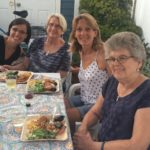
Our guests: Jenn, Joanne, Jan, Barb and Mom

Here I was, trying something totally new on my 11 guinea pig guests! The entire paella prep was reduced by half by using the sepia broth. All we did was chop one onion, sauté it in a fair amount of olive oil, add the Bomba Spanish rice, stir, then add the warmed sepia broth. I stirred in a pinch of saffron (from Palermo!) and about a teaspoon of smoked paprika. Now all that was left to do was to let it steam while we prepped the seafood to top the paella.

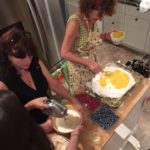
Eva and me adding the mollusks. We are having fun!

We tucked clams, mussels, squid ringlets with their tentacles and shrimp into the cooked rice and covered it with foil for about five minutes. Mangiamo!

Finished Seafood Paella before garnishing with roasted red peppers and fresh parsley.

I think everyone agreed, this was the best paella ever. The sepia broth delivered a richness, almost as if I had slaved all day to make the perfect fish broth using fish heads and shellfish. The unusual squid ink that colors the rice black just made the entire dish more interesting and a great conversation piece!

Jenny and her colorful salad.
The perfect crunchy green salad to go with the Paella.

The paella was accompanied by a gorgeous green salad, made by my best friend Jenny, and some chunks of French bread. This was a celebration for my mom’s birthday and every year she craves Pavlova as her birthday cake. The meringue was one of the best I’ve ever made. Thick, soft marshmallow meringue with a lemon creme filling, topped with whipped cream and fresh berries. Always a crowd pleaser and all the prep can be done in advance. Assembly takes about five minutes! My advice for throwing a party – keep it simple. Limit the dishes to one hearty main, a salad, bread and dessert and involve your friends in the cooking and prepping process. Don’t forget the after dinner dance party! Ours lasted until midnight!

Pavlova – a slice of marshmallowy lightness with a tang of lemon creme. Yummy!
My wonderful mom, the birthday girl!

The next time you make paella, I hope you try it with the sepia broth. You will thank me.

“When you hear a Spanish cook describe a paella or a cake, you realize she’s using a much richer repertoire of adjectives than what one of us would use to characterize a book or an important experience.”
― Julio Cortázar, Final Exam

Ciao for now!

My Tips for Hosting an Incredible Paella Party in 5 Simple Steps

Posted on August 24, 2017December 31, 2017 by Mary
Seafood Paella made with Love

Step 1
For me, the most important thing is starting with a great guest list. I choose family and compatible friends who have met before. This creates an intimate, comfortable atmosphere for all, and you, the host/hostess, need not worry about guests feeling left out because they don’t know anyone. You will be focused on making layers of flavor with the paella, with fleeting moments of conversation with your guests! Remember to read your guest’s facial expressions. Does everyone feel part of the party?
Oftentimes I encourage interaction between people who might not know each other well by taking photos of them together. This usually prompts a conversation between them and keeps the party moving along.

Step 2
Keep the menu simple. Paella, Green Salad, Plenty of Drink, Dessert. This is not a time to try a new recipe or overload your guests with too many appetizers. I usually ask one guest to bring light appetizers like olives and Manchego cheese. Something to snack on to absorb the alcohol while viewing the entertainment – me singing while stirring the paella! Making the paella on a grill outdoors keeps the party contained outside and creates a side show for the guests.

Involve your friends by asking them to help. Our Fire Man, Bob, kept the grill fire fueled. In between fire duties, he connected the Flamenco music to outdoor speakers and later in the evening switched it to good old rock ’n roll. When it comes to drinks, I have resorted again to keeping it simple. I’ve made Sangria for past parties but have found that most guests prefer their favorite cocktail or variety of wine. Pelligrino is a favorite sparkler to quench thirst between drinks. All beverages are on hand and within easy reach on a dedicated “bar” table. This year, my sister-in-law, Mirna, brought me a bottle of fine Vapor Distillery Rhok gin( formerly Roundhouse), made in Boulder, Colorado as a gift. It was a warm evening and suddenly gin sounded really good! I know this is not a traditional Spanish accompaniment to paella but Mirna started whipping up cocktails with the gin and they were such a hit, several of the guests were requesting her special drinks! This is when you just go with the flow and enjoy the moment.

Bob. The Fire Man

Step 3

Enlist a co-chef! What would I do without Eva who has been my co-chef for three years? Eva is able to co-taste with me and offer suggestions to improve the recipe or technique. Choose someone compatible that you work easily with, does not freak out and understands flavor combining. Discuss each other’s roles beforehand so you are not duplicating tasks. Two people cooking also helps keep the pace moving along so you are not eating at midnight!

Co-chefs!
Eva strutting her paella

Step 4
Prep all ingredients for the paella in the morning. Have them measured out and in bowls in order of appearance to be added to the dish. When you start cooking, there’s no need to look at the recipe. It’s all right there in front of you. Continue to monitor guests for engagement and over dinner, ask them to share a favorite summer food memory.

Step 5
End the evening with one spectacular dessert. I always make a traditional Australian Pavlova. It’s my mom’s favorite dessert and works well for a crowd. The mouth feel of soft and creamy meringue and whipped cream, accented by tangy lemon curd and fresh berries is undeniably one of the best combinations on earth. And, it’s different. Make the meringue and lemon curd the day before. The night of the party, just assemble by spreading the curd onto the meringue, lavishing whipped cream over all and sprinkling with the freshest berries you can find. Done. Your guests will thank you.

All the girls pitched in to help finish off the Pavlova. Such a great group! Love them all!
Spreading on the lemon creme
Pavlova Extraordinaire!
Barb and Ali lighting the candles
Beautiful Mom. In celebration of You!

“He tastes of rice with a touch of saffron. He says I taste of seafood. I guess we’d make a good paella.”
― Chloe Thurlow, Girl Trade

Ciao for now,

Mary

Roberto Cooks Sicilian

Posted on August 5, 2015March 10, 2022 by Mary
True Sicilian pride.

My friend Roberto, musician, teacher and lover of food, especially Italian, came to visit last weekend. He brought us the best gift. He cooked for us! Did I mention Roberto is Sicilian? His recipes are not what you would find in any restaurant and probably rarely what would be published in a trendy cooking magazine. They are true-to-the-culture dishes that are a bit out there and really pushed my culinary boundaries. Skeptical as you may be, this recipe is so delicious, your stomach will be begging for seconds, as mine did.

Pasta Con Le Sarde, or Pasta with Sardines, is a representative dish of Sicily from Palermo.  What makes this dish so interesting is its Arab influence and how the middle eastern ingredients found their way into Sicily’s culinary history. Examples of this are raisins, pine nuts and saffron included in this pasta.

Roberto told me of his mother and aunt making Pasta Con Le Sarde for family dinners. He fell in love with his first taste of the dish even as a young child. As he grew older, and eventually moved to California, Roberto became more interested in the food and ingredients of his homeland.  To help with the surges of homesickness most foreigners experience, he began cooking from a cookbook of ancient Sicilian recipes he brought with him from Sicily. Here is the recreation of the recipe he fondly remembers.

The beauty of this dish is that you can have a few things going at once and while they simmer, sit down and enjoy a glass of wine.

This recipe will not spell out exact measurements because Roberto made it off the top of his head. Still, it is easy to create and this dish is not an exact science! Serves an army or about 4 hungry diners.

Pasta Con Le Sarde

Print Recipe
Ingredients Method

Ingredients
  

  • 2 Tbls. extra virgin olive oil
  • 1 large onion chopped
  • 3 anchovy fillets canned in oil
  • 3 cups chopped fennel fronds and stalks not the bulb
  • 16 oz. rigatoni pasta
  • 1 tin sardines in oil
  • 1 cup raisins soaked in warm water to soften, then drained
  • 1/2 cup pinenuts toasted
  • generous pinch saffron
  • Lemon Extra Virgin Olive Oil

Method
 

  1. Preheat oven to 325 degrees.
  2. Sauté the onion in the olive oil with the anchovies.
  3. Bring a large pot of water to a boil. Add a teaspoon of salt.
  4. Add the chopped fennel fronds and boil for about 45 minutes or until very tender and soft.
  5. As the onions cook and soften, add spoonfuls of the fennel water to the mixture to keep it moist.
  6. When the fennel is cooked, strain it out of the water using a slotted spoon and add it to the onion mix.
  7. Do not discard the water! This water will be used to boil the pasta.
  8. Add the pasta to the boiling fennel water and cook until just al dente or firm to the teeth.
  9. Meanwhile, to the fennel onion mix, stir in the sardines, raisins, pine nuts and finally the saffron.
  10. Gently stir in the cooked pasta and coat it with the fennel sauce.
  11. Use olive oil, we prefer the Lemon Extra Virgin, to coat a 6 quart baking dish. Pour in the pasta mixture. Generously drizzle the entire dish with lemon extra virgin olive oil, about 2 Tablespoons.
  12. Bake in a 325 degree oven for 10-15 minutes or until heated through.
  13. Serve with a fresh green salad and crusty bread.


IMG_1036

In Italy, Roberto uses wild fennel, Finnochio Rizzo, that he gathers from the side of the road.
The marriage.
The marriage.
The nose is telling Roberto how many more sardines to add.
The nose is telling Roberto how many more sardines to add. The sardines smooth out the strong flavor of the fennel. Of course, in Sicily, fresh sardines are used.
The finishing touch - generous drizzles of Lemon Extra Virgin Olive Oil.
The finishing touch – generous drizzles of Lemon Extra Virgin Olive Oil.

So, how many of you will attempt this dish? It is quite tasty, not fishy and flavorful to a fault.

“And anyone who has once known this land (Sicily) can never be quite free from the nostalgia for it.”
D. H. Lawrence

Ciao for now,

Love,

Mary


Party Paella

Posted on July 16, 2014March 10, 2022 by Mary
Spanish Paella. Ole!

Lately I’ve been having fantasies – of Spain. Spanish tapas, Spanish olive oil, Spanish wine, the people, the music, the romance of it all. My feet have only touched the airport in Madrid and now they dream of dancing the flamenco in Sevilla.

This sudden enchantment was Anthony Bourdain inspired by his visit to bewitching Andalusia on his TV show, Parts Unknown. The spell is cast and perhaps next year I will indulge my fantasy. Until then, let’s explore a Spanish specialty!

Paella, as one version of the story goes, is Latin-named after the shallow, round pan it is cooked in, a “patella.” Farmers and laborers in Valencia, the southeastern region of Spain, created “paella” over a word burning fire to cook rice, a local crop, with whatever was available like rabbit, snails, chicken and white and green beans. The coastal version often incorporated seafood and soon paella emerged as a dish to suit all tastes using a variety of ingredients. nowadays, paella can take form as a “mixta,” a combination of chicken and seafood, a Valencia Paella, like the original noted above or a combination of chorizo, chicken and seafood, which seems the most popular here in America. Many forms of paella exist in Europe and other parts of the world, each infused with the region’s edibles. Spain is a major producer of saffron and it plays a prominent role by adding an earthy rich flavor and deep orange color.

The beginnings of a delicious dinner.

I love paella but have been overwhelmed by what seems like a big deal. Well, paella is now more fun than fear thanks to my sister-in-law Mirna who showed me her secret to simplicity. All you need to do is to prep a few things before hand and the rest can take place while your guests sip a refreshing Sangria or cool Pinot Grigio on the patio. This is a great party food!

We love this flush of paprika's heat on her cheeks!
We love this flush of paprika’s heat on her cheeks!
Our imitation of the Paprika Girl!

The grill is the secret weapon where we literally cooked the entire paella. A real find was a large “paella-type” pan at Ikea that can comfortably sit and bake on the grill. Once the onions, garlic and peppers are chopped, just measure out the rest of the ingredients and have them handy. That’s it!

A sprinkling of parsley adds the final flash of color.

We made a few adjustments to the traditional paella and that’s the beauty of the dish. You can add or subtract ingredients to suit your liking. We like the flavor smoked paprika contributes. I adore artichokes and red peppers, other traditional Spanish ingredients. Paella can be your ticket to wherever you feel like traveling that night. Pick a destination and build your dish around ingredients indigenous to that locality. Make it fun!

Paella at the Vaison la Romaine market in the Haut Vaucluse region of France. Yummy!

I must mention that in the olden days, the farmers would sit around the fire and eat the paella straight out of the pan with a wooden spoon. No plates to clean up. It might be a fun way to share a dinner with family and friends!

A toast to family forever!

“You should conduct yourself in life as at a feast.” Epictetus

Paella for a Family Reunion, serves 8

Print Recipe
Ingredients Method

Ingredients
  

  • 3 chicken thighs
  • 2 sweet Italian sausages
  • 1 spicy Italian sausage next time I will use Chorizo
  • ÂĽ cup Extra Virgin Olive Oil
  • 1 onion chopped
  • 3 cloves garlic chopped
  • 1 large or 2 small sweet red peppers cut into 1” pieces
  • Salt to taste
  • pinch of saffron
  • 4 cups or more chicken, vegetable or clam broth
  • 2 cups rice – we used Arborio but the Spanish use Bomba. Be sure to use a short grain rice to absorb all the liquid
  • 3 Tablespoons Smoked Hungarian Paprika
  • 1 ½ cups frozen or canned artichoke hearts – no oil
  • 1 package Trader Joe’s Seafood Blend OR shrimp clams, mussels, calamari to suit your taste
  • ½ cup frozen or fresh peas

Method
 

  1. Heat a grill to medium heat. Grill chicken thighs and sausages until brown but barely cooked. Remove from grill. Cut into 1” pieces. Set aside.
  2. Place paella pan on grill and add olive oil. Stir in onions and sauté until soft. Add garlic and peppers and cook another two minutes.
  3. Crush saffron and combine with broth. I read a recipe where Bobby Flay toasted the saffron before adding to the broth. I will try this next time.
  4. Stir in rice and coat well with oil and veggies. Cook for one minute.
  5. Stir in liquid and artichoke hearts. Sprinkle paprika on top and stir in.
  6. Cook over medium heat until liquid is evaporated, about 20 minutes. If rice seems dry, add more liquid. Try to refrain from stirring rice so it doesn’t get sticky.
  7. When rice is firm but tender, stir in cooked sausages, chicken thighs, seafood and peas and cook just until done, another couple of minutes. Give a generous sprinkling of parsley and voilĂ ! Your party is a success!

If I’ve peaked your interest about paella, check out these great websites: www.lapaella.net, www.orceserranohams.com, www.lapaella.co.uk

Ciao & Adios!

Maria


Eating Crudo

Posted on May 27, 2013May 20, 2017 by Mary
Today's catch
Today’s catch

One afternoon in Pulia, our tour host Mick, asked if anyone would like to join him for a “Crudo” dinner. Crudo, in Italian means raw. We all had puzzled looks on our faces. As he explained what it was and how it was prepared, my hand shot up as a participant. When in Rome.

Certain restaurants that have a “Crudo” designation have met all the criteria for cleanliness, freshness and procurement from reputable fishermen. Because I enjoy sushi, I was curious to taste the difference.

French tuna drenched in olive oil. Can fresh be fresher than fresh?
Fresh tuna drenched in olive oil. Can fresh be fresher than fresh?

Several dishes were set at the table to share. Crudo is not like sushi. There is no wasabi, only lemon slices. The Italians prefer to serve their seafood with a dash of high quality (what else?) olive oil and a sprinkling of sea salt. Some of the dishes did include a flavor, like the octopus with fresh mint and the cooked shrimp with fresh pineapple.

We did have a few cooked dishes like this shrimp with mint.
We did have a few cooked dishes like this shrimp with mint and pineapple.
The most delectable fried calamari my mouth has ever tasted.

One of my favorite fish to eat crudo was the swordfish. Sliced paper thin and layered on the plate drizzled with olive oil, its only garnish, a smattering of pink peppercorns and a few bits of spring greens. The pretty red dots that lined the curve of the fish revealed that is was unmistakably swordfish. So sweet and tender and mild. It hit my tongue and dissolved with its saltiness. The tuna was also sliced thin, unlike thicker chunks of sashimi.

Decadent swordfish. Warning: My local fish monger advised against eating swordfish raw here. It must be impeccibly fresh.
Decadent swordfish. Warning: My local fish monger advised against eating swordfish raw here. It must be impeccably fresh.

Something I had never seen or eaten before were red shrimp. These vibrant red creatures shimmered on the plate and tasted of a silky brine, the texture at first jello-y, then with a lobster bite.

Seductive red shrimp
Seductive red shrimp. Aren’t they stunning?

The oysters slid down ever so sweetly – the best I have ever had – or was it because I was in Italy? Raw mussels and clams also graced the table.

Seafood crudo galore.

We had eaten cuttlefish, a squid like cephalopod, as an antipasti but not crudo. Crunchy and salty is the best way to describe the experience. The texture is similar to octopus and squid. A delicious side dish of black rice, tiny cubed carrots and corn were the accompaniment to the crudo.

Just enough of a flavor contrast to compliment the raw seafood.

After filling our senses with all the salty flavors of the crudo, we were offered a crudité platter of fresh radishes, Barattino cucumber, sliced in wedges like a cantaloupe, raw fava beans and chicory heart. I had never tasted fresh chicory before. It is unlike what we know as chicory here. The bulb looks like fennel but the flavor is mild and sweet. A perfect palate cleanser. I am researching how to grow it.  After explaining it to one of my dear friends, she purchased some seeds for me from an Italian seed company. They will be planted this fall and I will anxiously await their appearance in my garden.

Refreshing and also raw!

Two things capped off this incredible dinner. A very icey, almost liquidy fresh lemon sorbet with just a hint of sweetness, not to be out done by the strawberries it was mingling with. Heavenly.

My mouth waters just looking at this photo!

The owner, acknowledging our extreme pleasure in this meal, treated us to an Italian digestive, Amari Mere, a slightly bitter, herbal flavor that grows on you as you sip.

Per la salute! To your health!

With an abundance of wine included in this dinner, the bill was about $40 each. When I return to Pulignano a Mare someday, this restaurant will be at the top of my dining list!

Food is a central activity of mankind and one of the single most significant trademarks of a culture.
-Mark Kurlansky (1948 – present)

Ciao Bella!

Maria

Shopping with Gaby

Posted on June 24, 2012May 25, 2024 by Mary

Do you remember days when you set out on a mission to do something but you end up somewhere completely out of your range? Well, that happened to us. My friend, Bonnie, had fallen the previous week, while visiting our beloved Cathars and injured her hand. Our hostess at Moulin de la Roque, Gaby, had sweetly offered her services to translate all injury-related issues at a nearby clinic in Avignon. Country driving suits me just fine but navigating in rush hour traffic through roundabouts with honking horns set my nerves on edge. We finally made it to The clinic in the early evening only to find it was closed. Quel dommage! Ok, so we will table this visit until tomorrow. Since we were so close to a Geant, I asked if we could pop in to see if I could get some help with my Samsung camera that I had purchased in Carcassonne when my Nikon bit the dust. As fate would have it, my Samsung shutter also failed after six days. Gaby asked if she could drive our car (I secretly think my city driving alarmed her!) and she took us straight away to the nearby Geant. Unhelpful, they said that since it was day eight, I could not return my camera. Had it been day seven, I could have exchanged it for a new one. One day shy! Strike two! Hungry to pick up dinner, Gaby asked if we had ever been to a big supermarket and we said “no.” She proceeded to take us to Hyper Marche, a store so large and overwhelming, that it made Super Target look like a puppy whining for its dinner.

On an interesting note: Gaby told us that all the warehouse, mega grocery, and box-type stores are all congregated together, usually outside of town so as not to interfere with the ambiance of village life. You will never find a “strip mall” randomly placed alongside the road for convenience. All you will find are hectares of vineyards, lavender, olives, cows, sheep, and other lovely vistas.

The first thing I loved were the carts on wheels so you could pull your groceries along instead of lugging a handcart. Why don’t we have these here?

Simplistic and easy on the body!

Next, the cheese selection was like being at an outdoor market with a knowledgeable and happy person eager to explain which cheese to buy for which course. Next stop, the fish department. I was expecting a shabby selection of ancient seafood but was blown out of the ocean by the fresh offerings beautifully displayed. My eyes fixated on the Raie. Glowing and almost still quivering, its eyes spoke to me and said, “Try me tonight.” So I did. I have had Raie before but have never attempted to cook it. Gaby suggested lightly sautéing it, then scraping the meat off the cartilage. Let’s see, capers, butter, lemon, finished with Fleur de Sel. My taste buds could not wait.

Fresh Raie is so gorgeous if fish can be that way.

Gaby was anxious to show us her favorite aisle in the store —the yogurt section. Almost twice as long as our average freezer aisle, the yogurt aisle is lined on BOTH sides with every kind of yogurt imaginable. Cow, goat, sheep, unpasteurized, with cream, with fruit, for breakfast, for dessert, in beautiful glazed ceramic jars – anything your heart desires. She tells us the French are crazy about their yogurt and now I can see why. There are as many yogurts as there are wines. We choose a few to try and can’t wait until breakfast.

Let your imagination run wild!

One of our favorites. These containers are ceramic and make beautiful little flower vases.

Yogurt, yogurt everywhere!

Gaby explains the finer art of Fleur de Sel.

On the way out, the wine aisle lures us in. Displayed in only a way the French can, bottles pop out of the shelf with a handwritten tag describing the contents. We learn that in Provence, 60% of the wine that is sold is Rose, that beautiful light pink softness of dry that resembles nothing of our Rose here. In fact, in most restaurants we frequented, the favored wine was Rose. I am now a fan of French Rose.

French wines galore. This is the red selection. Rose was on the other side.

One of the better Roses. A Tavel. Check out the prices! This is about $6.75 and would easily be around $15+ in the US!

Back in our comfy apartment, I took on the Raie, cooking it to perfection, finishing it with a dash of cream and butter, and a smattering of capers and lemon slices. Delish. How I wish this fish would swim our way!

The Raie in its glory.

First, lightly saute.

Lemons make everything tastier.

The plates just made this dish seem even more Provençal!

All fresh. All from the land and sea of Provence. All extremely delicious!

The Cooking Lesson

Posted on June 1, 2012May 22, 2024 by Mary
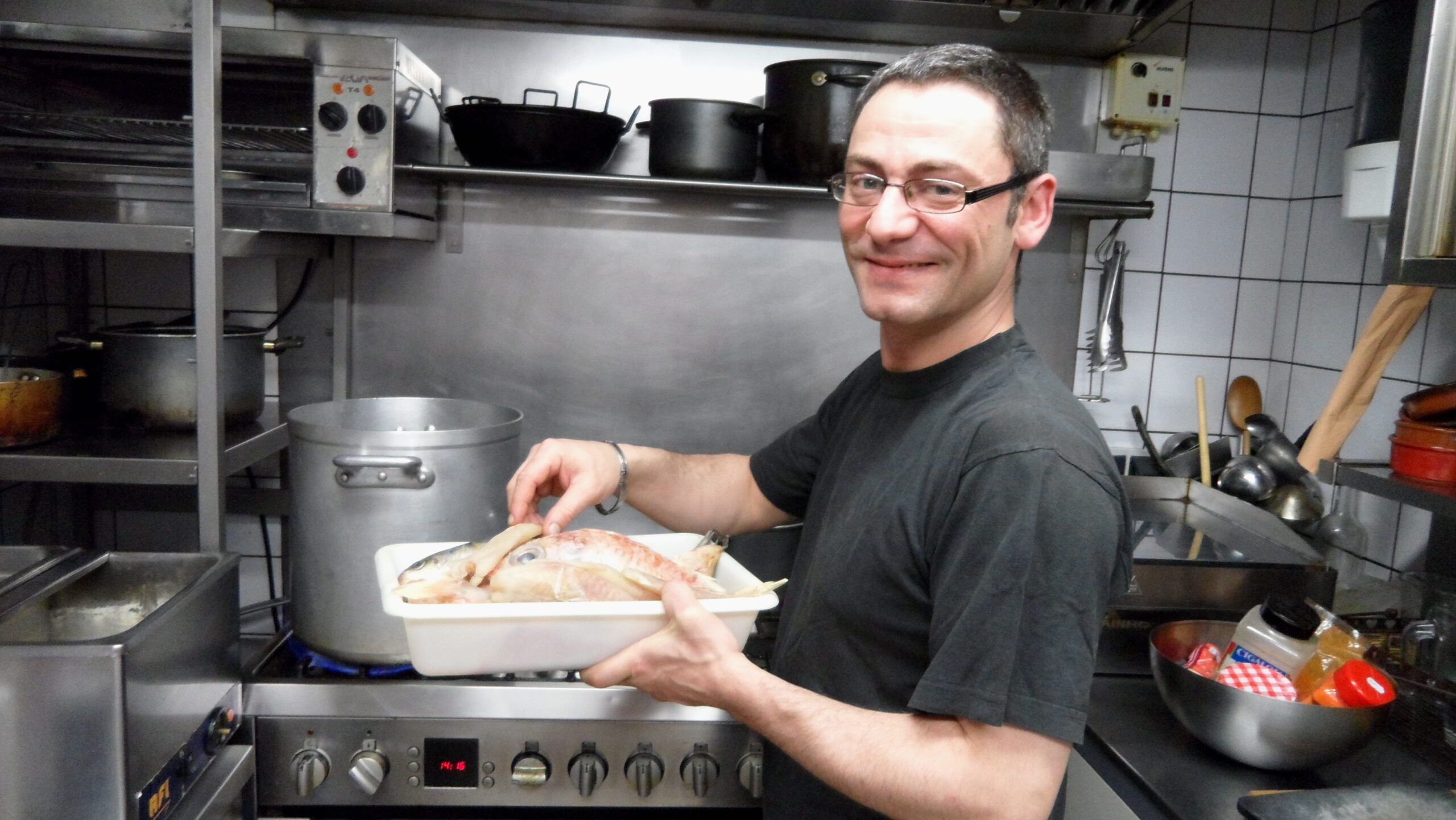
Chef Lionel getting ready to make Bourride.

Bonjour! It is a gorgeous sunny day, and the birds are chirping out melodies of joy. Today, I am excited to share my cooking lesson with you. As you know, we four women ate at Le Sixieme Sens earlier in the week and were charmed by the “cave” experience and the owner, Lionel. He invited us back and said he would cook anything for us, perhaps a French recipe we had never tried before. We put our heads together, looked through some cookbooks, and came up with Bourride, a type of fish soup. I emailed him our choice and, on second thought, asked if I might watch the process. The reply was “oui” and could I be there at 2 pm? Of course!

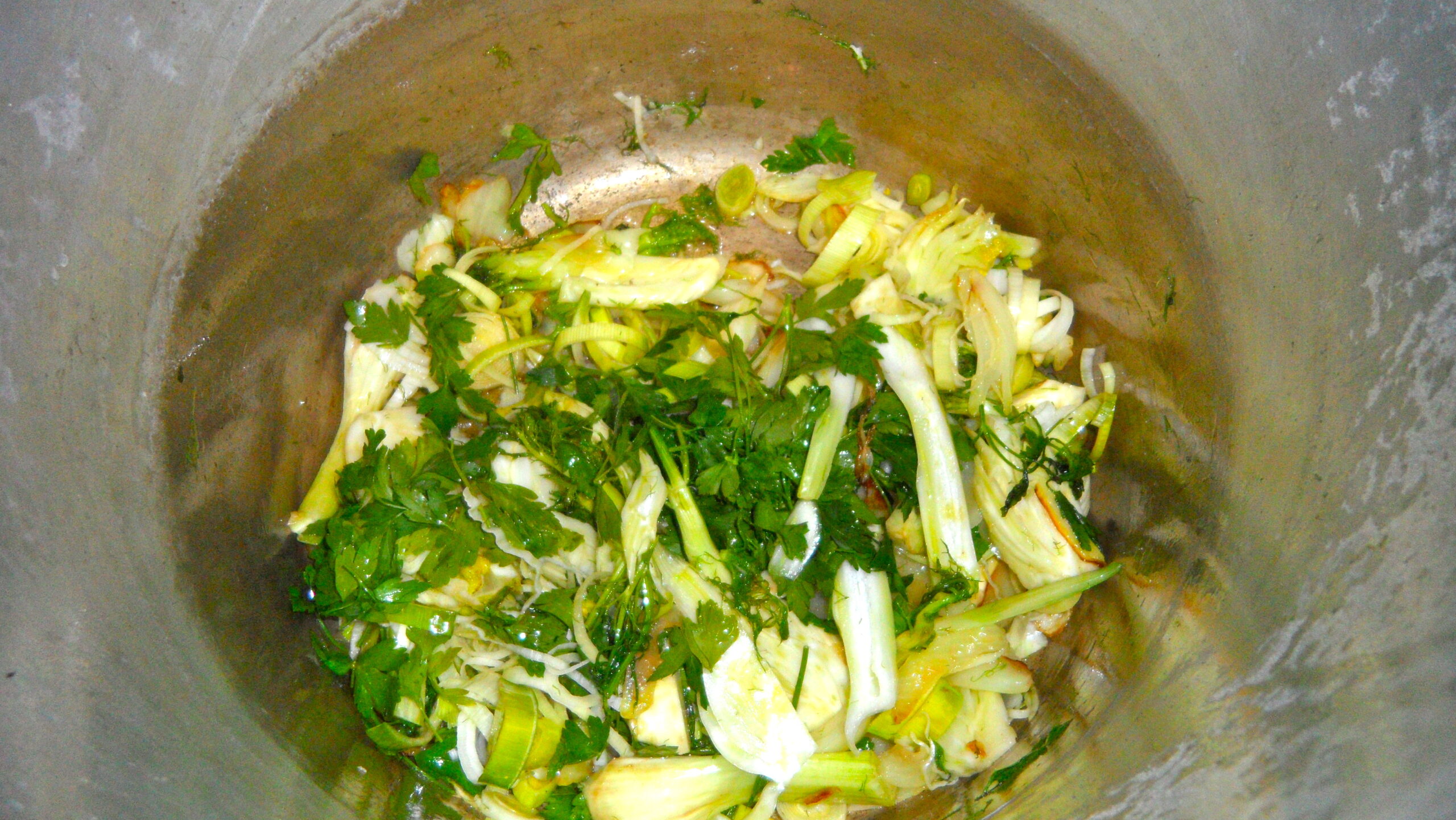
I walked into the restaurant, and Lionel did not waste any time handing me an apron and asking me to please slice the fennel and leeks he had cleaned and organized on a cutting board. I was thrilled. Not only could I watch, I would be his sous chef for this recipe! I washed my hands and quickly got to work in his pristine kitchen. He asked me how I chose the recipe for Bourride. I replied that it was something you would not find on a menu in the States, and I could smell the melange of flavors in my mind. He commented that it is an ancient recipe that your grandmother would have made. The recipe for Bourride is in Lionel’s head, and ingredient after ingredient appears in a small refrigerator below the counter. Into a giant, maybe three-gallon stockpot, we toss leeks, fennel, onion, parsley, and garlic. I will write out a rough recipe to share on a separate page from this post.

The veggie base for the stock.


Next, we add a cupful of cherry tomatoes, which he says have better taste than the larger whole tomatoes. “Now you can stir the pot.” The vegetables sweat as we continue to add a tube of tomato concentrate, generous sprinklings of pepper, and sel gris (gray salt), which has more depth than regular salt. As we cook, I try to extract as much as I can about this man in my beginner French.  Lionel’s mother is a passionate cook who prepares international dishes for the family. This influence and appreciation for food led him to experiment with different recipes while DJ’ing in St. Etienne for 14 years. Six years ago, he came to Carcassonne to realize his dream, opening Le Sixieme Sens, appropriately named because he creates the tastes and smells for your six senses. He manages the kitchen by himself and enthusiastically cooks for his guests.

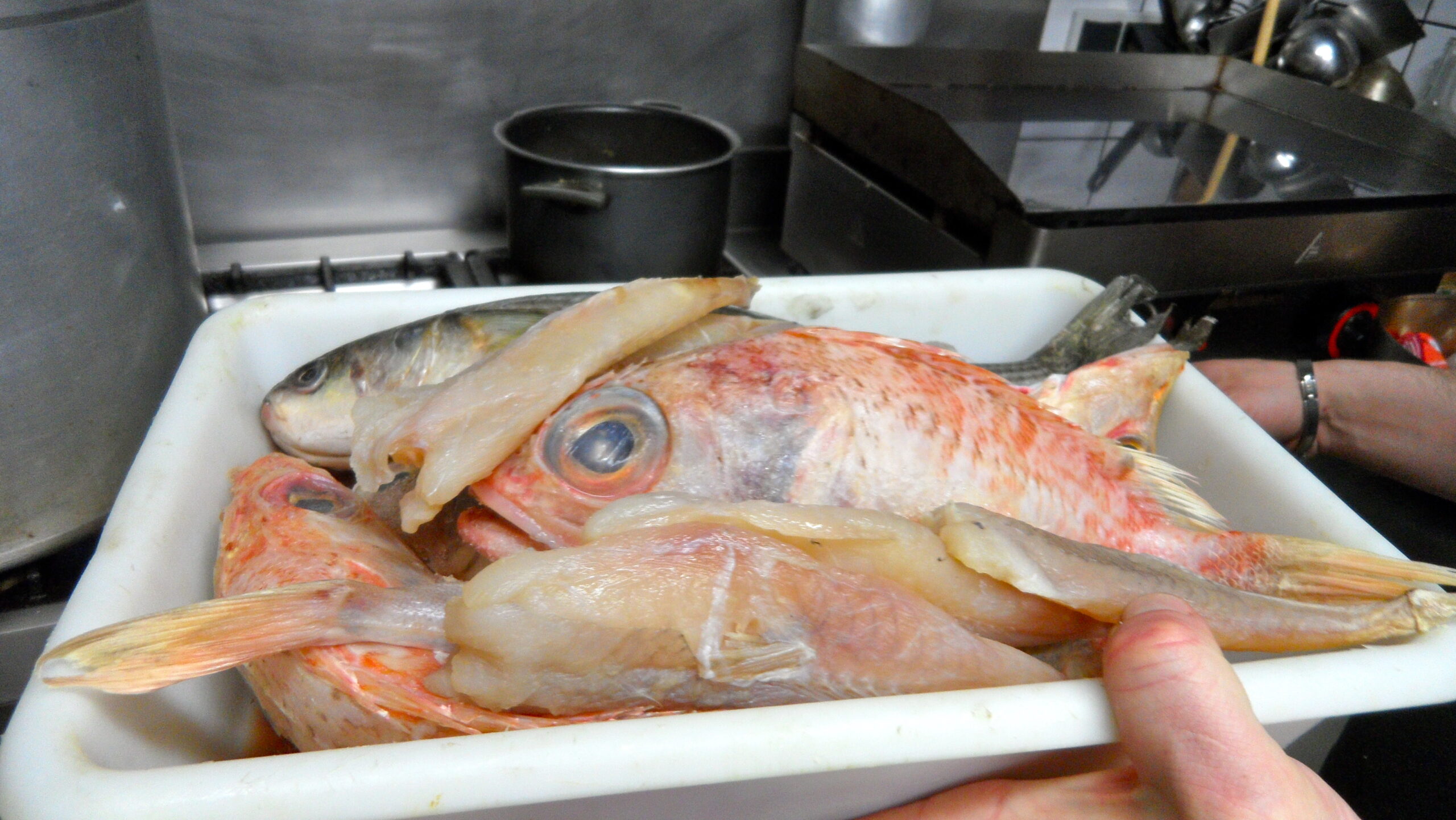
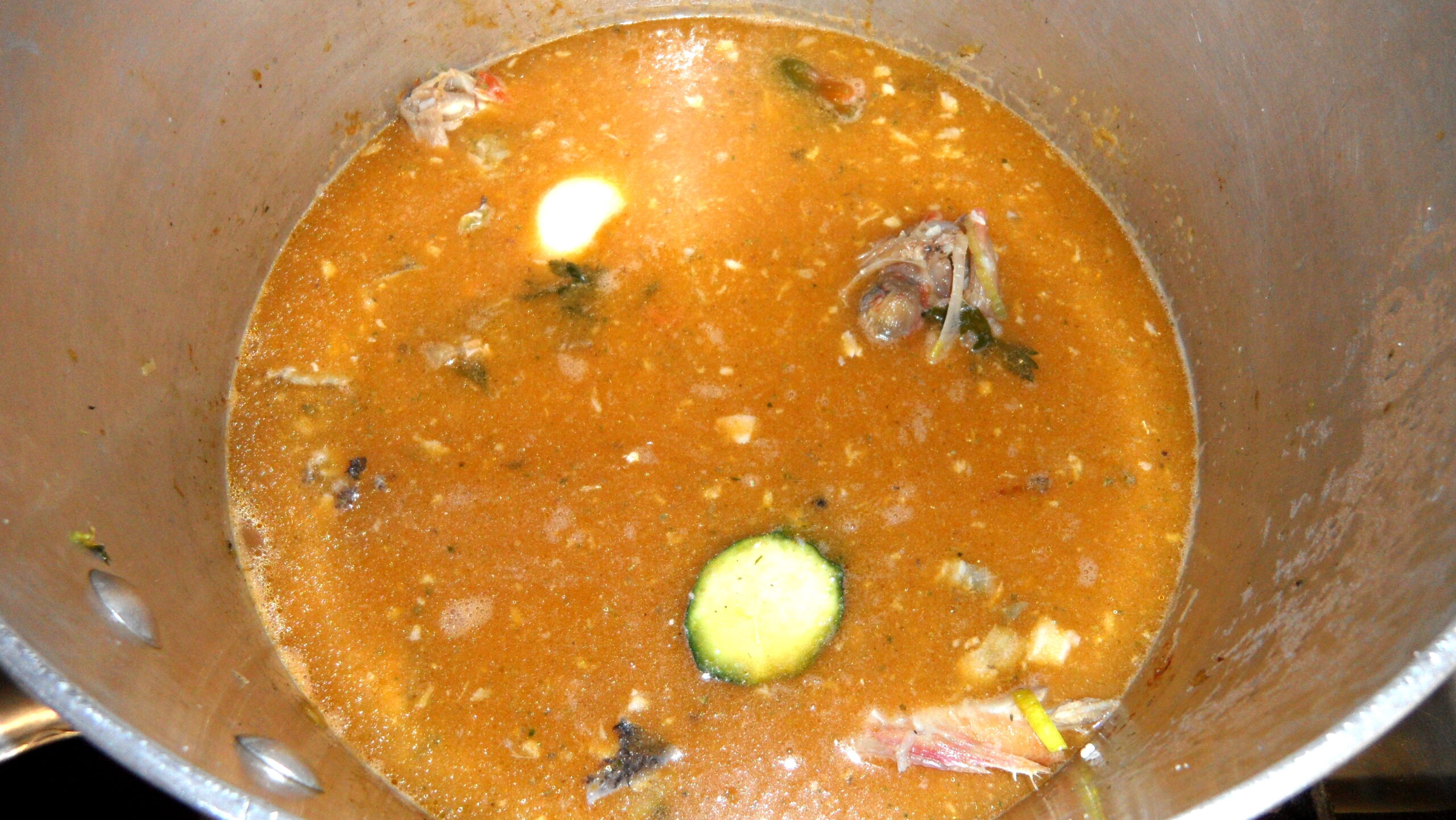
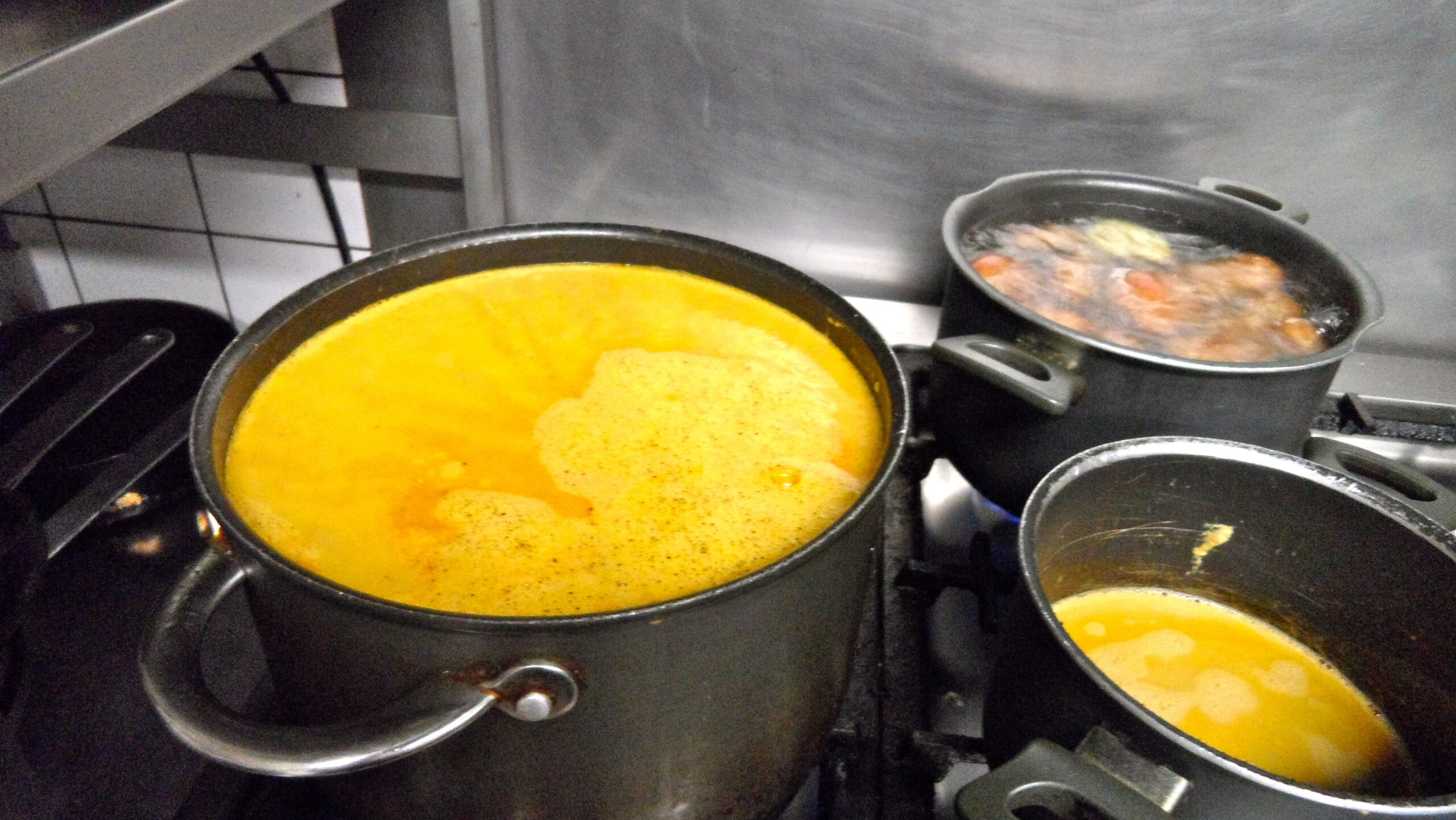
Back to the Bourride—into the pot goes the whole fish, eyeballs and all, Poisson Roche, a kind of rockfish, and Lotte. Next, a handful of thyme and turmeric and a few quarts of water. This all simmers for three hours.

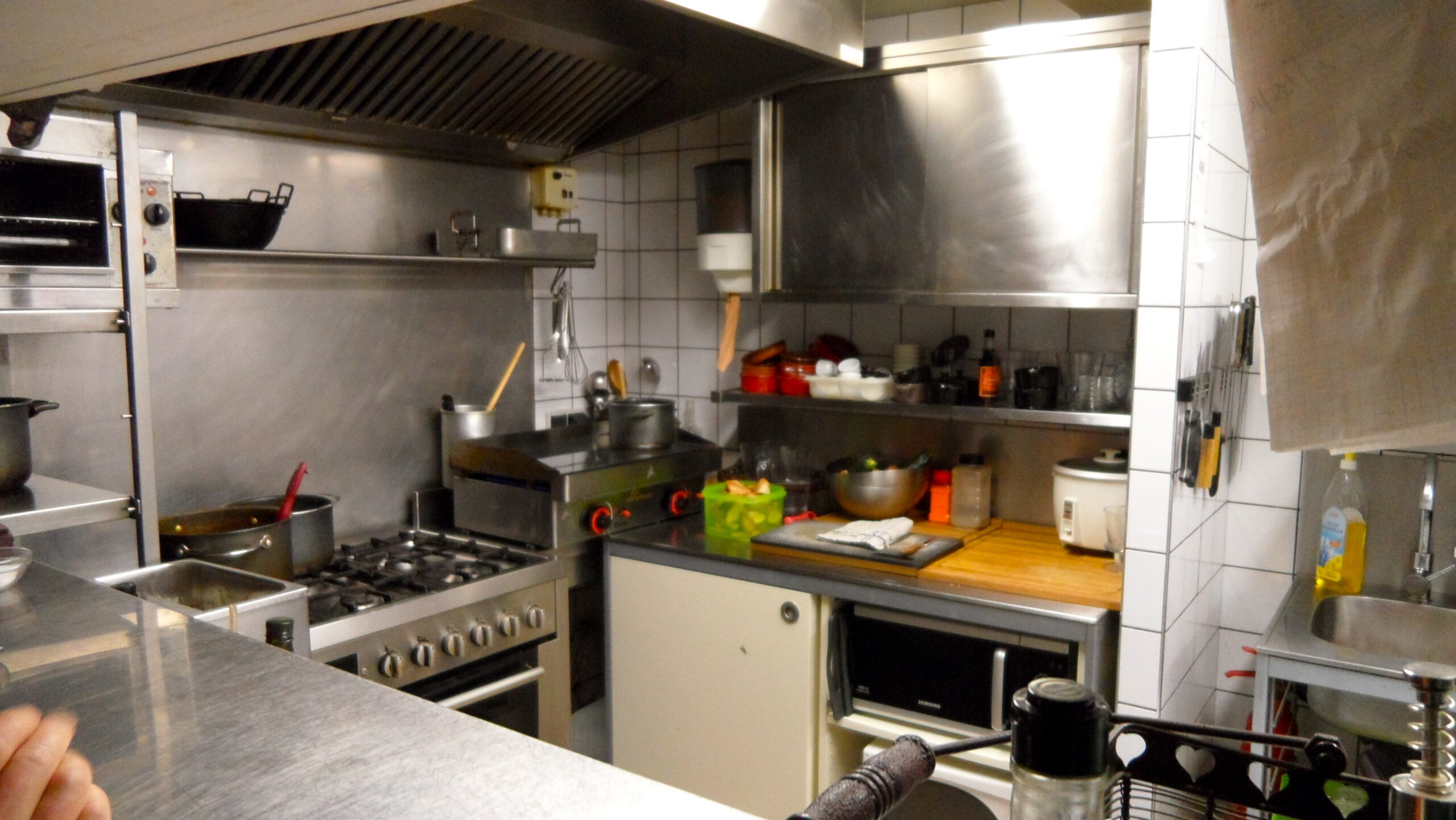
Lionel’s tiny kitchen.

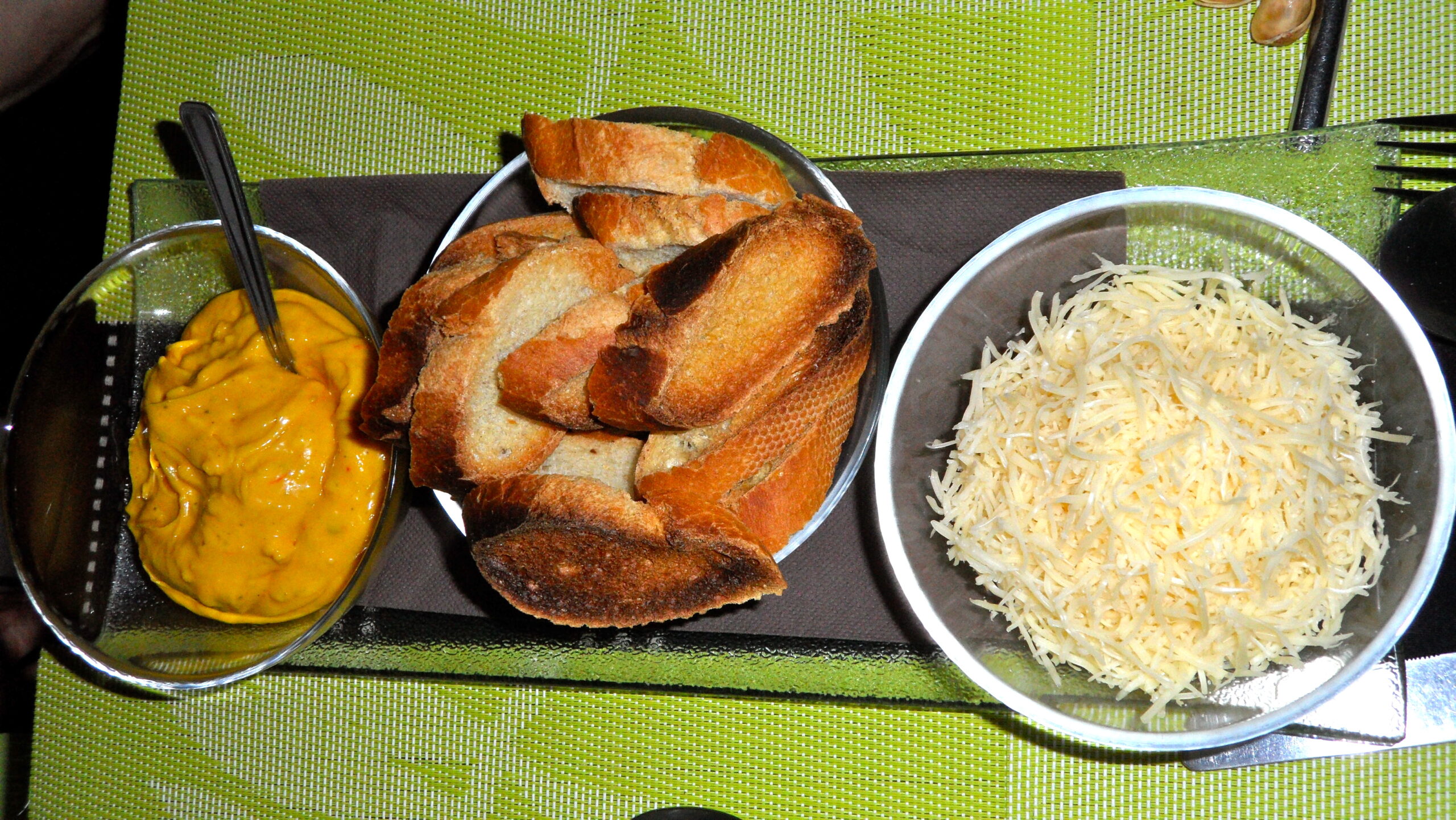
A rouille is the traditional accompaniment for the dish, so we begin with fresh, homemade mayonnaise, to which I add finely chopped garlic, salt, pepper, turmeric, and a tiny dash of hot pepper sauce. We reserve this for dinner tonight. Lionel asks, can I return at 6 pm to finish the soup? Ma oiu!

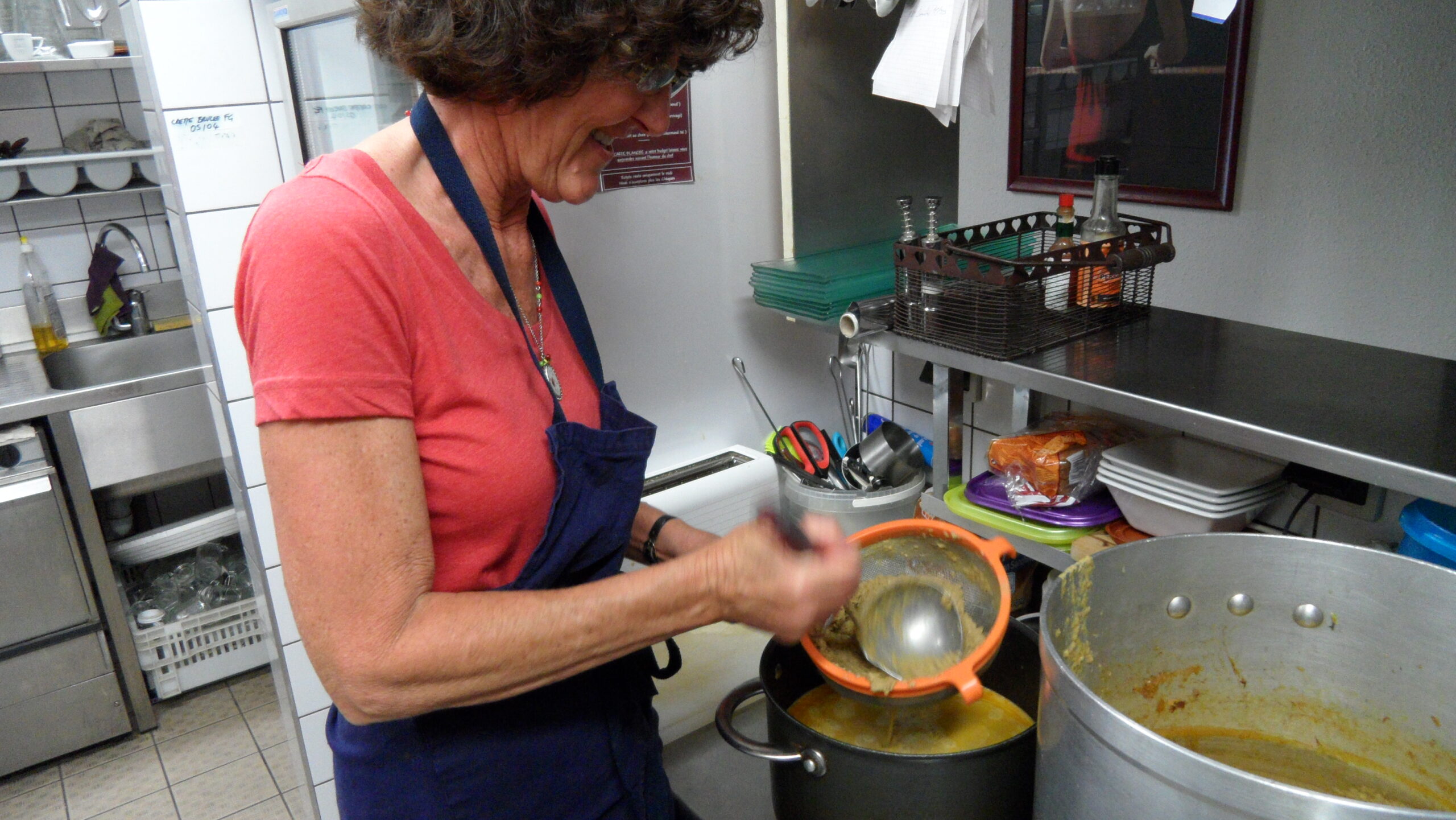
The next step in this lengthy process is to strain the gallons of fish broth we prepared earlier into another stock pot. First, Lionel uses a hand processor to blend all the simmered ingredients. Okay, I am game, and in this steamy kitchen, I sweat as I ladle spoonfuls after spoonfuls of broth into this small strainer.

15 minutes later, we have the Bourride. It simmers again on the stove to reduce by a third. The finishing touches come tonight.

The first course is the delicious soup, so creamy with gentle fish flavors and a hint of the fennel and leek. I had never tasted such depth and richness without the help of cream and butter. Served with toasted baguettes and the garlicky rouille, it exceeds my expectations.

After the first course of soup, Lionel gently poaches fresh fish of lotte, loup, meurlu, squid, and calamari. This second course is served separately on a giant platter, enough food for 10 people!

The finished Bourride.

A chardonnay from Limoux, a local wine-growing region, paired perfectly with the Bourride.

Merci Lionel for a very memorable experience. I enjoyed every minute of cooking and learning with you! Good luck with your new tapas bar set, which will open in the fall.

Au Revoir!

Mary

About Mary Knight

Ciao! I’m Mary, a chef with a heart full of French flair, an explorer of the world, a history buff, and a green-thumbed gardener. My love for food, its origins, all things Europe, and the legendary Julia Child has led me to exciting adventures and delicious discoveries. Travel tugs at my heart, leading me to new places to indulge in local delights, explore ancient sites, and learn of secret spots and recipes from the locals.

Read more »

Search

Generic selectors
Exact matches only
Search in title
Search in content
Post Type Selectors

My Favorites

The Douro River Valley - A Love Story

The Douro River Valley - A Love Story

Theres a place, deep in a river valley in northern Portugal…

Read more âžž
Rhubarb Marries Meringue

Rhubarb Marries Meringue

Lately Ive been feeling disenchanted with the world. About the…

Read more âžž

Tags

Ancient Rome Art beets Carcassonne Cocktails Extra virgin olive oil Fava beans figs France Galantino garden greens gardening gluten-free Harvesting grapes home grown lettuce Italian italy kale La Mimosa Languedoc La Varenne Lemon Lucca Olive oil Paella pasta Perigord pomegranates Provence Puglia Pulignano a Mare pâte sucrée Santa Fe sculpture Sicily The California Olive Company The Virtuous Olive Time tomatoes traveling with dogs Valentine's Day dessert vegan vegetarian writing Zucchini

Categories

Archives

Search

Generic selectors
Exact matches only
Search in title
Search in content
Post Type Selectors
©2026 Spoon & Suitcase

Subscribe to the Blog via Email

Enter your email address to receive my monthly blog posts, where I share my latest journeys and inspirations.