Hello my friends and long-time readers of my adventures on Spoon and Suitcase.
I have moved my stories, recipes, and travels to Substack. Please follow me here:
You’ll find the same content, only better!
Ciao for now and see you on Substack!
Mary
Exploring life through food and travel
Hello my friends and long-time readers of my adventures on Spoon and Suitcase.
I have moved my stories, recipes, and travels to Substack. Please follow me here:
You’ll find the same content, only better!
Ciao for now and see you on Substack!
Mary


Spring’s moody weather—we finally had rain—and the emergence of color pops in my garden gently remind me to stop and admire the continuation of life amid what seems like dark times. It’s so easy to get caught up in the negativity in the world, so I choose to immerse myself where birds chirp and bees sing.


I’ve been struggling with vision issues due to massive floaters, and spending time on the computer has been difficult. It’s frustrating and zaps my creativity, but gardening requires no reading, and I let my hands do the work.
The kitchen has called my name many times this month to explore a few new creations like this orange and chocolate posset from The Cozy Plum. It’s creamy and orange-y, like a creamsicle, and it’s irresistible! My friends and I ate it so fast that there was no time for photos, but check out this easy recipe and delight your guests.
Something else I’ve discovered is how to make my own dishwasher and laundry soap. Guilt set in when I realized how much plastic in those little cubes went onto my dishes and into the ground water. I tried unsuccessfully to make powder detergents and got filmy dishes and rough, powder-dusted clothes. I found this cool website, MyMerryMessyLife, and tried Sara McFall’s recipes to great success. Dishes are sparkling, and laundry is clean and fresh. She has recipes for many all-natural home products so check her out. Dishwasher soap. Laundry soap.
Along a trail in Point Loma, in towering trees, blue herons build enormous nests to raise their fledglings. I find it captivating to watch these magnificent birds either sitting in the nest or feeding their little ones. They are hard to capture in photos, but here’s a peek.

I wish you a spring full of sunshine, good times with family and friends, and a harvest of seasonal edibles, whether grown yourself or from the farm.
“It is spring again. The earth is like a child that knows poems by heart.”
― Rainer Maria Rilke
Ciao for now,


When my mom and I embarked on our Holland America holiday cruise to the Mexican Riviera, little did I expect to discover a rich and vibrant art scene in the towns we visited. Warm breezes greeted us as we arrived in Cabo at the tip of Baja after two days of calm cruising at sea. Instead of getting caught up in the hustle and bustle of touristy Cabo, we joined a group tour of San Jose del Cabo, about twenty minutes north. This bite-size artist colony is a collective of creatives oozing with bright-colored buildings, pedestrian malls lined with jungle animal sculptures, and boutiques of hand-crafted beadwork figures—so much local talent packed into this little, walkable town.


The beaded artwork intrigued me, and I discovered that it had been passed down for generations by the Huichol, an Indigenous people from Nayarit, Jalisco, and Zacatecas. Each piece represents a spiritual or cultural aspect of their life. First, the artist makes the form from paper mache, wood, or clay. Sometimes, they paint it to determine where to place the beads. A thin layer of beeswax is molded onto the work and is the adhesive for the beads. Using a needle, the artist picks up the beads and gently presses them into the beeswax, creating a mosaic-like pattern. One artist told me her beads came from Czechoslovakia. The process is intricate and time-consuming. I have a new appreciation for the hours and sometimes weeks spent on these meaningful expressions of art.
Continue reading “Cruising the Art Scene in Mexico”

Fruit trees have this miraculous ability to produce a delicious edible from a single blossom; however, pomegranates do it with more flair and panache. The drama unfolds as orange orbs open to delicate squash blossom-like blooms that eventually form a deep scarlet, leathery skin packed with tiny ruby-jeweled seeds, perfect for the beginnings of a seasonal martini.
My tree produced over 100 pomegranates this year, so besides juicing them for drinks, I de-seeded them for salads and made pomegranate jelly, something I started doing in my teens to give away for holiday gifts.
Even as the pomegranate season draws to a close, with most of her leaves fallen and naked limbs exposed, she retains her dignity—like Persephone retreating within—waiting until spring awakens her once again with gifts of tender budding greens. I try not to play favorites, but can you tell how much I love my pomegranate tree?


To celebrate this transitional season, I juice the seeds, a labor of love, and make a tart libation. My pomegranate martini is infused with fresh juice, gin or vodka, orange liqueur, and a splash of lime juice. Divine.
This sipper makes a colorful pre-Thanksgiving dinner cocktail. I love the glamour of the straight-up martini. You can make a batch for a crowd by combining the juice, gin or vodka, liqueur, and lime in a pitcher and chilling it until ready to drink. Pour it over ice and add sparkling water or white wine.
Treasure times with family and friends and celebrate togetherness with good food and drink!
Makes one martini
Some may feel intimidated by the amount of juice you need to squeeze. Never fear. I have found the easiest and most efficient way to juice a pomegranate is to use an electric juicer, like you’d use for oranges. Wear an apron because the red liquid will squirt onto your clothes, countertops, and elsewhere, but you will be rewarded with plenty of juice. This recipe calls for equal measures of juice and alcohol. Feel free to increase the gin or vodka to two ounces with the same amount of pomegranate juice.
1 ½ ounces fresh pomegranate juice*
1 ½ ounces gin or vodka (I prefer gin)
½ ounce orange liqueur, such as Solerno (a Sicilian blood orange liqueur), Cointreau, or Royale Orange from France (my favorite for its orange peel flavor)
1 tablespoon fresh lime juice
1 thin lime slice for garnish
Fill a cocktail shaker halfway with ice.
Measure and pour the pomegranate juice, gin or vodka, orange liqueur, and lime juice into the shaker.
Shake, shake, shake. I usually do about 25 shakes.
Strain the mixture into a martini glass and garnish with a lime slice.
Sip and savor.
* Feel free to substitute bottled pomegranate juice.
Fun fact: I was curious to know how many seeds were in an average pomegranate. My research revealed anywhere from 600 to 1400 seeds, depending on the fruit size. Who took the time to count all those seeds?
The seeded juice is prized as an antioxidant, anti-inflammatory, and vitamin C elixir. Plus, it’s excellent for brain health. In Sicily, pomegranates are stacked high in pyramid form and juiced on the spot for a refreshing drink.
Eat a pomegranate and visit a bath; your youth will haste back. Ancient Egyptian proverb.
Ciao for now,


This post continues my southwest road trip in June with my mom, planned around trading posts and Canyon de Chelly. We discovered many new sights in our six days and are discussing another road trip next May!
After a night in Flagstaff, the adventure begins as we head north on Highway 89 along dusty roads with views of tall, striated red rock and the occasional Navajo homestead. Our intention to visit old trading posts is disappointing. Many posts marked on the map turn out to be deserted, boarded up, and standing alone in the vast expanse of wide-open country. A lower story for selling goods, an upstairs home, and a corral for horses and sheep—all abandoned. This scene is played out many times along our route. I wondered if COVID had shut off tourism, forcing closures and sending tourists and locals to the bigger cities and posts.

Our first stop, Cameron, is a significant trading post with a sister gallery next door. The gallery houses exquisite Navajo rugs—some with price tags of $40,000—large kachinas, pawned jewelry, beaded knife sheaths, and authentic deerskin outfits. The gallery is more like a museum and laid out like a house with small rooms of artistic work for sale, most likely for serious collectors. This gallery is a true gem, an appreciation and tribute to Native American art, old and new.


Do not miss this gallery when you travel through Navajo country.

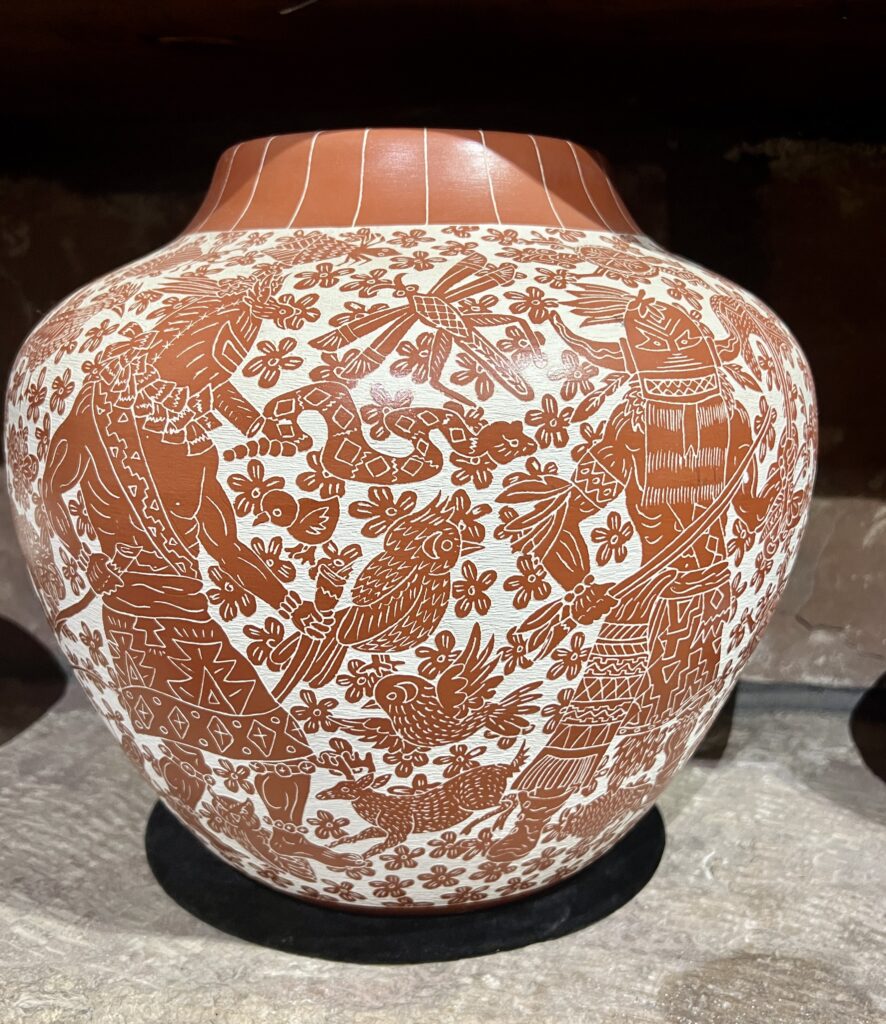
Visions from the past at Cameron’s Gallery Trading Post
My mom’s discovery of the history of a Hopi bracelet she wears daily was a highlight of our trip. In her words, she tells of her extraordinary experience at Cameron Trading Post:
It was February or March when my Hopi bracelet began talking to me. I have worn it most every day and night since I purchased it in 1959 at the Grand Canyon National Park. It is my signature. I often wondered about the Hopi artist who stamped his crossed arrow signature to the inside of the inlay silver cuff bracelet. Maybe this trip was my opportunity to find the mystery artist. I struck gold in the Cameron Trading Post. Alan, an expert in Hopi jewelry, took my bracelet and, with a magnifying glass, looked at the marking inside. He then produced a book about Hopi silver, and there it was! Wallie Sekayumptewa of the Reed clan in Hotevilla-Oraibi Shungopavi, 1948. Wallie was enrolled in a class on Second Mesa, for WW II veterans to learn silver smithing, which became his life-long occupation. Since I have worn this piece every day for many years, I now feel a kinship with those who inhabited our land centuries ago. This was the highlight of the trip for me! Mystery solved.
Further north, now on Highway 60, Monument Valley looms in the distance. To our right, a carved statue of a woman rises above the mesa. She isn’t really carved, but the red stone rocks resemble a Navajo woman with her full-length dress and long hair in a bun. I can’t take my eyes off her but must watch the road. The towering buttes come closer and closer. My mom says one cluster is a family of brothers and sisters. Some giants stand alone, commanding the spotlight; others are an organized lineup. We pull over and snap photos under a deep blue sky and perfectly formed clouds of white puffs. Dazzling and dizzying, the intense contrasted colors seem painted—but by whom? No wonder I find inspiration here in an uncluttered landscape of nature’s beauty.


Windblown at Monument Valley.
We veer east and connect to Highway 160, the Najavo Trail. This route will take us to Chinle and into the heart of Navajo country. Chinle and Canyon de Chelly is our base for two days as we explore nearby trading posts. I have always admired the tightly woven, muted greys, creams, and blacks of the Two Grey Hills Navajo rugs. Located in Newcomb, New Mexico, just across the Arizona state line, the trading post is about as far off the beaten track as possible. This isolated stop has served as a general store and community center for Navajos and a few determined tourists like us for over one hundred years. The drive from Chinle to Newcomb is worth it alone, climbing high into the mountains with gorgeous pine views before dropping into the barren and flat desert. We had studied the roads, and just when we thought we were lost, Two Grey Hills appears, looking deserted with nothing near for miles except for wild horses and wandering reservation dogs. I begin to worry when I notice no cars in the parking lot, and on closer inspection, a sign on the door says the owner could be reached by phone if we wanted to visit. I call the number, and a pleasant man says he was in Farmington and would be back in three hours and open the rest of the week. Unfortunately, this would not work for us, so I thank him, and we retrace our journey back up the mountains to Thunderbird Lodge. I hope to return next year to see this icon establishment.


Two Grey Hills Trading Post and wandering visitors.
I rise early at the Thunderbird to catch the sunrise over the canyon and experience pre-dawn activities. A hint of soft pastel streaks across the sky. The still cool air smells of pine and scrub brush and hay. A few crows caw out a hello and are joined by songbirds announcing the start of a new day. The world wakes up as the clouds transition to deeper yellow and pink. I spot a light-colored horse resting in a pasture. She sees me admiring her and stands up, shaking off the night, her mane swaying from side to side. Two dogs appear out of nowhere and trot down the dirt road toward the Thunderbird; I assume looking for breakfast.


Mom and I share a blue corn pancake in the lodge café and discuss our day. Instead of heading south into Zuni territory, we alter our route and point toward Ganado, home of Hubbell Trading Post, and then travel up to Second Mesa. I love how we both are spontaneous and don’t feel we must stick to a pre-arranged plan. Note: The trading post at the Thunderbird Lodge is fantastic! We found many artifacts (we had to have 😍) at very reasonable prices. Yes, we collect Native American art with abandon.


The drive south is a straight line ahead, with red buttes dotting the landscape. In an hour, we drive down a long dirt road and arrive at an old stone building, part of which is the trading post. Don Lorenzo Hubbell founded the post in 1878 to supply Navajos with needed goods. The entrance is almost hidden on one side of the building, while the rest of the structure houses Hubbell’s living quarters, stables, a repair shop, and more. We slip through the wooden door and enter a room filled with curios, some handcrafted and some tourist souvenirs. Another door leads into a room with the good stuff—cases of sterling silver jewelry mostly from local artists, pottery, sandpaintings, and stunning rugs, all woven with 100% wool. The standards are high, as is the quality. We ogle over the earrings and meet Wallace, the store’s curator, whose descendants have been closely associated with the Hubbells for over a century. Wallace knows who made every piece of jewelry, who weaves the rugs, and who creates the paintings. His close ties to the Navajo community make for fascinating conversation. Just meeting him is worth the trip to Ganado. We each purchase two pairs of stunning handmade earrings and a few other small gifts for friends before we drag ourselves out. Of all the trading posts, this is a highlight and oozes with history. Be sure to put it on your itinerary.


Historic Hubbel Trading Post
After leaving Ganado, we drive 7,200 feet skyward to First, Second, and Third Mesas. The reservation spans 1.5 million acres and is home to twelve villages of many Hopi artists and agrarians. The Hopi Cultural Center is but a small representation of Hopi life and history, but the old photographs lining the gallery tell the Hopi story. Next door to the Cultural Center is an abandoned trade school where silversmiths learned their art. We feel confident this is where Wallie learned to create fine jewelry, like my mom’s bracelet.
Nearing the end of our travels, and having purchased our share of Native American art, decide to make the short 100-mile drive toward Winslow on the famous Route 66. Cruising the main street without a hotel reservation, we search for accommodations and follow the railroad tracks almost to the end when Mom says, “Stop here. Let’s check this place out.”


The sign said La Posada, and little did we know what a treat we were in for. The hotel was originally a Harvey House built by the Santa Fe Railway and the Harvey family to service train passengers and resolved to be the finest hotel in the Southwest. It has undergone many transformations since its beginnings in 1927, but now La Posada brags gorgeous gardens, rooms decorated with antique furniture, and a hacienda-style dining room serving exquisite food. Even without a reservation, we get a room. Lucky us. After settling in, we head to the Martini Bar for a cocktail before dinner. I watch the bartender pour ounces of gin into a generous martini glass topped with bleu cheese olives. It’s probably the best dirty martini I’ve ever had. We take our martinis into the Spanish-style Turquoise Room to order appetizers to help subdue the mighty strong drink. Our favorite, fried calamari, is on the menu, and we also order corn pudding-stuffed squash blossoms in a mild chile sauce. The hearty portions are plenty to account for dinner.


The best part—we step just outside onto the back patio, where we have a front-row seat to watch the passing trains. As the sun sets, we ease into the click-clack of the wheels, and everything seems right in our worlds.


Breakfast the following day is nothing short of amazing. The Corn Maiden’s Delight of warm, creamy polenta, topped with poached eggs, spinach, and fire-roasted tomatoes drizzled in salsa, is a prize winner. I want to try everything on the menu. We would like to stay for many days.

Before leaving, we visit their trading post/gift shop—another hidden gem. Carefully curated works of art, many from local craftspeople, stunning jewelry, and an extensive collection of fetishes puts this on my list of must-visits when in the area.
It was a memorable trip indeed with my beautiful, adventurous mom. Same time next year?
“Seek wisdom, not knowledge. Knowledge is of the past, wisdom is of the future.” Native American Proverb
Ciao for now,


My latest adventure took my mom and me back to the southwest for a fix of Native American culture. Oh, what a time we had!
Road trips are in my blood. Most family vacations of my childhood included a tent, a camp kitchen, and a trusty station wagon. These trips were semi-planned, meaning we lingered a few days longer if we found a place along a river we liked. This trip was no exception.
For the last forty years, my mom and I have returned again and again to the southwest to renew our spirits in a place we feel at home. Our usual destination is Santa Fe, but we had a new idea this time. Why not explore the trading posts in northern Arizona and steep ourselves in Native American history? We traced a tentative route on a AAA Indian Country map with a destination of Canyon de Chelly, a National Monument that the park service and Navajo Nation manage together. Our trip was so eventful that I decided to break this story into two parts: Canyon de Chelly and the next installment, our favorite trading posts.


After a night in Flagstaff and the next in Kayenta, we departed early in the morning to drive wide-open country roads on the Navajo Trail past tall red sandstone mesas to Chinle to catch our reserved 9 a.m. jeep tour of Canyon de Chelly and Canyon del Muerto. We booked the tour through Thunderbird Lodge, near the canyon entrance and our home base for the next two nights. Experienced Navajo guide David John expertly maneuvered our ten-person, six-wheel-drive behemoth of a vehicle that would take us into the canyon’s depths for the ride of a lifetime. Four of us strapped in and bumped through shallow creeks and deep sand, the towering adobe-red walls hugging us from either side. I’m surprised by how few people are here. You cannot enter the canyon to hike or camp without a Navajo guide—a good policy.


In front of us scampered a robust turkey with her tiny chicks racing behind. I am stunned by the canyon’s peaceful beauty and could easily see why the Anasazi, Hopi, and Navajo made this their home. David stops the jeep to point out petroglyphs on the cliff walls. He speaks rapidly to tell us about the Kokopelli, sun, moon, and deer symbols representing the nature the people so embraced. Deep cutouts in the cliff’s face give shelter to the cliff dwellings, suspended between heaven and earth and occupied by many groups of Native Americans over the centuries. Tall ladders and footholds dug into the cliff face also give access to the homes.
According to David, bears, coyotes, mountain lions, bobcats, and deer wandered the valley. Also abundant were crops of watermelon, squash, corn, and fruit trees of peach, apple, apricot, and cherry. The water source eventually dried up, and with no wells in the canyons and a long-term drought, crops and livestock faltered. The few remaining families who live here now are elderly, determined to maintain the old lifestyle even with no electricity or running water. I admire their tenacity and hope their grandchildren will learn about living with nature from them. We passed one recently abandoned home with a large loom still sitting next to the house, almost like an homage to the weaver who lived here. Mom said when she was here in the 70s, a woman, most likely on this spot, sat and wove rugs. She was lucky to visit the canyon when a more active community resided here.


Tall cottonwood trees showered us with white puffs, like snow, as we traveled down narrow, rutted roads to view cliff dwellings built around 750 AD. In the seven hours we spent in the canyons, we clocked around fifty miles, stopping frequently to hear the history of certain wall paintings or how the cliff dwellers lived. On one tree-lined canyon stretch, a magnificent wild Appaloosa stallion ran beside us, his mane and tail flowing in the breeze to match his gait. Later in the afternoon, we saw a grouping of wild horses, head to tail, keeping cool next to the cliff walls. This mare, below, ran in front of us, her swaying belly suggesting she was pregnant with foal—such beautiful free spirits.

The scenery becomes more vivid, and we are where most other vehicles cannot navigate. Deep into the heart of the canyon, quiet abides, and the only noise is the rustling of leaves and the whispered stories of the ancestors high up in the cliffs. We stop for lunch under a shade tree, with a view of Mummy House. Here we become fast friends with our tour companions, Elliott and Susan. I discover that Elliott has written two books and is into his third. This author connection, along with Susan hailing from San Diego, bonds us, and I know we will correspond in the future. I am grateful we all met!


The tour comes to a close in the late afternoon. We are sun-drenched, thirsty, and need a chiropractic adjustment, but we wouldn’t trade this experience for anything. We accomplished what we set out to do—immerse ourselves in Navajo culture—and we could not have gotten a better lesson. I feel a close connection to this place and all it represents: strength, nature, and community, and I will return for more life lessons.
I have been to the end of the earth, I have been to the end of the waters, I have been to the end of the sky, I have been to the end of the mountains, I have found none that are not my friends. Navajo Proverb.
Ciao for now,
P.S. Be sure to check out my author, writing, and copyediting website at Mary Knight!


A few months ago, I woke up and realized how much I missed writing this blog. My editing newsletter took its place for a while, but it was time to separate the two. This blog is for pure fun and allows me to release my inner spirit for the joy of it.
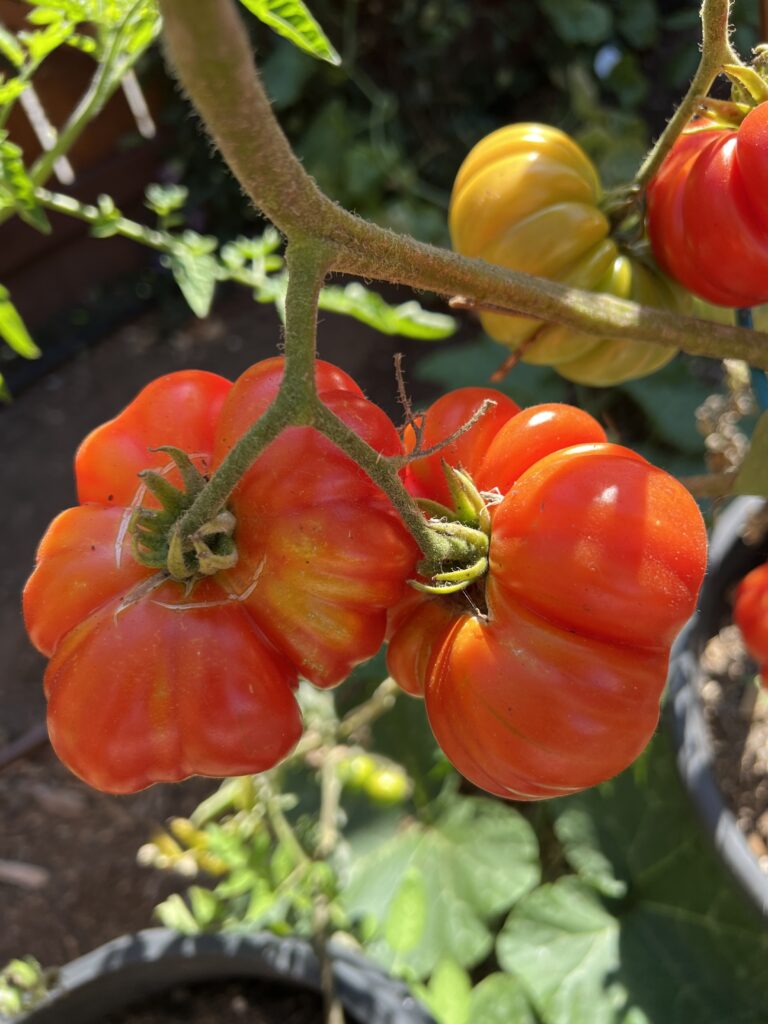


It’s summer love in the Knight Oasis this August. My garden has had a workout! I loaded the middle box with green beans, which are now all harvested and many frozen for future use. I’ve replaced them with yellow zucchini, parsley, carrot, and basil seeds. The herbs, especially the basil, sport larger and more aromatic leaves in the late summer and early fall. I’ll have a pesto party in October! My friend, John, gifted me a grapevine, now growing up a new trellis, and two butternut squash seedlings, which are taking over the ground space behind my beds.
Every year, I like to try to plant something I’ve never done before, and this year, it’s hard squash. My front bed is seeded with acorn, delicata, and red kuri squashes for a November harvest and winter of good eating. The back bed is lush with zucchini, Kellogg, Costoluto Genovese, and Sungold cherry tomatoes. Yesterday, I spied and ate the first two ripe figs of the summer!
The kitchen has been calling my name, but not for my usual canning of tomatoes and jamming of fruits. The bright flavors of Adele’s Caponata are the perfect use of my garden’s harvest. Make a batch and keep it on hand for easy entertaining. I’ve served it as an appetizer with crostini, on a toasted baguette for lunch, and stirred it into pearled couscous for an easy dinner. What are you making with your garden produce this summer?
We celebrated my mom’s 93rd birthday with a small gathering, and I made a super easy and delicious ginger-mint shrimp dish from New York Times Cooking. It’s perfect for a crowd, and there were no leftovers! For dessert, I whipped up a batch of mini pavlovas, her favorite, and instead of my usual lemon curd filling, I churned two ice creams: salted caramel and fresh peach. David Lebovitz’s book, The Perfect Scoop, delivered on point with his salted caramel sauce that I swirled into crème fraiche ice cream. Buonissimo!


Celebrating my mom with a birthday pavlova stuffed with homemade ice cream, with a drizzle of caramel sauce, and sauteed peaches.
Because tomatoes and zucchini dominate my garden, I created this easy caprese-ish recipe. It’s my answer to the perfect summer dinner.
I’m so glad to be back! In next month’s blog, I will take you on a road trip to northern Arizona, including a jeep ride deep in the canyons of Canyon de Chelly. The experience of a lifetime!
That beautiful season, the Summer!
Filled was the air with a dreamy and magical light;
and the landscape
Lay as if new created in all the freshness of childhood.
– Henry Wadsworth Longfellow
A late summer garden has a tranquility found no other time of the year.
William F. Longgood
Ciao for now,


Just this week, my fig tree delivered its first ripe fruit of the season. Every year it produces more and more figs, and besides giving them away to friends and neighbors, I’m finding new ways to use this special, luscious fruit.

Last year I made fig and ginger compote—so yummy on toast—and this year, I continue to throw them on the grill alongside my garden veggies. If you haven’t tried this, please do. The figs caramelize into a gooey softness and they are wonderful in a goat cheese salad, onto crostini, as an accompaniment to grilled pork or chicken, and on top of ice cream. The possibilities are endless so use your imagination. Almost anywhere you would use grilled fruit, such as peaches, you can substitute figs.
In my upcoming book, The Sicilian Sorceress, my main character, Alexis, makes fig bars for her clients so I thought I’d get into her head and create my own version. The result was amazing! I used ingredients popular in ancient Sicily: figs, almonds, goat cheese, Greek yogurt, and fennel. The recipe for Fig, Fennel, and Goat Cheese Bars is in the book so unfortunately, I can’t reveal it just yet. Sorry! It will soon be available within the next two months. Please subscribe to my monthly newsletter at Mary Knight for interesting articles and updates on a publication date. The Sicilian Sorceress has several Sicilian recipes, many I learned while in Sicily. Follow me along as I continue to be inspired by Mediterranean cuisine!
Ciao for now,

Love is a fruit in season at all times, and within reach of every hand. –Mother Teresa


Now starring . . . drumroll, please. The lovely eggplant: cloaked in the deepest jewel-tone purple, satiny, with unblemished skin, sleek in figure adorned by an evergreen crown cap. She is royalty and commands a striking presence in my garden. I’d almost rather leave this bowing beauty as a decoration than cut it.
But it called me to create something exotic, something I’d never tried before, and so it became the Eggplant Kabob.
My friend Ahmad, a student in Turkey, knows first-hand the possibilities of this fleshy fruit. Yes, eggplant is a fruit! The kabob was his recipe recommendation. Ahmad aspires to live in America and become an electrical engineer, but he was previously a chef assistant at his friend Erdal’s restaurant, Kebabi, in Istanbul. Kabobs, other meats, and flatbread are all grilled over an open flame. Click on the gallery view on the website to see photos of the appetizing food!
My friend Ahmad and the chef and owner of Kebabi, Erdal.
After watching the “how-to” video Ahmad sent me, I was ready to tackle the eggplant kabob.
An Arabic video on eggplant kabobs
Chris and I marched off to our now favorite market, Balboa International Market, to gather ingredients to make it ourselves. We found a “meat kebob” seasoning with cayenne, paprika, sumac, saffron, turmeric, and more in their well-stocked spice section. The knowledgeable butcher said it was typical to use an equal amount of lamb and beef to skewer between the eggplant. We added the spices to the meat, along with chopped onion, and assembled it alternating meat and fruit, and then BBQ’ed it on the grill.


The result? It was really tasty! To finish it, we sprinkled pomegranate seeds, walnuts, and mint leaves on top, which really pulled all the flavors together. Next time, I would make a yogurt and cucumber sauce to drizzle on top and serve it with mint tea. Crumbled feta would be delicious, too! Middle Eastern cuisine’s depth of flavors and spices have given my taste buds a new experience and made me crave more. What’s next, Ahmad?

Gleaming skin: a plump elongated shape: the eggplant is a vegetable you’d want to caress with your eyes and fingers, even if you didn’t know its luscious flavor.
Roger Verge
Ciao for now,

My fig tree not only bestows me with gorgeous summer fruit but presents a nature show all year long. In the fall and winter, it loses its leaves to reveal bare-naked limbs. Small green buds evolve into broad, finger-like leaves while nubs form on its skinny branches in spring. Finally, in early summer, these little fig buttons push out pear shapes whose bottoms balloon and begin turning a musty burgundy. Biting into a fig is like a beautiful kiss. Sweet, soft, juicy, velvety, downright sexy! Perhaps this is why I have such a passion for this fragile fruit that I eat with abandon during its short-lived season.


My fig tree is named Paradiso, after its southern Italian roots. When my dad and dog, Star, died seven years ago, I wanted to plant something to honor them both. The fig, a sign of peace and prosperity, seemed appropriate. My new-found interest in figs coincided with my exploration of southern Italian food, most specifically in Puglia. Green figs with fleshy pink insides were everywhere and luscious.

A search in San Diego came up empty for this kind of fig, so I found a man in Boston who grows over 25 varieties of this delicacy. He matched my description to our growing conditions and sent me an Italian Paradiso. The long, narrow box contained a 15” twig, clustered with leaves and a few small figs. My friend, Jenny, and I cleared a space near my orange tree, and with love, gave this new tree a home. The first two years were rough, and I wasn’t sure if he was going to make it, but the third year he decided to stay and grew at least three feet! I have been enjoying the sweet fruit ever since.


What do you do with figs besides just eat them off the tree? I made a fig compote with roughly chopped figs, a little sugar, some lemon juice, water, and lots of crystallized ginger. It is tasty on toast or on grilled meat. When you cook a fig, its sugar oozes out, and it becomes almost candied. I serve these alongside grilled chicken or pork. You can also pair raw or grilled figs with ice cream and drizzle a little balsamic on top. Here I made a fig crostada.

Last weekend, Chris and I made the ultimate, decadent breakfast inspired by none other than our favorite chef, Jacques Pepin‘s Instagram post. French toast soaked in vanilla ice cream, then pan-fried in butter, served with grilled figs and grilled pineapple. No extra butter or syrup is needed. The bread, Praeger Brothers Country Artisan boule, when cut into thick slices, made bunny shapes! Light and creamy with just the right amount of sweetness and fun to eat. Irresistible! If you haven’t tried this, you must!


Enjoy these beauties while they last and please send me your favorite fig recipes.
“To eat figs off the tree in the very early morning, when they have been barely touched by the sun, is one of the exquisite pleasures of the Mediterranean.”
― An Omelette and a Glass of Wine
Ciao for now,


Despite the pandemic daze I often find myself in, being cooped up has reignited a flame in my cooking life, using seasonal ingredients in imaginative ways. My over-grown garden of veggies nudged my palate to explore new tastes and combinations that permeated further into Italian bread, stone fruit, and a deep dive into wood-fired oven cooking.
My garden is delivering cucumbers, zucchini, and basil in abundance as I anticipate the ripening of my favorite member of the garden club, the San Marzano tomato. Eating zucchini every night can be tiresome. Still, I find great pleasure in a sliced zucchini, drizzled with lemon olive oil and grilled or zucchini tucked into foil packets of shallots and basil, to be topped with fresh fish, and ready for the BBQ.
Fragrant, juicy peaches have been my obsession, making peach cobbler, peach and cucumber salad, peach ice cream, and peach with ricotta on toast. I love peaches and wish the season lasted longer!
Bread baking is still part of my life, now using olives or walnuts in the dough and also learning to make focaccia. Our last batch of focaccia with rosemary was so good, it was as if an angel from heaven descended and anointed its spongy texture, and salty, herbal taste. Irresistible.
My friend, Chris, has a stunning wood-fired oven in his backyard, and after baking pizza one night, I convinced him that we could make a complete meal in the oven the next night while the fire was still hot. Lemon chicken, Italian white beans, summer veggies, and focaccia sizzled side by side. I felt like I was back in Italy, my other love.
Here’s a sampling of what Chris and I have been formulating and happily eating. Perhaps one of these photos will inspire you to capture the mid-summer harvest in new and delicious ways.
My favorite fish dinners this summer.


A great French tradition – Ratatouille!

Plums and apricots in a frangipane base. So delectable!
My bread learning curve – French Country and Focaccia.
Cocktail of the month: Aviation

My favorite – Caprese.


Breakfast of champions! Sourdough waffles with apricots and cherries and honeyed ricotta on homemade bread topped with peaches and thyme.
Peach magic. Peaches, cucumbers, rice vinegar, mint, and basil complement pork tenderloin.
Wood-fired dinner extraordinaire.

Essential tools of the kitchen.

Delight in each day!
“When I pass a flowering zucchini plant in a garden, my heart skips a beat.”
— Gwyneth Paltrow
Ciao for now!


Let me introduce my writing friend, colleague, and guest blogger, Jolie Tunnell. Jolie is witty, sassy, and knows how to tell a story. Her blog at JolieTunnell.com shares humerous tales of her five children, husband, and new kitten and is always a fun read. She’s got a lot more action on her site than just her blog, so please check it out!
Recently we were bemoaning the fact that we couldn’t just jump on a plane and fly to Italy for inspiration. Inspiration meaning immediately heading to the local gelateria for a pick-me-up. I asked her to share her experiences with this Italian classic to give us all a break from reality.
Thank you Jolie!
In 2018, guest blogger Jolie Tunnell and her Hubby spent their 30th wedding anniversary traveling Italy and sampling the cuisine. By “sample,” we mean “ate as much as they could hold on any given day.” This is her take on the gelato experience, followed by recommendations for locally sourcing the tempting treat.
Not all gelato is created equal.
As a matter of fact, you cannot walk a Roman city block without tripping face first into three different gelato displays, and as tempting as it is to eat your way through Italy with a cucchiaio (spoon) in your hand, you need to know the “Good” sources from the “Great.” You don’t have to settle for less, here in the motherland.

“Good” will have a small case of flavors, ten or so basics, tucked into a larger establishment like a restaurant or souvenir shop. “Good” gelato is made in a factory from sullen cows with whatever ingredients are handy, but you may as well try it in order to educate your palate.

“Great” will have a wide variety of flavors, twenty at least, in a place dedicated only to this frozen delight. It will have over 150 if you’ve arrived in gelato Nirvana…which exists in Rome. Maybe it has won major awards for deliciousness in Sorrento. It will say “gelateria” over the door and have a bonafide gelato party going on inside.

“Great” gelato is crafted from the finest fresh ingredients from someone’s secret family recipe that Nonna left under her pillow. Each artisanal flavor will be piled into tall fluffy mountains of joy with bits of the ingredient tossed on top. ie: the pineapple gelato will be wearing a pineapple crown and the walnut gelato will be studded with walnuts. They branch out with lighter sorbets, too, just to mix things up.

The chilled pan of nocciola will be half empty because the Master Gelatieres can’t stop sampling it for quality control.

This place is taking gelato as seriously as you are and that’s good Great.

Next – always choose a cup, not a cone. Don’t be that guy with the cone we watched over and over, wandering sideways into the middle of a busy square attempting to lick his gelato into submission and losing the battle. You will run into him later in the baptistry – sprinkled in holy pistachio. Marked by his dedication.
Gelato deserves your complete attention.

Now for the best part: Choosing your flavors. Begin slowly, don’t hurt yourself. We began with single flavor starter cups and worked our way up to professional level with three for four flavors at once. This allowed us to sample sometimes eight flavors at a time, because sharing is caring.
Also, this is how you discover that tart lemon and smooth chocolate go surprising well together in a single lick. My absolute favorites were the pear and the fig. The flavors are rich but also subtle, with bits of dried sweet pear or fresh fig swirled into the gelato. Unusual and delicious.

While we impatiently wait for a chance to revisit this beautiful country, its delicious cuisine, and its precious people, we offer you a quick perusal of local San Diego gelaterias. Enjoy your sweet summer treat on a friendly neighborhood sidewalk as the sun drops into the west and remind yourself that Italy is only a lick away.
Deliziosa!
Voglio mangiare il gelato tutto il giorno! (I want to eat gelato all day long!)
San Diego Gelato:
Chocolat Hillcrest, 5th Ave
Bobboi Natural Gelato, Little Italy & La Jolla
Gelato Paradiso, Coronado
Milkissimo Gelato, Mission Valley Mall
Bottega Italiana (UTC Mall), Nado Gelato (Coronado), Gelato 101 (Encinitas)
Pappalecco, Hillcrest
An’s Dry Cleaning, Adams Ave
EscoGelato, Escondido
Gelato Vero Cafe, India St, Caffe Italia, Little Italy
Zero Gelato, Normal Heights
Dolce Italian Ice, Pacific Beach
Figaro Dessert Cafe, University Ave
Gelato & Friends, N Harbor Dr
Gelati & Peccati, North Park
Cor di Gelato, Mission Beach
Jolie Tunnell is a freelance writer, blogger, and aspiring novelist with a background that includes administration, education, and – thanks to her five kids – a sixteen year stint in the PTA. She serves up hard-won wisdom with humor, compassion and insight from her home in San Diego, California. Visit her at JolieTunnell.com, LinkedIn, or Facebook, or be her writing buddy at NaNoWriMo.
Flavors worth finding:
Cocco (coconut)
Pistachio
Amarena (tart cherry swirl)
Deep Dark Cioccolato (death by chocolate)
Stracciatella (a bit like chocolate chip)
Peanut (not peanut butter sadly, but more like a raw peanut ice cream)
Pera (pear and ricotta)
Berry
Tiramisu
Albicocca (apricot)
Nocciola (hazelnut)
Mango (basically you are just eating a chilled perfect mango)
Limone (tart lemon)
Mistero Latino (it’s still a Latin Mystery to me but it was quite tasty)
Fico (fig)
Caffe (coffee)
Ciao for now,

Amidst all this self-isolation, I’ve discovered new ways to keep from going crazy, which has happened a few times. The unexpected evolution of these new hobbies is a spin-off of my gardening and cooking passions. They are bird watching and bread-making, one using the right side of my brain and an inactive pursuit, and the other more science-focused, active, and sometimes frustrating. Both have helped fend off the loneliness.
Weeding is my usual therapy and helps me generate ideas for my writing, except for these days, when my garden is the cleanest of weeds it’s been in years. I started to tidy up the garage, and that became boring all too soon, but in the process, I did find two old bird feeders. A good scrub and new seed were all that was needed to lure new feathered friends into my yard. It took a few weeks but now my garden is a flurry of birds. The doves arrive in the early morning and come back later for happy hour. The juvenile doves are so fun to watch; they are wobbly and still unsure of their new wings. Finches and sparrows feed mid-day, and the bluejays, crows, parrots, and occasional hawks swing by to enjoy the vibe. I’ve observed the mourning doves’ mating dance, parrots entertaining me and themselves, yellow-bellied, black and white spotted wrens who are so breathtakingly beautiful, and recently, a bluejay who loves to hang out with me on my patio. Time slips away, and some days, my mom will ask me what I did all day, and I’ll say, “I watched the birds!”
The doves especially have made such an impression on me that they now have a role in the historical fiction novel I’m writing called The Sicilian Sorceress. Doves have been written about since the Bronze Age and were revered in ancient Greece as signs of peace, devotion, love, and friendship. Doves mate for life. The things I’ve learned!

Without this pandemic, I would never have met these new friends who keep me company during the lonely times and show me that all we really need is food, song, and love.

On to my next new interest – bread-making. Pastries and baking were the focus and passion of my life for many years but only included smidgens of bread science. And what a science it is! Using a starter instead of instant yeast is a whole new ballgame, as I recently discovered. I tried making my own starter, but then the flour shortage happened. According to King Arthur’s recipe, you must feed the starter with one cup of flour twice a day. My flour stash was quickly evaporating, so that put an end to starting from scratch. A friend in Portland, Oregon, sent me a starter and gave me directions to keep it going using way less flour, so I was back in business. My friend Eva shared her technique for making sourdough bread, and I thought to myself, “No sweat!” Wrong again. Two days of vigilant fermenting, stretching, and worshipping the dough resulted in a watery mess without enough character to even form a ball. Dejected, it quickly found the trash can, and I was more determined than ever to learn how to make a decent loaf. Not that I want to be a bread queen, but I figure when your brain takes on a new challenge, it usually “rises” to the occasion. My aunt recommended Ken Forkish’s book, Flour, Water, Salt, Yeast, and I read almost half of it in one sitting. I’ll start slow to gain confidence before I move on to more complicated bread. I don’t have a choice – I just ordered 50# of flour!

I hope you are finding some diversions to help you through this delirious time. Please let me know what you are doing to stay sane.
As I learned from Sparky, when things aren’t going the way you want them to, Shift Your Energy!
“Live as if you were to die tomorrow. Learn as if you were to live forever.”
― Mahatma Gandhi
Ciao for now,

To me, chocolate represents everything good in life. It has helped me through my darkest hours, given me clarity when I am indecisive, and won hearts when it counts.
That is why I cannot imagine Valentine’s Day without chocolate. Whether you are wooing a mate or just treating yourself or family, this flourless chocolate cake will cast a spell for love, which is what we all need, right?
I use Galantino’s olive oils, pure and strictly local to Puglia. It’s the best olive oil I have tasted.
Torta Caprese is a traditional Italian chocolate dessert, rich and dense with chocolate and almonds and moisturized with olive oil. This recipe is from Galantino’s collection. A decadent finale! Excellent served with espresso. Buon appetito!
May love knock at your door this Valentine’s Day!
*EVOO = Extra Virgin Olive Oil
I have made this cake using the full amount of mandarin EVOO and have also made it with half mandarin and half EVOO. Feel free to improvise by using only EVOO, eliminating the orange zest, and perhaps stirring in a teaspoon. of coffee power for a bold chocolate coffee flavor. Or, use EVOO and stir in a teaspoon of almond extract. Use your imagination!
“Chocolate symbolizes, as does no other food, luxury, comfort, sensuality, gratification, and love.”
― Karl Petzke
Ciao for now,

The Sparkle in my Life
March 2009 to October 2019

My dearest Sparky,
Even though you have crossed over the Rainbow Bridge, I feel your warm spirit and vibrant energy beside me. Oh, the adventures we had! From the oceans to the desert and the mountains. Joy was our middle name.
From the moment I laid eyes on you as a six-month-old skinny pup from Baja, I knew we were destined to be best friends. The way you nuzzled my neck and clung to me tugged at my heart. Of course, those big pointy curious ears, bunny-soft tan, and white fur and a tail that curled tightly above your back endeared you to me forever. I called you my Lucky Leprechaun and honored you with a birthdate of St. Patty’s Day.
You must have been an old soul. Your calm nature and steady loyalty always reassured me that life was good. I never felt alone with you here. Whenever I came home, you were right there at the garage door, ready to greet me and run circles in the yard to show me how happy you were.
You were so brave to travel with Mom and me on our road trips. We loved our male escort! People always commented on your good behavior. I was always so proud of you.
Read about Sparky’s travels in his own words.
I especially loved watching you at the beach as you chased the ball with all your might and waded into the water to cool off. Most times, you dropped the ball in the water, requiring me to fetch it for you! Your frolicking deer-like dances in and out of the surf always made me giggle. Somehow, I knew you did this to entertain me.
We were both there for each other, like a marriage—a solid commitment, a relationship so strong and tight it defied reason, a soul connection at the deepest level possible. There will never be another one of you. I honor your spirit and am grateful for the perfect 10 years we shared together. I miss you every day.

I love you always and forever. May our paths meet again someday. Please.

Mom XXOO
“Dogs, lives are short, too short, but you know that going in. You know the pain is coming, you’re going to lose a dog, and there’s going to be great anguish, so you live fully in the moment with her, never fail to share her joy or delight in her innocence, because you can’t support the illusion that a dog can be your lifelong companion. There’s such beauty in the hard honesty of that, in accepting and giving love while always aware that it comes with an unbearable price. Maybe loving dogs is a way we do penance for all the other illusions we allow ourselves and the mistakes we make because of those illusions.”
― Dean Koontz, The Darkest Evening of the Year
“A dog doesn’t care if you’re rich or poor, educated or illiterate, clever or dull. Give him your heart and he will give you his.”
― John Grogan, Marley and Me: Life and Love With the World’s Worst Dog

My Gramma has done it again: delivered a recipe with oranges that sounded so incredibly good that I made it immediately and now cannot stop snacking. I came across it during my annual January purge. This year, my studio, which is jammed with multiple writing resources, became the lucky recipient of the clean-out. While rearranging and dusting off my cooking and gardening books, I discovered two plastic recipe file boxes, shoved to the back of the shelf and temporarily hidden. Even though chaos abounded, I took some time to look through each box and every recipe, some from my mom but most from my Gramma. I love how she recorded her recipes by neatly typing them on index cards or thin onionskin paper. This gem for Orange Spice Bars nudged at my sweet tooth. Now that my two orange trees are bursting with fruit, I am ready to make them a center stage of many dishes.


The recipe comes together easily and takes me back in time. As I creamed the butter and sugar and folded in the walnuts, I felt my Gramma’s presence in the kitchen with me, donned in her well-worn and faded yellow apron, sipping coffee and nodding her head in approval. Gramma, thanks for documenting so many wonderful, tasty recipes. I promise to make more of them!

If the family were a fruit, it would be an orange, a circle of sections, held together but separable – each segment distinct.
Letty Cottin Pogrebin
Ciao for now,


I’d never thought of growing potatoes until I visited my family in Denver last year and my green-thumb sister-in-law, Mirna, showed me how. Her homegrown potatoes were finished for the season in October, and I helped her dig them up before the first frost. The yield amazed me – at least five pounds. Right then and there, determination set in to give the mighty spud a try.

My research led me to Peaceful Valley, an online garden shop specializing in organic tubers, seeds and trees. I purchased “seed” potatoes from them after learning grocery store potatoes are often treated to prevent them from sprouting. Peaceful Valley provides excellent on-line videos with step-by-step instructions on how to cut the eyes and dry them for a day to harden the exposed skin. This prevents the moist surface from creating mildew.

Into the ground they went. I waited and waited. It must have been four weeks before I saw the emergence of green leaves. To protect them from sun exposure, you use a technique called “hilling.” As soon as leaves arrive, you make a hill of dirt around the base and keep them as far underground as possible. I hilled my plants many times as they grew tall. When the leaves dry out and wilt, the potatoes are ready to harvest. At first, I dug up a few here and there to eat that night. Most of the potatoes I planted were Red Thumb Fingerling and French Fingerling. The names accurately reflect the small, dusty red, oblong potatoes that came out of the ground, looking like they’ve just been to the beauty parlor – all cleaned up! Their creamy richness lent themselves to simple boiling and steaming to eat with salt and butter.
It’s now late spring, and my appetite for bright summer veggies kicked in. Even though I relished in my every other day harvesting, I dug up all the potatoes to make room for squash, cucumbers, poblanos and cantaloupe. I love the activity of a treasure hunt, and as I turn the dirt, it’s like magic as potatoes appear on my shovel. The entire raised bed gifted me with a yield of around 15 pounds! As I crumbled the soil to prepare it for its next visitors, my fingers combed through the dirt to find at least 30 more potatoes, comfortably tucked into their warm home, still hiding from me.

What am I going to do with all these potatoes? Needing a cool place to store them, an idea came to me: Put the spuds in my wine cooler to save them from sprouting. San Diego’s climate is not conducive to storing dry produce. I hope this works! Let me know about your homegrown potato-planting experience and how you keep them fresh. Next week, I’ll share a simple recipe that honors the virtue of my new favorite winter vegetable.
“I only want to live in peace, plant potatoes and dream!”
― Tove Jansson, Moomin: The Complete Tove Jansson Comic Strip, Vol. 1
Ciao for now,

On a plane en route to Albuquerque, final destination Santa Fe, I devoured a book by one of my food writer gurus, Ruth Reichl. Her latest book, Save me the Plums, was just released and is a memoir of her life as editor-in-chief of Gourmet Magazine, my favorite food magazine – ever.
I have read all her books, and as an admirer, I couldn’t wait to hear her insider’s view on the world of publishing. A recipe she included in the book called Jeweled Chocolate Cake caught my eye, and I couldn’t stop thinking about making it upon my return home.
So, what was I up to this time in Santa Fe, my favorite destination? A friend told me about a food photography workshop at a retreat center, Santa Fe Workshops, nestled in the foot of the Sangre de Cristo mountains. Photography is one of my loves but capturing food always alludes me —the lighting, composition, and how to edit the photos without just pushing the “boost” icon in iPhoto. My photography life was about to change.
The workshop taught by food photographer Tracy Benjamin of Shutterbean awakened my brain and revitalized the artistic side I thought was fading.
Tracy is a talented photographer, artist, and exceptional teacher. Her patience and easy-going spirit propelled the five of us into a new world of visual possibilities. After four intensive days of shooting food in the retreat basement, the Santa Fe Plaza, and bars and restaurants, I felt revitalized and ready to utilize my new-found skills. By the way, the other four women in the workshop humbled and inspired me with their unique talents and diverse careers. I learned a lot from them.

Back to the cake. The pastry chef in me erupted like Mt. Etna. As soon as I returned home, I began my photography experimentation, beginning with baking Ruth’s Jeweled Chocolate Cake and composing photos to highlight its exquisiteness. The dark, velvety cake has a whisper of mascarpone topping and then a tumble of crunchy, glistening praline. I finished photographing it around 6 p.m. and couldn’t resist having a slice before dinner. A trio of flavors collaborated on my tongue. Soft, dense, and tender chocolate, creamy, tangy frosting, and an accent mark of crunchy sugar nut sparkles. One bite, and the marriage was consummated. It kept tempting me back. And, I am not really a cake person, so this one is a serious keeper! Thank you, Ruth, for the decadent recipe and another great read.

I am discovering once again that baking is my groove. And now, showcasing the photos that highlight my sweet creations gives me gratitude for this life-long passion. Thank you Tracy! You are a gifted teacher and I will continue the journey . . .

Get the recipe for Jeweled Chocolate Cake and watch an interview with Ms. Reichl at:
https://www.cbsnews.com/news/ruth-reichl-save-me-the-plums-memoir-recipes/
“…it was so rich and exotic I was seduced into taking one bite and then another as I tried to chase the flavors back to their source.”
― Ruth Reichl
Ciao for now,

Our family beach house of 57 years is now a memory. I spent much of my childhood here, in the tiny 1929 blue cottage with brick-red shutters along the shores of Mission Beach. Her living room was covered in a driftwood-type paneling, a fish net hung in a corner, stuffed with shells. The floors and furniture were all a bit sandy. I often wonder why we didn’t name her. We just called her “the beach house.” To me, it was heaven on earth. My sanctuary being the wide blue ocean in her front yard.
My mom’s memories: First, it was finding the house after renting apartments for several years in Mission Beach. It was perfect because it was right on the beach and the way into the ocean was gradual. Just right for young children learning the ways of the waves. Close enough to watch from the kitchen window. The beach was rarely crowded. The boardwalk lent itself to learning to ride a two-wheeler.
Memory #1:
Riding the Waves
Surfing the white ruffles of waves on an orange canvas float is heaven. My dad is my raft caddy, teaching me how to get through the surf. After I learn the ropes, I am off on my own. My arms paddle with ferocity out to the last set of waves. I glance over my shoulder, waiting for that perfect swell of water to lift me up, then plunge me downward into her curl. The salty water sprays over my body as I am propelled, at an angle, toward the shore, finally stopping with a thump as my float hits the sand. A rush of adrenaline always makes me giggle with delight as I turn my float around to paddle out for more. The cool water sends shivers down my thin body at the same time as the warmth of the sun gives it a glow. I smell like Sea & Ski and am either slathered in sunscreen, while swimming, or in cocoa butter while tanning. My hair dries with salt crusts and bleaches with blonde streaks naturally.
Mom calls for me to come in for lunch, and I reluctantly leave my water at home. After eating, I am told I must wait 1/2 hour before returning to the sea. It seems like an eternity as I nap in the warm sand, awaiting the A-Okay. I have this routine, day in and day out. There is nothing I’d rather do, and nowhere I’d rather be.
Memory #2
Family
It seems we are almost always together—my mom and dad, brother John and babysitter Claudia. We sure know how to play! Swim, sunbathe, ride bikes, repeat. Every kid’s dream and we are living it!

Memory #3
Beach Combing
Early misty mornings at low tide, my babysitter Claudia and I awake in the wee hours to see what gifts the ocean has delivered to her shore. An aroma of salty seaweed hovers in the still air. Bucket in hand, my eyes downward, I scan the beach for scallop shells, tiny clam wings, and the prized sand dollar. It takes a special awareness to find the sand dollars, whose “bump” is usually the only thing visible, the rest of the fragile shells covered with sand. I create art with the shells, making hanging mobiles to decorate the beach house and my room at home. I glue my finds onto picture frames and pile them into glass jars for display. Shells are my visible connection to the ocean, even when I am not there.
My mom’s memories: As the children grew and friends were invited to come for a week in the summer, it became a destination to enjoy the ocean, lie on the beach to “cook” until a good tan was visible, eat the sweet rolls from the Parker House, and savor the fish and chips from the authentic English vendor, Jubbs, wrapped in newspaper and dosed with vinegar.
Memory #4
Sandcastles and Sunshine

It is almost an everyday occurrence. Building a sandcastle and then watching it disappear with the rising tide. Running to the water with our buckets for water to drizzle on top, like icing a cake. Each one has its own character and theme. Mostly of fairy tales, like the kind Claudia would read to us at bedtime. All of us contributing one special tower or a moat to a work of love.
Memory #5
Watching the sunset with my dad

Every night, my dad calls us outside to view the orange ball of sun sink into the horizon. This is his favorite part of beach living. Quietly, we gather on the deck, like a nightly ceremony. Sometimes the sun vanishes in a tangerine glow. Sometimes, when it is very clear, we are rewarded with a “green flash.” This phenomenon does not occur often, and you must not take your eyes off the sun. Not even for a second! As soon the last bit of sun hits the horizon line, a flash of lime green light bursts forth, hence, the green flash. Every night, we watch for it. The best part of our sunset viewing is actually after the sun has set and the clouds light up the evening sky with layers of fuchsia, fire-red, and salmon orange. The colors become more vibrant, then begin to fade with the darkness to become glowing embers. Afterward, my dad and I give each other hugs, not saying a word, just sharing the emotion. Every sunset I watch now, I feel my dad’s embrace and know he is in my heart, admiring the color-splashed sky alongside me.
My mom’s memories: When Jim retired, we spent free time at the beach house hosting friends and relatives. It was a great getaway. Everyone enjoyed the lazy days and the magnificent sunsets. Time marches on, and it is time to say farewell to “this old house.” It was good to all of us, and its walls hold just as many memories as I do. May its new inhabitants give the walls new memories to hold.
It was a time of togetherness and family love. If wishes could come true, well, mine were pretty well granted. This was summer life in Mission Beach. Still my favorite place to swim, nap in the sun, watch the dolphins and the sunsets and most of all, remember how to play again.
“Happy. Just in my swim shorts, barefooted, wild-haired, in the red fire dark, singing, swigging wine, spitting, jumping, running — that’s the way to live. All alone and free in the soft sands of the beach….”
― Jack Kerouac, The Dharma Bums
“Clouds come floating into my life, no longer to carry rain or usher storm, but to add color to my sunset sky.”
― Rabindranath Tagore, Stray Birds
Ciao for now,

The desert displays many faces. It can be bone dry and desolate, or raging in color and life, like it is this spring. It’s called a Super Bloom and only happens when an abundance of rainfall gifts its precious resource to the parched land. It’s wildflower time!
I want to show my Portuguese visitor, Luís, the best of southern California and it is curtain call for the wildflowers at Anza Borrego desert. We drive through ranchlands in back country San Diego, along with my pal, Sparky, to the Visitor’s Center in Borrego. The rangers direct us to an area known as Garden Desert for the best flower show and because it is dog friendly.

The road we follow is lined with orange groves and faces the open desert landscape. It’s a dichotomy of lush fruit trees paralleling the dry, wind-swept desert floor.
Warm-to-the-touch breezes gently guide us in, toward the mountains. I am one with the wind, feeling the vibrancy of life. Sweet scents of orange blossoms mingle with the more stringent creosote bush and collide with the delicate fragrance of tiny white flowers reminiscent of jasmine. Carefully, I traverse the pathways, trying hard not to step on the multitude of flora. I gather a handful of pink flowers and nuzzle their bouquet to my face, breathing in their faint, sweet scent. I feel insignificant compared to all this activity, just a passer-by in a flash of time.
A Desert Lily captures my attention. She almost evokes a religious element, she is that perfectly crafted, her arranged and spiked leaves protecting the delicate white bloom that is her pride. No longer living a life of obscurity, these flourishing plants flaunt their brilliance, basking in the limelight, if only for a short time.

Tiny animal footprints —rabbit?—solidly cast in dried, cracked mud, follow a path along the wash. I wonder if all the desert critters frolic and rejoice under the moonlight, celebrating this phenomenon?

I stop in the middle of this polychromatic carpet and close my eyes. The voices of nature are the only sound: lofty creosote bushes sway and comingle, the friction of their branches release a rustle, as well as the scent of camphor that fills my nostrils. Lower-lying flowers dance with the winds and whisper to each other. Sparky’s eyes close as he drinks in the quiet.

I feel grounded like roots are sprouting from my feet, connecting me to the next layer of life. A feeling of peace overcomes me, knowing that all things are possible. Hope springs from the harshest of challenges and the desert perseveres. Soon the show will end and they will fade and retreat underground until Mother Nature grants their freedom once again. Thank you Borrego for a brilliant performance!
“Love is wild; its whole beauty is in its wildness. It comes like a breeze with great fragrance, fills your heart, and suddenly where there was a desert there is a garden full of flowers.”
― Intimacy: Trusting Oneself and the Other
Ciao for now,
Mary

There’s a place, deep in a river valley in northern Portugal, that is rich in natural resources and tended to by humble, dedicated people. It is called the Douro River Valley and is romantic, intoxicating, and magnetic. Its fertility, along with a temperate climate, stirs up the perfect recipe for growing grapes. Steep, terraced vineyards rise up from the river, grazing the clouds of mist that hang above. Quintas, or wineries, splash the landscape, announcing their names on painted rocks, like the sign in the Hollywood hills. Dignified and enduring, the terroir has been producing wine since 2000 BC.

I am exploring this river on a Viking Cruise, where an outside deck becomes my viewing station for the spectacular scenery I experience. As our ship gently glides along the glassy Douro, the trees and small buildings reflect perfectly, like twins, along the river bank. I feel cozy and tucked in. Ducks emerge from the water ahead and flee upward to escape our approach. Is this the Tunnel of Love?

This fertile valley breathes freely without the clutter of freeways, big hotels or Starbucks to distract from its playground. Alluring villages cluster tightly together as if in solidarity to keep their heritage alive. The Douro valley communities share their unique gifts with each other offering specialities of pork, wine, cheese, bread, and olive oil.
White-washed quintas, olive groves, orange and persimmon trees deliver bursts of color amidst the wintery, avocado-green landscape. The tranquility is profound and meditative. Only the lullaby of a soft breeze occupies the air. Clouds hang so low in an airbrushed effect that I feel like I’m part of a painting, a collage of all things artistic and beautiful. One cannot help but feel connected to Mother Earth, part of her roots, reaching into her soul.


Lazy dogs fall under her spell and sleep alongside the vines. They must feel the peaceful energy, too. Yes, life here in the Douro Valley seems idyllic, although I’m sure the locals feel the same daily pressures we do. It’s just at a slower pace, in an environment that fosters the use of its nature-provided ingredients to serve up exquisite wine and port alongside other things good that present on a tapas plate. I long to return. It’s a love story not yet finished.

“What I do, and what I dream include thee, as the wine must taste of its own grapes.”
― Sonnets from the Portuguese and Other Poems
Ciao for now!
Mary

A new place has touched my heart and her name is Portugal. An old European soul, she remains unspoiled with raw beauty and a depth of cultural influence. I wasn’t surprised as I’d heard so many wonderful things about this country that I had to experience it for myself.
So taken with her old-world charm, an immediate seduction took hold. Like eating a very fine dark chocolate, and the warmth that flows through your body, leaving you craving more. Yes, this place deserves more than the 10 days we would spend in her company.
To get an overview of Portugal, my mom and I chose to take a Viking cruise down the Douro River. We started our exploration in Lisbon, which we just barely touched in a day, then headed to Porto on the Douro, where our ship was docked. Rio Douro means “river of gold” because its water looks like gold when reflecting the sun. At the mouth of the river, the Douro flows between two Portuguese cities: Porto on one side and Vila Nova de Gaia on the other. Our ship, the Hemming, was actually docked on Gaia, providing spectacular views of Porto, a city that emerged in the 4th century.


My eyes gazed in wonder at the panorama of Porto, pronounced “Purtu” by the Portuguese. Dots of sunflower yellow, Dutch blue and deep salmon stack up high on the water’s edge, praying to the Douro on which shore they lie. High above peek ancient churches, museums, and monuments calling me to step inside the city and indulge my curiosity. I feel like I am entering a fairy tale time warp and about to discover something magical and mystical in this city of old. The feeling is so strong that I am wondering if the locals would be going about their daily activities in 16th-century costumes.

Tight, winding cobblestone streets weave through the city, showcasing stunning tile work around every corner. The abundance of glazed ceramic tiles, or azulejos, was a main lure for visiting Portugal. I learned that the tile work was influenced by the Moors, who initiated the art form in Spain and Portugal. It quickly took hold as a way to cover up blank walls and provide insulation, not to mention to bring a touch of opulence. Now, entire buildings are dressed in traditional blue and white patterned tiles, interspersed with houses tiled in yellow, green, and red azulejos. The entire city looks like one big painting, telling her story with art as her passion.
Small, local shops sell bacalhau, a Portuguese favorite of dried and salted cod, linens, azulejos, port wine, and cork products. I never realized the many products made from cork that come from southern Portugal. The bark from the cork oak tree is carefully removed by certified harvesters and then processed to make it soft and spongy. The finished product resembles fine leather. The water-resistant and fire-proof cork “leather” is used to make gorgeous purses, shoes, flooring, wall insulation, fabric, and even surfboards! Of course, the main cork production is in cork stoppers. Warm and friendly shopkeepers engage me in conversation, their soft accents almost a mixture of French and Spanish.

Music is born into Portugal’s blood and Fado is its music of choice. Many bars and cafes offer evenings of Fado, a folk music that is usually melancholy. A singer expresses her laments as a guitar or mandolin accompanies her or him. It is hauntingly beautiful. Here is a song from Trovadores Oportuna, a group we enjoyed listening to: Fado music by Trovadores Oportuna
Always in search of the local eats, I discovered the favorite morning and mid-afternoon pastry. It is Pastel de Natal, an egg yolk-based custard baked in a puff pastry crust. The dense three—to four-bite pastries are sweet and creamy, lightened by the crunchy butter crust. They are usually served warm and are particularly tasty with a coffee. The windows of the many sweet shops were bulging with decadent Christmas cakes, fruitcakes, and even giant meringues, all begging to be taken home to be enjoyed for the holidays.
I dream of returning—to dig deeper into Portugal’s roots, to feel the uneven cobblestones beneath my feet, to taste the briny shellfish, to engage with the people and learn their stories, and mostly to relax into her easy-going pace as I sip an espresso and watch the world go by.
Ciao for now,
Mary
P.S. Just last week I discovered that on Parts Unknown Anthony Bourdain visited Porto. The show aired on June 25, 2017. Take a look if you want to dive deeper into this city of stories, art, and history. Here are his field notes and links to his show. Parts Unknown Porto

Home Ec class, circa 1970. Our teacher, Mrs. Talbot, handed out mimeographed recipes for Pineapple Upside Down Cake. Exotic! We donned our aprons, made in the sewing class she taught, and organized the ingredients. Our class was the giggly kind but, today, the giggles were replaced by intrigue and excitement. Learning how to make a cake from scratch!
I don’t think I had ever eaten a Pineapple Upside-down Cake before this class, but now, I was hooked. The cloying topping of brown sugar and butter melding into the canned pineapple rings sang “Hawaii,” a place we all dreamed of going. The extra juices seeped into the velvety-textured white cake. We devoured the cake and couldn’t wait to try it at home.
My best girlfriend and I went on a Pineapple Upside-down Cake binge. We made it monthly, always adding more brown sugar to the topping to satisfy our sweet tooth. It was addicting.
Last year, I tried to recreate the old-school recipe and could only find modern versions. Then, when sorting recipes, I found this one I had cut out from the Riverside Press-Enterprise in 1991, and eureka! I hit the mother lode. Making this again brought back so many happy memories of high school friends, how we loved our Home Ec class, and the teacher we made fun of but secretly really admired and respected. Cheers to a classic!

“One should never save cake for later when it can be eaten now.”
― Marissa Meyer, Winter
Ciao for now!
Mary

The cooler fall days encourage a shift in my cooking. After a binge on vegetable soups in all stages, my taste buds are hungry for something I can sink my teeth into. Enter phyllo dough.
Most people know it as the thin layers of dough between ground nuts and honey in the Greek pastry baklava. But phyllo dough begs to be used in a million ways. My mom and I experimented with phyllo while I was in high school and I fell in love with its diversity.
My favorite, and something I’ve been making since my 20s, is phyllo chicken with tarragon and mustard. I don’t remember where this recipe came from, but I have made it for catering clients and shared it with friends over the years. I taught my dear friend Debbie how to make it right after college, and to this day, she tells me how much she still enjoys the recipe.
Phyllo chicken is the perfect dinner party entrée as the little packets of goodness represent gifts of love. It is visually attractive, and your guests will truly feel special.
Chicken breasts are first smeared with Dijon mustard and sprinkled with tarragon leaves, then wrapped into a square of layered phyllo dough. They bake into a beautiful golden brown bundle. I like to dress them up with a “ribbon” of thin roasted red pepper for an added touch of elegance. Set the baked parcel in a pool of delicate mustard sauce for an infusion of flavors. Don’t be afraid of the mustard in this recipe. The addition of cream tames its sharpness and produces a silky, delectable sauce.
Layers of buttery crispness shatter beneath the fork, exposing a savory chicken breast. The combination is undeniably delicious. I would serve this with haricot verts (thin French green beans), carrot mousse, and crusty French bread. For dessert, poached pears or a flourless chocolate cake.
I have made these packets and successfully frozen them, unbaked, until the day of my party.
Treat your friends to this gift of love. Someone will ask you for the recipe.
Ciao for now,
“Life is a gift. Don’t forget to live it.”
― Nicola Yoon, Everything, Everything

While cleaning out an upper cupboard in my closet last week, I discovered a forgotten box. A treasure full of old recipes I had created when I taught cooking classes, as well as letters and postcards I’d sent my parents from La Varenne in Paris, France. It was like opening a present on Christmas Day. The “missing pieces” from my life suddenly inspired me to return to the recipes I’d embraced many years ago. Early in my cooking career, ideas for recipes came like lightning strikes, unexpected but exhilarating, followed by cloud bursts of extended creations. It all seemed so easy. I almost couldn’t get the ideas down fast enough, not to mention implement them.
Here is one of those recipes for Almondines that I’ve adapted. The results impressed me more than I’d expected. The tart is made delectable by the inclusion of almond paste. Rich and tender, the almond filling almost melts on the tongue, and the unifying light almond crust is the accent mark. Divine. It’s been a hit with all my taste testers. The best part is you can fill the tarts with the almond creme, sprinkle on the sliced almonds, and freeze for an impromptu breakfast or tea time. They only take about 18 minutes to bake or about 25 if frozen. I’m making a batch to freeze for weekend guests and last-minute holiday gatherings. Enjoy!
Believe in your heart that you’re meant to live a life full of passion, purpose, magic and miracles.
― Roy T. Bennett, The Light in the Heart
Ciao for now,

This story is dedicated to my forever pomegranate best friend, Jenny.
The one fruit I have always been smitten with is the pomegranate. Not because of its highly sought after nutritional benefits or how it has become a “cool” fruit, but for other deeper reasons.
Flashback. We had one of the few backyards in my Riverside neighborhood with an actively producing pomegranate tree. As fall approached, we young ones anxiously awaited the season of the pomegranate. Fall signaled the dreaded shorter days, but hope was on the horizon. Every day I’d inspect the fruit, watching it turn deeper and darker red. When the fruit signaled its ripeness, I would call my friends to come over to share in the harvest. “It’s pomegranate time!” Back then, pomegranates were rarely used as a garnish or addition to a meal. They were purely for the pleasure of eating straight off the tree. It was an annual tradition —an event!

Extracting the fruit was an arduous task that my friends and I found challenging but more so entertaining. First, we peeled off the dark, outer leathery skin, then pulled the thin, bitter-white membrane away to expose the red seeds. We’d giggle at each other, the red juice squirting all over our faces, hands, and the old clothes our moms made us wear.
The fruit finally torn apart, we stuffed handfuls of the pomegranate into our tiny mouths, crunching through the inner white seeds to extract the tart juice and gorge until we couldn’t eat anymore. It was as if eating the seeds with such abandon and recklessness was our own private ceremony, a time to share secrets. We weren’t trying to figure out which balsamic vinegar to pair with them or how to bake them into a chicken recipe. It was just enjoying the moment in its simplicity, bare and naked.
In my teenage years, I began making pomegranate jelly. (This recipe is from Williams Sonoma and includes apples!) It was a real gourmet treat that I gifted to friends at Christmas. I’ve graduated from jelly to pomegranate martinis, paired with gin or vodka, which is always a favorite for a Halloween or Christmas cocktail.
Five years ago, I finally planted my very own pomegranate tree, and it is definitely the happiest tree in my yard! It grew quickly, now topping 25 feet, its branches dominating a large part of my garden. I let her have her space. Her vibrant, soft, billowy leaves catch the sunlight and remind me of a time of carefree indulgence, stained hands, and friendship bonding – over pomegranates.
“Fun fact #1 about pomegranates: Pomegranates are awesome.
Fun fact #2: Pomegranates are like little explosions of awesome in your mouth.
Fun fact #3: A lot of people think you’re not supposed to eat the seeds of a pomegranate – but that’s not true, people who tell you that are liars, and they don’t know anything about life, and they should never be trusted.”
―
Ciao for now,


I’ve been resisting writing about my latest vacation escape. Not because it wasn’t memorable—quite the opposite. But I just can’t get it out of my mind, so I needed to share. I went to New Jersey. When I told my friends I was going to The Garden State, they quickly remarked with visualizations of smokestacks, unattractive clusters of tall buildings, and traffic congestion. Why go there, they asked?
I, too, wasn’t sure what to expect, but I was curious to see it for myself, especially since my dear cousin, Ali, lives there. Turns out, I cannot wait to return! (And I experienced none of the above-mentioned negatives!)
Here’s what this California girl found enchanting in this nature land.


Yes, the East Coast has won me over. Could these good vibes be the reason for this particularly relaxing vacation? I just can’t get over the intense green farmland, vast forests, and tranquility that surrounded us daily. Now I know why it’s called The Garden State. I’ve put my reservation in for next year. Thank you, Ali, and Harry the dog, for sharing your wonderland with me. I loved every minute!

For a great website that gives 100 ideas for places to visit in New Jersey, read this article in Your RV Lifestyle. After reading it, I am even more inspired to return and explore this beautiful state!
“Why does everyone make fun of New Jersey? It’s beautiful here,” she said.
“We live in America.”
“What does that mean?”
“People like to judge without knowing.”
― The Color of Home
Ciao for now,


Roberto’s mom, Adele, was my cooking mentor the two weeks I spent in Sicily. I watched as she prepared, mostly by memory, Pan di Spagna, quiche al formaggio, gnocchi, Insalata Russa (delectable potato, shrimp and carrot salad), risotto, frittata, brioche and caponata.
Adele is the “nonna” (grandmother) of the family and queen of the kitchen. She is truly beautiful. With soft brown eyes and a wry grin, she was rarely without perfectly quaffed hair, her pearl earrings and pearl necklace. Her elegance is the epitome of a classy, sophisticated Italian woman. How I wish I could absorb just a bit of her style and class.
Cooking together in her narrow and efficient kitchen, I observed her graceful flow. Adele was focused, almost serious about her cooking. I admired her relaxed style and could always feel the love she put into every dish. Eager to show me one of her treasures, her tiny frame reached up high to a book shelf, her fingers pulling at the binding to release a book that gently fell into her hands. It was a family cookbook of Sicilian specialities. Her father was well-known, in his circle of friends, for his culinary prowess and Adele naturally fell in line to share the same passion.

One afternoon, we made caponata, a Sicilian summer classic, using the island’s abundance of fresh, local produce. Adele’s recipe and method appealed to me because it is baked in the oven instead of stirred on the stove, freeing up our time to prepare other dishes. In Sicily, caponata is usually served cold, as a side dish or salad. It is also delicious as a topping for crostini. Caponata will last in the refrigerator 10 days so it can be prepared in advance.

Adele’s Caponata


Grazie Adele for sharing your kitchen, time and loving energy with me. We sure had a great time together!!

“After arriving on the ancestral soil I figured out pretty quickly why that [Italian] heritage swamps all competition. It’s a culture that sweeps you in, sits you down in the kitchen, and feeds you so well you really don’t want to leave.”
― Barbara Kingsolver, Animal, Vegetable, Miracle: A Year of Food Life
Ciao for now,


“I’m taking you to the best seafood restaurant on the island of Sicily, maybe the entire world!” Roberto proclaimed. Roberto’s insistence that EVERYTHING in Sicily is the best is irritating at times. How can the food be better than the meals I’d eaten in southern France, Tuscany and Puglia, my favorite places for food adventures? I was anxious to find out.
We drive north from Catania, for about 30 minutes, through narrow, winding neighborhood streets that hug the coastline to arrive in the tiny paese (village) of Santa Maria La Scala.
Santa Maria La Scala sits cradled in a storybook harbor, overlooking a tranquil Ionian Sea. Houses colored ochre, pistachio, melon and granite perch on volcanic rock facing small, bobbing fishing boats. Trattoria Scalo Grande’s location is its decoration. Simple pumpkin colored tablecloths, trimmed in white, and black chairs to match the railing keep the focus on the food. The sun is setting as we sit down at an outdoor table hovering over the harbor. The view is enchanting. The warm breeze invites me to relax into the Sicilian vibe. I glance at the menu but defer to Roberto to order the crudo I’d so anticipated. “Vino?” our waiter states more than asks. “Si! Vino Bianco Locale,” I respond. The wine comes in a recycled green bottle, is cool and delicious. We’ve mostly been drinking white wine on this vacation – weather driven – and its crispness pairs beautifully with the fish and lighter pasta dishes. The Sicilians fill their tumbler glasses a quarter full and drink slowly unlike their food which they inhale like its their last meal.


For our secondi, or second course, Roberto orders the sepia pasta made with squid ink and I decide to select my fish from the assortment displayed on ice inside the restaurant. The fish is priced by the kilo, so it depends on what you order. The waiter describes the fish using words like “forte,” strong and “pesce a polpa tenera,” soft flesh fish. A chubby “Pauro,” or seabream species, catches my eye. He will be grilled whole with no adornments except olive oil, lemon juice and fresh parsley.

Our primi arrives in waves. Raw red shrimp, huddled together on a plate drizzled with a hint of olive oil and lemon juice starts us off. After the first bite, I begin to think Roberto really is onto something. Soft, sweet and fresh, melting in my mouth like a bon-bon. I could eat a bowl of these, they are that exquisite. Please be the magical replenishing plate! Alas, we must move on…
I’m not sure how I feel about anchovies. In the U.S., they usually are oily, fishy and not fresh. But, these are different. They gleam. Butterflied to expose their delicate bodies, and dressed with the same olive oil, lemon juice and parsley, their briny and tender taste is bewitching.

Small chunks of warm tuna follow, then a delectable mixture of marinated octopus, shrimp and mussels.
The parade of seafood continues. A plate arrives with a trio of perfectly fried anchovies, shrimp and calamari. A squeeze of fresh lemon brings out even more flavor in these crispy bites.
Freshly steamed mussels, heaping in a bowl, are placed between us. I eagerly grab one and with a fork, pry out the orange meat. The subtle taste of wine and garlic accents the mussel’s tender bite. I eat in amazement as I have never eaten a mussel that has no chewiness or after taste. I’m all about texture as well as taste and these are simply the best mussels I have ever eaten. I smile at Roberto, in a fog from all the delectable flavors that have crossed our table, and nod my head. “Yes, Roberto, you are right about everything being fresher, tastier and better in Sicily.” Now there is no denying it.

My secondi of Pauro fish is served on an oval platter, laying in a pool of the ubiquitous garnish of olive oil, lemon juice and parsley. He is gorgeous! I expose the inner flesh and easily slide my fork under the set of bones to unlock them and set them aside. The Pauro’s meat is delicate, moist and divine with a spoonful of the sauce. Roberto is just as entranced with his squid ink pasta. Words simply cannot describe this meal.
For dessert, I opt for a digestive of lemon sorbetto. I taste a combination of lemon and key lime. Asking the waiter what kind of lemon it is, he replies, “locale,” or local. The different parts of the island deliver their own unique fruit flavors. I eat the cool, slushy sorbetto slowly, savoring every spoonful. Roberto’s mandorle (almond) semi-freddo drizzled with chocolate sauce is heavenly too. It melts in your mouth, is not too sweet and is just the perfect few bites to finish off the meal.

I could never duplicate this meal, this dessert. It is only meant for this place in time. An experience more than just a dinner. It will be etched in my memory forever… the warm ocean air, beautiful views, setting sun illuminating the city lights. Bellissimo!

Trattoria Scalo Grande
66, 95024 Acireale
CT, Italy
39 328 883 2384
“Her gaze dims as her nostalgia for Palermo overcomes her. Those smells of seaweed dried by the sun, of capers, of ripe figs, she will never find them anywhere else; those burnt and scented shores, those waves slowly breaking, jasmine petals flaking in the sun.”
― Dacia Maraini, The Silent Duchess
Ciao for now,


Have you ever been to a place that brought forth such a surge of emotion that it vibrated into the deepest part of your soul? A place so powerful, so ancient, that its energies pulsate, like a heartbeat, and still feels alive, even now, over 2500 years later? This is how I felt while visiting Agrigento or The Valley Of Temples on the south coast of Sicily. The extraordinary UNESCO site is preserved in honor of the Greeks, who built these magnificent temples to honor their gods. So humbled by this experience, I felt as if I were bowing to a lion.

The Greeks built their society on these dusty hills overlooking a turquoise sea to demonstrate their strength when viewed from below. It must have been, and still is, imposing and overwhelming in its grandeur. Almost as if giants lived here. Monumental Doric columns made of sandstone frame the temples, their walls lost to history and war, leaving a hollow, a void to be filled only by the spirits of their worshippers. But the small bodied Greeks, working their hearts out to create gratuity for their gods and goddesses, somehow designed and built temples that would last, freezing their time in existence. Hard to imagine!

At every temple site, with headphones glued to my ears, I listened to the stories behind each structure; The Temples of Juno, Zeus, Hercules, Dioscuri, Persephone and Demeter. I was getting a Greek mythology lesson and I loved it. A thriving city-state housing over 300,000 inhabitants, Agrigento prospered under Greek rule and was respected for its brilliant architecture and its beauty. These people had it all. A fishing port down the hill. A valley behind, named Kolymbethra, abounding with orchards, gardens and wildlife. It came complete with a sophisticated hydraulic irrigation system, to be the envy of any present-day gardener. What more could you ask for? I guess that is why it was so heavily fortified, only to be conquered and re-conquered for its abundance of natural resources as well as its strategic positioning.
They say the average stay at Agrigento is two and a half hours and we were there for more than five. I could have stayed longer. Kolymbethra’s garden oasis enchanted and seduced the gardener in me.
If I had lived here, my job would have been to be a caretaker of this splendid paradise. Cool breezes filtered through the orange, lemon, apple, pear, bergamot, mulberry, fig and pomegranate trees that lined a pathway on both sides of the canyon. I walked further along, surrounded by olive and almond trees, artichoke stalks, and vegetable gardens, all strategically irrigated via narrow ditches guiding water from a nearby pool. Every food I love, right here. A gastronome’s paradise. I wondered, who were the cooks, the chefs and how did they prepare this plenitude, these riches and gifts of the earth? My research revealed a lack of details on food preparation but I did find this great site about the kinds of food grown by the Greeks. The website is called Spruce Eats. If I were the cook, I’d prepare sardines and prawns with freshly pressed olive oil, fennel, cucumbers and olives served over thyme infused barley. For something sweet, I’d bake little cakes with the almonds and pistachios and maybe add a little saffron. How about figs soaked in pomegranate juice or artichokes steamed with citrus peel? The options were endless! And delicious!
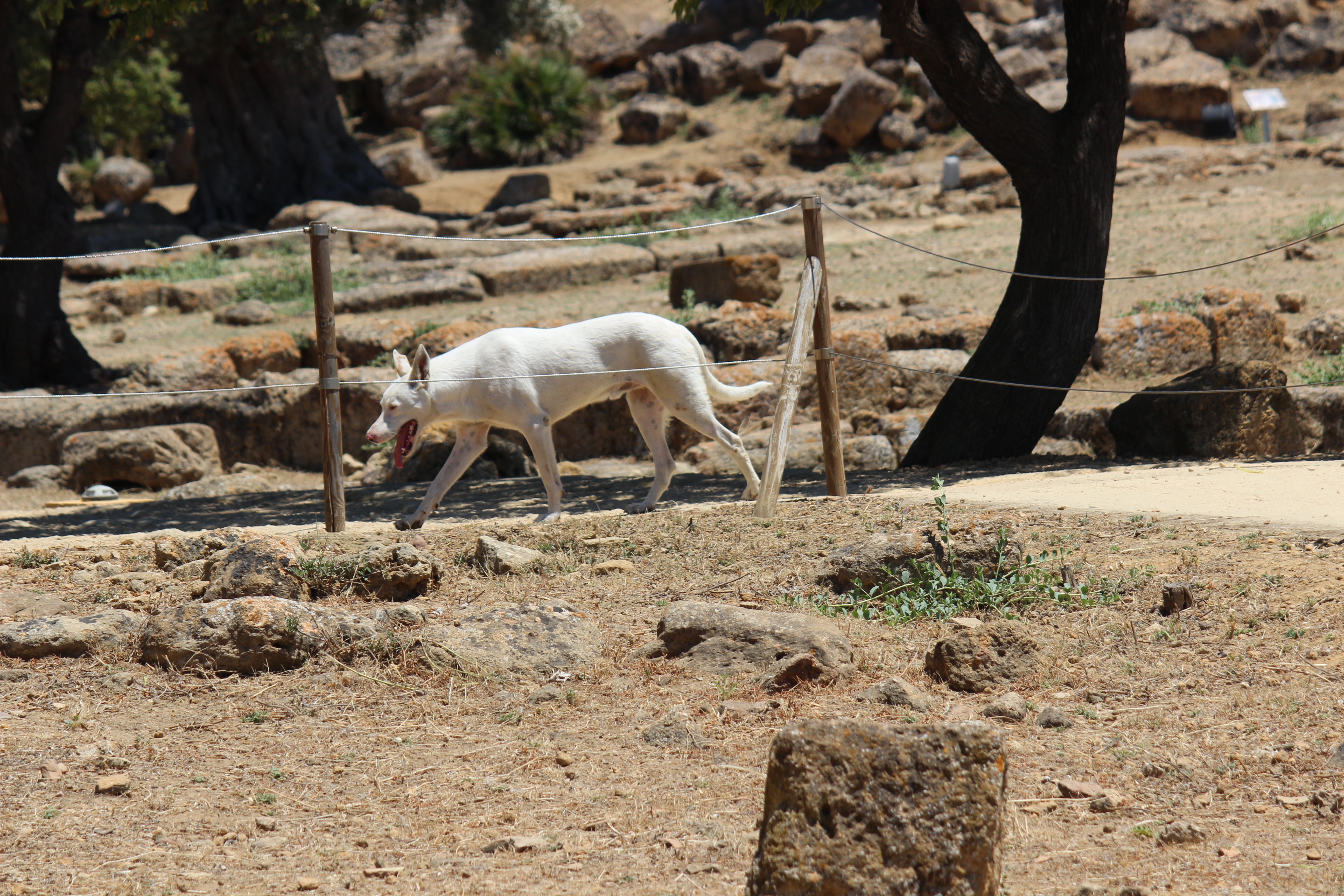


“Agrigento!” is the first word out of my mouth when someone asks me about the highlight of my trip to Sicily. Since I’ve not yet been to Greece, these ruins gave me a deeper perspective on life and a respect and reverence for the ancient Greeks. How did we get so far away from simplicity? Ok, I know their life wasn’t simple – I’m sure it was hard but what mattered to them were their gods and goddesses, survival from invaders and attention to nature and its natural resources. How can we, as a society, bridge the gap?

Empedocles (c. 492-432 BCE), who came from Agrigento, famously said of the city’s inhabitants and their easy living: ‘…they party as if they will die tomorrow, and build as if they will live for ever’. (Found on the Ancient History Encyclopedia, a fantastic website!)
Ciao for now

I’m interrupting my travelogue of Sicily to tell you about yet another fantastic paella party I hosted on Saturday. This was our 4th annual party and my mom and I decided to take it to the next level. “I saw this interesting Garcima Paella Burner at Pata Negra,” my mom said enthusiastically. Pata Negra is our local Spanish food stuffs store and also carries every size of paella pan and accessories to throw a great paella party. I returned to the store with her and fell in love with the concept. Two propane-fueled ring burners attach to a tripod. The paella pan sits on top. No more messy charcoal! Click here to see them at La Tienda.
The knowledgeable salesman saw me eyeing the packages of squid ink or sepia, I so enjoyed in Sicilian pastas. He pointed out a sepia broth that he swore would make the BEST paella ever. How could we refuse? The black broth, from the squid ink, would turn the rice black!


I love inviting guests who are eager to try new and different foods.


Here I was, trying something totally new on my 11 guinea pig guests! The entire paella prep was reduced by half by using the sepia broth. All we did was chop one onion, sauté it in a fair amount of olive oil, add the Bomba Spanish rice, stir, then add the warmed sepia broth. I stirred in a pinch of saffron (from Palermo!) and about a teaspoon of smoked paprika. Now all that was left to do was to let it steam while we prepped the seafood to top the paella.

We tucked clams, mussels, squid ringlets with their tentacles and shrimp into the cooked rice and covered it with foil for about five minutes. Mangiamo!

I think everyone agreed, this was the best paella ever. The sepia broth delivered a richness, almost as if I had slaved all day to make the perfect fish broth using fish heads and shellfish. The unusual squid ink that colors the rice black just made the entire dish more interesting and a great conversation piece!


The paella was accompanied by a gorgeous green salad, made by my best friend Jenny, and some chunks of French bread. This was a celebration for my mom’s birthday and every year she craves Pavlova as her birthday cake. The meringue was one of the best I’ve ever made. Thick, soft marshmallow meringue with a lemon creme filling, topped with whipped cream and fresh berries. Always a crowd pleaser and all the prep can be done in advance. Assembly takes about five minutes! My advice for throwing a party – keep it simple. Limit the dishes to one hearty main, a salad, bread and dessert and involve your friends in the cooking and prepping process. Don’t forget the after dinner dance party! Ours lasted until midnight!


The next time you make paella, I hope you try it with the sepia broth. You will thank me.
“When you hear a Spanish cook describe a paella or a cake, you realize she’s using a much richer repertoire of adjectives than what one of us would use to characterize a book or an important experience.”
― Julio Cortázar, Final Exam
Ciao for now!


A Pistachio Inspired Pranzo
A review of Il Fiorentino, Bronte, Sicily
Another lovely blue-skied day in Sicily. Today’s adventure and culinary find takes us from the aquamarine sea to a mountain top and then half-way down the other side. All this to reach our lunch (pranzo) destination, Il Fiorentino, in the paise (village) of Bronte. Bronte is well-known for its pistachios grown in the foothills of Mt. Etna. Sicilians take pride in this regional nut, claiming the minerals from the lava in the earth give the pistachios a special richness and intensity to their flavor.
It is a Monday and most eateries are closed on Mondays. Roberto called ahead to double-check and the owner replied, “Si!, viene!” Winding curvy roads, with views that resembled the Rocky Mountains, the terrain suddenly dips down into vast open meadows filled with colorful cows and even llamas. Around another corner and Roberto immediately swings into a street parking spot right in front of the restaurant. Arriviamo! We walk through the beaded curtain entrance and are greeted by Pino, the owner. A warm, fuzzy feeling takes over, like I am entering a friend’s home, someone who has lived here for a very long time. The room’s light comes only through its windows. Old memorabilia line the walls and shelves while crisp, white tablecloths anchor the maybe 10 tables. Charming. As it happened, Il Fiorentino is closed but Pino opens just for us! We will have a private pranzo, cooked to order.
Interior of Il Fiorentino, Pistachios are their specialty!Pino is a small man, maybe mid 60’s, conservatively dressed in a shirt and buttoned up v-neck sweater, wearing a closed-lipped grin. He hands us menus but Roberto clearly knows the ropes and orders for both of us. A bottle of water and a carafe of red wine are placed on the table and the feast begins.

A trio of caramelized onion, pomodoro and herb bruschetta sets the tone for the meal. Roberto orders a primi of antipasto to share. An abundance and variety of textures and colors activates my taste buds. Caponata, green beans, home-cured salami, local olives and caciocavallo cheese, fried potatoes and two kinds of stuffed and fried squash blossoms fill every corner of the plate. I first dig into the fried, mozzarella-stuffed squash blossom, its cheese oozing all over my fork. The salty, melting warmth brings forth a squeal of delight. Pino’s grin widens as he watches me eat with such pleasure. I enjoy the local caciocavallo cheese so much, he returns with another large slice and sets it next to me. So sweet.
Il Fiorentino’s menu offers two kinds of their specialty pasta with pistachios, “Casarecci al Pistacchio.” It is a warm day and Pino suggests the “red” pasta with tomato, eggplant and onion for me. Roberto likes the “white” pasta in a light cream sauce. The presentation in beautiful Sicilian ceramic bowls make this experience extra special. Both dishes are heavily dusted with freshly chopped pistachios. Pino makes sure I understand that he has picked and shelled these pistachios. I eat slowly, savoring every bite. When I reach the bottom of my bowl to scrape every last morsel onto my fork, I am greeted by a smiling sun face! It was if she is saying, “I’m glad you enjoyed me so much!”


Our plates are cleared away and Pino asks, “Would you like some cherries?” Certo! A bowl of just picked and perfectly ripe burgundy beauties is placed between us and we eagerly bite into the juicy flesh. Pino is obviously still enjoying our display of delight with his food.

Il Fiorentino’s specialty dessert is pistachio gelato served with pistachio cake. Even though I am feeling pasta-full, I cannot resist dessert. I take a scoop of the intensely flavored, nutty gelato and smear it on top of the cake to eat them together. Ice cream and cake! I especially love the moist cake with a slightly sugar crunch on top. My pastry mind is putting the ingredients together. Meringue? Flourless? So enamored with the cake, I ask Pino how it is made. He shrugs his shoulders and then leads me to the kitchen to meet his wife, Franca, who is the star chef of the restaurant. Delighted by the compliment, she eagerly shares her recipe with me. I am overwhelmed by her kindness.

For me, this is the definition of a great dining experience. Besides fantastic fresh food, it’s the warm hospitality in a comfortable home-like setting. Mostly, it’s Pino and Franca who so lovingly share their livelihood, that forever will endear me to Il Fiorentino. If you are ever in Sicily, do not miss the opportunity to dine with them!
Here is Franca’s recipe for the Pistachio Cake.
Glossary of Italian words used in this story. Your Italian lesson for the day!
Pranzo – Lunch
Viene – Come, come in
Arriviamo – We have arrived.
Primi – First course
Certo – Certainly
Pomodoro – Tomato
Paise – Village
History of the Bronte Pistachio
Interesting article in the New York Times about the Bronte Pistachio
“One cannot think well, love well, sleep well, if one has not dined well.”
― Virginia Woolf, A Room of One’s Own
Ciao for now!

Sicilian Pistachio Cake
As a former pastry chef, I am constantly on the quest for beautifully crafted and tasty pastries and of course, gelato. What I saw and tasted in Sicily really wowed me and delivered an unexpected surprise. Very similar to beautiful French pastries, only using more of what mother nature locally provides, like pistachios, almonds and citrus, from this sunny island. I thought I’d share a few photos I took of the diversity of Sicilian pastries to make your mouth water or to perhaps inspire your next creations. Be sure to check out the photo captions for links, or use these, to learn how to make cannoli, semi freddo, marzipan, and brioche.


Did you see something that inspired you? Some of these pastries are truly imaginative! I think a Semi Freddo will be my weekend project!
“All of Sicily is a dimension of the imagination.”
Leonardo Sciascia
Ciao for now!

I’ve tasted some pretty incredible things on my world-wide travels but did not expect for Sicily to offer foods that almost made me speechless. Seriously! Fine pastries in France, fresh seafood in Australia and robust goulash in Budapest all stand out as epic food experiences. What great Sicilian taste made my heart beat a little faster? Granita. If you have ever tasted Sicilian Granita, you understand. If not, it’s worth the trip just to find out – and fall in love.
The warm morning after I arrived in Catania, my host and guide Roberto announced, “You must have a granita for breakfast.” Many “bars” (our version of a coffee shop), offer coffee, pastries and granita for the morning’s greeting. My first introduction to granita made me a true believer in the seduction of Sicilian food. If this was the first of many local foods that made my body quiver with lust for more, how many more Sicilian specialities were on this gorgeous island?
It’s not easy to describe granita but I’ll try. Creamy (although there is usually no dairy), fluffy, cold, melt-in-your-mouth, and flavor intense, not sugary sweet. It is not formed with a scoop, like a sorbet, but served a little slushy. It’s made with fine flakes of ice frozen together with sugar and fruit. Other flavors may include almond, pistachio, coffee, or chocolate. Most bars serve almond, a favorite, coffee, lemon, pistachio and strawberry. This is a Sicilian ritual for breakfast when the weather heats up, accompanied by a warm brioche or other delectable pastry.
At the Bar del Santuario, my favorite stop for granita, you saddle up to the counter and order your choice of granita and pastry. Then choose an outdoor table overlooking a lovely park, alive with people and a flowing fountain. A handsome, well-groomed server brings your granita in a stemmed glass dish with a tiny spoon, a plate with your pastry and a glass of water. The only distracting thing on the table – an ashtray. You pay at the cashier inside only upon finishing your breakfast. Two granite and two pastries cost about 5 Euro or $5.75. Yes, the delicious food is much cheaper than the rest of Italy. Affordable for all, locals and tourists alike.

Mandorle (almond) with a shot of espresso on top became my fast favorite. Silky almond and sharp contrast of espresso was the perfect marriage, destined to last a lifetime. “Roberto! I want to eat this everyday for the rest of my life!” My emotional side was taking over. The mandorle is made with freshly extracted almond milk, almonds being a key ingredient in many Sicilian foods and also a major player in the agriculture scene. Each day I tried a new pastry to go with it. Buonissimo! (So good!). So addicting is granita that my day just wasn’t right without this starter.

During my two weeks in Sicily, I tried many flavors of granita. Gelsi, or mulberry is a seasonal specialty, and its dark eggplant color mirrored its deep berry flavor. At Caffe Sicilia in Noto, I tried strawberry tomato granita, with a color of rhubarb. Sounds strange but somehow the tomato just barely tames the flavor of the strawberry, pushing forth really ripe tomato for balance that is indescribable. When I asked the person next to me in line which item was his favorite, he quickly replied. “Strawberry tomato granita!” So I was not alone.

I was surprised to learn that Sicilians rarely use ice. No ice in water. And to cool iced tea – what else? A scoop of lemon granita. Exquisite!

My last day in Sicily, I tried half strawberry (with fresh local berries) and half pistachio. Equally yummy. All fruit flavors are made strictly with fresh fruit of the season. I know you can make it here but it will never match the homemade quality and intensity of flavor only found in Sicily.

Yes, I would return to Sicily for the mere pleasure of savoring granita from coast to coast. Sicily – this one’s yours to keep!
For a fun background and history of granita, please visit Citi Map Sicilia on Granita
Ciao for now,

Oh no! Suitcases! I sigh. Long stress yawn. I hate suitcases so much, my anxiety kicks in big time. It means you are going away. Pouting is my favorite way to instill guilt and boy, does it work!
Wait! Are you packing my leash and my bowl? Does this mean – really? Oh boy, oh boy! Let me in the car and close the door, quick! The car is really full of stuff and my dog bed is lining the back seat. Where in the world are we going? My Grammy gets into the car too. My curly tail doesn’t allow me to really “wag” but I can shake my butt and wiggle with glee. One happy boy! The pack, all of us together. I am excited but nervous. We dogs live for the present and every day is a new adventure. I LOVE adventure but the roar of the engine causes me to slip into a dreamy sleep.
When I wake up from my nap, we stop for my pee breaks and the air feels different – drier and hotter. The heat carries the smells of my mom’s herbal garden: sages, rosemarys, fragrant wood. Hmmmm. Thirsty, thirsty. The rough, gravelly dirt is prickly on my sensitive paws. I hop back in the car and am blasted with cool air. Hey, I know it’s hot outside but this temperature switch is killing me! Turn down the A/C guys! I crawl onto the floor behind the seats for relief.
My ears! Something feels different. There’s pressure in my ears and it hurts. I am yawning way more than usual. Please open the window, even a crack!
Mom keeps talking about mountains. The landscape is flat with big mountains in the distance. We finally stop and the suitcases come out. Grammy tells me we are in Flagstaff. This isn’t our home! Why are we here? I really am a creature of habit! A homebody! I know all that stuff I said about living in the present. I take it back. I’m not used to being out of my comfort zone – my sweet backyard with cool grass, a shady patio, the occasional possum to kick my prey drive in gear.
All these noises in this Flagstaff backyard spook me. My barking mechanism is triggered with the crack of a twig. I am in protection mode for the pack. It’s my job and I don’t take it lightly. I’m not like those Golden Retrievers who gush all over everybody. I size up a situation and am super cautious. You might say distrusting. Sometimes it takes years for me to realize people are actually my allies, like my neighbor, Sandy who I now adore. Yes, I have trust issues but it’s too late now to teach this old dog new tricks. I’m too smart to buy into any kind of behavior reform! Thankfully, Mom and Gram pet me and scratch my chest until I calm down. I quickly fall into a deep sleep and dream of chasing cats.
Cats. I’m not really sure how I feel about cats. When I spot one, my bark turns high-pitched and I whine. I want to pursue but have never really interacted with one. Once, on a neighborhood walk, I barked and pulled on my leash to get a closer look at a big, gray cat on a doorstep. Another cat, I’m sure the porch cat’s friend, jumped out from behind a bush (she must have just been waiting for someone to terrorize) and landed directly in front of me. She arched her back, raised her hackles and fur and let out a “hiiisss” like I have never heard! I got the message but the experience shattered my ego. The cat terrified me! I leapt in the air several feet backward and whimpered like a baby. I am not proud of this moment but there it is. I digress.
The next day we hit the road again. Killer temps but I manage to relax into the drive. We arrive in a town Mom calls Santa Fe. I exit the car, do my downward dog yoga pose and enjoy the cool breezes. Sniffing with curiosity, I detect anointed pee on rocks from unfamiliar creatures. Birds softly chirp and the rustle of wind in the pines unlocks bold and stringent scents. My ears are perked straight up like radar, alert, on guard, pivoting to catch any and all unique noises.
Mom sits on the porch and writes while I zen out next to her taking in the clean air where I can really pick up scents like coyote and lizard. I even think I hear drum beats. I am an old soul and very intuitive. I feel an energy of connectedness to this natural wilderness. Am I in tune with the ancients who lived here so long ago? Mom seems especially comfortable here and I hear the word “love” a lot. Sigh. Traveling can be interesting!

The altitude is affecting my appetite and I’m not very hungry. I know it’s my anxiety too. Grammy sneaks me her leftovers from the dog-friendly restaurants we go to. I love my Grammy. People in the restaurants always reach out and want to touch me – usually my head. Well hellOH-HO. Can you please be polite and ask? Did you not take Dog Etiquette 101? Ok, scratch my chest and I’m yours.
Hey wait! I’m feeling comfortable here, in the wooded forests of Santa Fe. So why are we packing up and leaving? Oh well, as long as we are all together, I’m in. A few stops later and the visuals and scents are shifting. Big, I mean really big snow-capped mountains loom, so close their energy pulsates. Boulder is the word Mom and Grammy keep telling me. I guess we’re going to Boulder. All shades of green dot the landscape. Who says dogs don’t see color? Ahhh, refreshing. I LIKE Airbnb! My paws enjoy cool grass like my backyard. My nose detects water, more pine, and that familiar smell I know so well – cats!
Every evening my mom takes me for a walk around the condo complex where we are staying. Every evening, as we turn the corner, an orange tabby cat sits just inside a small wooden patio. Every evening she waits for me (it must be love) and when she see me, leaves the comfort of her condo to strut her stuff outside along the wooden planks, almost as if she is a lady of the night in an old western town, daring me to come closer, “Come on over, big boy,” she seems to say. It’s this game we play, night after night and I quite enjoy it. Of course, I whine out of curiosity. Each time I whine, my mom gets a fit of the giggles watching us. Maybe my mom should get us a cat to play with….
Packing up again! When will this end? The drive home is hotter and at the rest stops, my mom actually picks me up to place me in a grassy area so my pads won’t touch the searing pavement. I love my mom.
Exhausted from all the new sights and sounds, I sleep away, dreaming of tall forests and scents of herbs, and gigantic mountains and my favorite dream of all – cats!

That’s my story. As my mom always says,
Ciao for now!
Sparky

This event happened in October of 2015 in Lucca, Italy. It changed my life and I wanted to acknowledge all my friends in Lucca who have opened my heart and showed me that anything is possible. The story is longer than usual so sit back with a coffee or glass of vino and enjoy.
This story is dedicated to my dear friend Davino, who showed me the real Italy, who taught me how to eat chestnuts and who had the biggest heart, always filled with love and generosity. I miss you Davino.

1947 – 2017
The Festa
A celebration of friends and food
This birthday stung. I felt like I was being propelled from the comfort zone of my “middle ages” into the “senior” zone. A downward spiral. What would mark the “age of wisdom” was otherwise depressing. We all experience milestones in our lives. I would survive.
To make this transition bearable, my mom, our dear friend Claudia and I planned a trip to Italy for late September into October. A visit to Florence, a week’s stay in Pienza and the grand finale, a week with my dear friends Angela and Davino on their comfortable farm, La Mimosa, in lovely Lucca.
As always, Lucca invited us in with open arms.
La Mimosa nestles itself into a landscape of spring mix salad greens, rolling hills, olive trees, and villas. My favorite view from the property is a stark but peaceful and eye-catching white washed convent that seems to hover, like a pair of angel wings, at the top of a hill in the distance. La Mimosa’s vast property houses two living spaces. One home for Angela and Davino and a renovated barn we three would share for a week. To me, this is the most peaceful place on earth and I was eager to reunite with my friends, their dogs Pongo and Gilda, the many cats and three donkeys that call La Mimosa home.
I’d been to Italy many times before but on this trip I would discover why I am seduced into returning here, to Lucca, even when there are so many other places I yearn to visit. The seduction was revealed during a festa, or party, thrown by Angela, Davino and my mom so I could reunite with all the friends I’ve made here the past three visits. The party would also take the sting out of my birthday. How exciting!
***
By early October, the autumn weather has shifted dramatically from warm sunshine to cool breezes. Black skies loom overhead throughout the day giving the feeling of constant dusk. The coziest and warmest room in the house is the kitchen, and, at its heart, a wood burning fireplace tucked in at waist level, delivering instant heat. An old wooden and well-worn farmhouse table sits in the middle of the room becoming the square kitchen’s centerpiece. When friends gather, it is often around this table where wine or espresso is shared and conversation flows freely. An antique meat slicer rests on a corner counter ready to deliver paper-thin prosciutto slices whose recipients are often one of the many lucky cats living at La Mimosa. Angela’s favorite cooking gadgets and appliances line another deep counter and directly above, open shelving houses plates and glasses.
In the comfort of this kitchen, Angela begins making Zuppa Verde, a traditional Tuscan bean soup with Fagiolini, a brown bean with swirls of red and shaped like a kidney. In Italy, this labor of love has many stages, the first of which is to cook the beans in garlic and sage. She then passes the beans through a hand-cranked press that extracts the skins pushing out only the inner bean. Next, Angela makes a soffritto, the Holy Trinity of Italian flavor basics: onions, carrots and celery. These ingredients are sautéed then added to the beans along with some pomodoro or tomato water. Aromas of the soffritto, which flavors the beans, steam from the tall pot on Angela’s large rustic stove, as the soup simmers for hours. Next, Angela stirs in chopped kale, swiss chard, celery and leek and the soup continues its journey building flavor upon flavor. “We have a contest here,” she tells me, “to see who makes the best Zuppa Verde in Tuscany!” Like our chili cook-off’s, I think to myself, only more sacred.
Our friend, Nico, arrives late in the still-dark day. His contribution to the festa would be homemade spinach-stuffed ravioli. We need ingredients so Mom, Nico and I pile into the car for an adventure at COOP, a large grocery store with good prices on the west side of town. Nico carefully chooses all the ingredients to make his special ravioli and we also purchase olives, jars of marinated red onions, and bottles of Prosecco to drink with the antipasti. The Italians love their coffee and with one whole aisle dedicated to this tradition, Mom finds an espresso coffeemaker to take home. She has learned how to make espresso the Italian way and so will carry forth the tradition – way to go Mom!
The rain is relentless. On the way home, Nico wants to show me where he works, at a center for learning that encompasses acres of land for group or individual gardens. Here he teaches organic gardening to children and disabled people. I can see how this is a good fit for him as he is so patient and kind. The garden is a canvas of design, color and texture. Some rows are well-manicured housing healthy, gorgeous heads of green and red leaf lettuce, spinach and arugula. On the other end of the color spectrum, scraggly bean stalks are saying goodbye to the season. A few aging eggplants still hang on. Nico explains, “This is not only a garden for the center, but the community can use it too for the small fee of 10 Euro a year.” Nico knows all the families, which plots they have and advises them on organic gardening methods. An Armenian family has even created a large coop for chickens and turkeys. Nico points out a giant white “Cinderella” pumpkin making an appearance in an open field. Nearby, a pergola houses hanging gourds of all shapes and sizes. We duck inside from the persistent rain to be semi-sheltered. The long hanging gourds almost form a curtain in the doorway. Some gourds look white-washed with their necks stretching three feet long. Some are deep green with a skin painted like a watermelon and oblongated bodies, perfectly shaped by nature. One must weigh 10 pounds and still hangs proudly on its sturdy vine. We traipse through the beds, picking various lettuces for the party and nibbling the spicy, fresh baby arugula. I am enchanted by this special place, this little microcosm of nature outside of Lucca, like a painting with rotating artists creating their own picture, year after year.
We return to La Mimosa around 5pm to begin making the fresh pasta. Nico proudly shows off his culinary skills by cracking the eggs into the flour to make the pasta dough, and Mom, his eager understudy, rolls the dough into long sheets in preparation for the ravioli. Angela pours us all a glass of their house-made red wine and takes a break from cooking to share her zuppa recipe with me. Then, with Nico’s guidance, I make the spinach filling for the ravioli. This filling is an Italian variation using half cow ricotta and half pecorino ricotta which give it a pleasantly tangy flavor. In a large sinkful of water, we clean, then blanch the abundance of fresh spinach we’d plucked from the community garden. Yes, we will have plenty of filling! We roll the pasta dough into six long wide strands and then dot three of them with the perfectly seasoned spinach, ricotta and parmesan filling. Another pasta layer is carefully placed on top and then gently sealed with fingertips to hold in the filling. “Which ravioli cutter should we use Nico? The big one?” I ask. “Use the small one,” Angela chimes in as she stirs the Zuppa. “We could use the wheel to make squares,” Mom comments. Nico was set on round. So small round it was.
Pasta dries quickly in a warm kitchen so we add pressure to cut through both layers of dough. A dusting of flour on top and voila! we have a finished product. The dough does not make as many ravioli as we project to feed 15 people. Considering all the food that would be served, I think we will have plenty, but the good Italian, Davino, wishes copious amounts of food for his guests. “When Italians are invited to dinner,” he reminds me, “they expect to be fed well.” No cocktail parties here! Yes, a feast, an Etruscan banquet this will be. We share a light meal with Angela and Davino before heading off to bed.
Friday – Festa Day
In the early morning, Mom and I drive to the seaside town of Livorno to purchase olive wood products for my olive oil business. The rain has not let up and is actually even more deliberate in its full throttle shower. The drive is exhausting and I need a nap.
Soon Davino is at the door, asking me to go with him to pick up the sausages for tonight’s festa. The weather is behaving brutto-ugly with angry booms and cloud bursts of torrential water. Onward we drive, winding in and out of country roads, making our way to his friend’s machelleria or butcher shop. Tucked away down a tiny, rural road is a short driveway and a small store front, the butcher’s living accommodations upstairs. Davino says this is how they can make a decent living, by having their shop in their house. The butcher and his wife, a handsome couple in their 60’s, dressed in their matching white aprons, stand proudly behind the small counter. Davino chats away with them, sharing the stories of the day. I watch as the butcher cuts the sausages from a long string, counting out 35 or two per person. How can we possibly eat all this food? The cost is 29 Euro, not bad for freshly ground, fat, pork sausages. Another slice of life in Italy. Doing what you love, even if it means living upstairs from a room of animal carcasses!
We return home and Davino insists that my mom goes with him to pick out the pastries for the party. He tells me I can’t go. “But pastries are my thing!” I whine. “No!” Davino says with a smile. “Only your mom and I!” They will drive to Davino’s home town, nearby, and meet his sister, the baker. I learn later that they are picking up my birthday cake and didn’t want me to see it before the party. My mom returns with stories of Davino’s home town and a glimpse of his past life. I think they really bonded!
I wander over to the main house to see how the preparations are going. Nico is busily poaching the ravioli and a pomodoro (tomato) ragu, to accompany them, bubbles on the stove. They look divine. Davino teaches me how to use the large, antique slicer to make thin salami slices for the antipasti. Nico prepares a gorgeous Mediterranean farro salad with beans, mint, tomato and onion. I place this in bowls and set up the antipasti area in the next room before going back to the barn to change my clothes. I wish I’d had something more appropriate to wear but had not packed for a party. The weather has shifted, fall is early and all my dresses are sleeveless. I put on my garnet-colored sweater and matching tank, some eye makeup, my favorite dangle silver earrings, rose-colored lipstick and now am ready to meet and greet.
Annalisa, Angela’s painting friend arrives first, followed by Mattia and Michelle, the incredibly talented opera singers I had stayed with the year before. Simonetta and Federico, Mattia’s parents whom I had met last year at their Vendemmia (grape harvest) came next and then Antonio, a well-regarded Tuscan painter, Liliana, his dentist wife and their daughter, Francesca, a concert pianist. The two Germans staying in La Mimosa’s studio also join us. A diverse, educated and artistic crowd will make for a lively evening. It is a quiet sort of mingle for the antipasti. Everyone gathers in the living room for Prosecco and Nico’s delicious farro salad. Soon Angela calls us all into the kitchen for La Cena. The kitchen table is flanked by two more tables creating a dining space the length of the room. A white tablecloth, white plates and simple white cotton napkins line the table along with carafes of Tuscan red wine. The food is to be the centerpiece. The fireplace roars with crackling wood, filling the room with warmth.

Presentation is everything. Angela lines a very large green ceramic bowl with day old bread slices, spooning the steaming Tuscan soup, Zuppa Verde, on top to soften the bread. Fantastico! From this bowl, she then scoops out some of the bread and ladles the hot zuppa on top into individual bowls for the guests. We all complete the zuppa with a ritual drizzling of Italian extra virgin olive oil. There is a hush and the only sounds are of spoons clanking the sides of the bowl scooping out every savory, creamy drop. The bowls are cleared away and new ones appear. Soon Nico’s ragu-baked ravioli are placed into the bowls along with a slice of thin, meat lasagna. It turns out Davino didn’t think there would be enough food so bought a beautiful homemade meat lasagne just in case. I am already getting full. Our ravioli are bursting with the delicate spinach and cheese filling and every mouthful dances on my tongue.
Listening to the various conversations is challenging since everyone is speaking in Italian but I manage to understand quite a bit. Mattia is clearly the entertainer, making everyone laugh and occasionally bursting out into song. His wife, Michelle, obviously adores him and enjoys bantering back at him. Antonio is a quiet and serious man with a big heart. I imagine him constantly creating a new painting in his mind’s eye. I hear him chiming in to comment, adding only a few words here and there. He is mostly focused on the food and like any artist, appreciating, with gusto, Angela’s masterpiece of the zuppa.
Angela comes alive, leaving her soft-spoken self and with animation, recounts a recent news story of people in Austria (her home country) trapped and locked away in a house for years. She has the entire table under her spell. It is a time to continue the digestion before more food.
Again, Angela clears away bowls and fresh plates arrive. She must have a magic replenishing cupboard! While we devour the ravioli, Davino is busy grilling the fresh salsicca (sausages), over the open fire in the kitchen. A cat appears and rubs up against my leg. He apparently smells the meat and invites himself to the party. The hot, aromatic sausages are delivered to each guest by Davino. How could I possibly eat more? But every bite tastes so good! Still the food keeps arriving. It is a dream I never want to end.
Earlier, Nico and Angela prepared fagioli, beans, simmered with copious amounts of garlic, onion and sage. So rich in flavor, I could eat these everyday. This is the accompaniment to the sausage. Dio Mio! By this time, my stomach is swelling out of proportion. Thankfully, after this course, we all retreat upstairs for some entertainment.
Francesca, Antonio and Lilliana’s 19 year-old daughter, is a classically trained pianist and treats us to a Beethoven concerto. I am mesmerized as her slender fingers slide so easily over the keys, making musical notes leap into the air. It is a masterpiece only to be understood by those of us lucky enough to be present in her company. Mattia and Michelle sing “Ol Sole Mio” and with gusto, everyone sings along. I have goosebumps. How can an evening be more perfect? I am about to find out.
I follow the rest of the guests down the stairs and back into the kitchen. To my surprise, the kitchen is dark and on the table sits a large gorgeous cake with “Happy Birthday Mary” written on it. A tiny firecracker sizzles and I blow out the candle that read “60.” Everyone sings Happy Birthday. It is beautiful and I feel a surge of love for these Italians who have become my family. This outpouring of food and genuine well wishes is overwhelming. I make a wish (to someday live in Lucca!) and cut the first slice of “Svoglia.” The cake is a giant Napoleon. When Davino ordered the cake, from his sister’s bakery he asked for a cake for 15 people. Instead, he got a cake for 50 people! A thin cookie crust creates the base, followed by layers of puff pastry, then panna (cream) and a thick layer of dark, gooey, delectable chocolate pastry cream fills the center. The entire cake is frosted in whipped cream with pretty flowers piped decoratively along the edges. A pink rose garnishes each corner. It is fantastico!


Davino loves gelato and no party is complete without it. After cake, he brings out his four favorite flavors: Hazelnut, Pistachio, Chocolate and Cassata. I am ready to explode. Oh, all this with more Prosecco.
Nico, who is sitting next to me, gets up and presents me with a beautiful white bag. Inside is a bottle of perfume encased in a gold and white box. I am stunned. “Nico, sei troppo gentile.” What a sweet, sweet gift from this gentle man. Michelle then stands up and comes back with another white bag. This one holds a tiny dark blue bag closed with raffia. Inside are a pair of silver earrings studded with two rounds of emeralds. “Bellisima!” Again, I am almost in tears. This outpouring of love and gifts is almost too much for this person who is so unused to attention. The group cries “Speech, speech!” With Nico whispering in my ear, the Italian words I want to convey, I thank my guests for coming, express gratitude for their friendship and then say “Amo i miei amici Lucchese!” I love my Lucchese friends. Everyone claps and the chatter returns.
I sit in between Nico, who speaks English, and Simonetta, who doesn’t and try desperately to carry on a conversation with her in my intermediate Italian. She is a fabulous cook as well as an accomplished Flamenco dancer and I love her confidence and style. She has made my favorite Italian dessert, her specialty of Semifreddo, an Italian frozen mousse. We don’t even get a chance to eat it – we already pushed the gastro limits beyond capacity. It will wait patiently to be appreciated the next day.
I have an epiphany at that moment. Italy itself is oozing out of this table, like a tube of oil paint and with each squeeze and stroke of the brush, coloring the event with art and artists. Everywhere, art is complementing art. I am surrounded by artists all in their own right. Three fine art painting artists, two opera singers, one concert pianist, one European architectural restoration artist, one dancer, three cooks, and one garden expert and historian. This is Italy. Living, breathing, art. I am a part of this art, drinking in all its humility on one side and its ownership on the other. It has taken me years to fully grasp this concept even as “art” keeps singing in my ears.
The evening is ending and I say goodnight to all. I will always remember this very special day and how my mom, Angela and Davino planned the perfect surprise just for me. That night as my mom and I lay in bed, she tells me how she had planned this party back in March as soon as she knew we were coming to Italy. She wanted me to feel happy and loved after the year of struggle and ill-health I experienced. I am learning to accept love and attention. This is a start. I am so grateful for my mom and all the friends who truly care about me. Lucca is a gift and a treasure and I cherish every moment I am here to experience her loving arms and joyful vitality.
Ciao for now,

Place: Pulignano a Mare, Puglia, Italy
The True Italy
The pistachio gelato I had just consumed made me sleepy and I headed back to our beautiful white-washed hotel overlooking the ocean. As I turned the corner, a group of young men waving Italian flags gathered in front of a life-size statue of Domenico Modugno, the Italian hero who wrote the iconic song, “Volare.” At first it looked like a political rally until in unison, they all broke out into song and with gusto sang “Volare” for all the town to hear. So moved by this experience, this respect and outpouring of admiration and Italian pride, their voices seemed to silence the waves of the Adriatic Sea, crashing behind them.
This joyful group might have represented the entire country of Italy and their joy of singing and life. Volare is now one of my favorite songs and I never, ever, tire of hearing it and singing along.
Be sure to listen to Domenico belt it out on The Ed Sullivan Show, 1958.

Ciao for now!

When the rhubarb arrives in my small local grocer, late spring, it’s like a mid-year Christmas present. I don’t know where I got this fondness for rhubarb but it does seem to be a fetish of mine.
Years ago, I remember having dinner in a rural cafe in Hamilton, Montana. You know, the old-fashioned kind of cafe/roadhouse where when you walk in, the selection of freshly baked homemade pies in a glass case next to the cashier, catches your eye. That evening, the case was sparse with a few slices of chocolate cream pie, apple pie and one lonely slice of rhubarb pie. My friend Cami, also a rhubarb fan, and I were set on sharing this sweet favorite after dinner. When it came time to order dessert, we watched as “our” slice of rhubarb left the case, only to be delivered to the table next to us. “Oh no!” we both cried in unison. The person about to dig in looked up and saw our dismay. He kindly stood up and walked the rhubarb slice over to us and sat it down on our table, giving up his slice of heaven so we could have ours. An act of kindness I will never forget, and a memory Cami and I will always share, giving us a good giggle always!
As I still carry a torch for rhubarb, my heart leapt a little when I spied the tall ruby stalks, neatly lined up next to the lettuce in the produce department earlier this week. Immediately my mind began imagining how I would honor this humble and often neglected vegetable.
Last year I created my Rhubarb Almond Meringue Cake. A stunner, definitely for a special occasion. This year I am simplifying. The stars in this recipe: a pâte fine sucrée (sugar crust) from Jacques Pepin’s book, “A French Chef Cooks at Home,” a compote of rhubarb, strawberries, lemon and sugar, and vanilla ice cream.
For those of you who have never tasted rhubarb or think it tastes like something else, give this a go. One of my friends who happened to be over when I was making the compote, said she didn’t think she’d like it because it would be bitter. I gave her a spoonful to try and then she asked for another, larger spoonful!! Sold!
“And the birds sang their songs of love. And the flowers serenaded with their sublime fragrances. And the whole world fell in love in spring!”
― Avijeet Das
Ciao for now

Welcome to my new blog site! I have a new name, Spoon & Suitcase, that reflects my passions for eating, cooking and travel. I really like it and hope you do too! I’ve categorized my recipes, stories and travel information to make it much easier to access. Also new is a “print” option for the recipes.
Take a look around and let me know what you think. I am grateful for you, my readers, and love writing about my cooking and traveling adventures. In June, I’m off to the island of Sicily, complete with my tour guide and fratello Roberto, a native Sicilian who is featured in a few of my stories. I’ll share all the great little Sicilian haunts that are local favorites!

Ciao for now!

Pears have this seductive quality about them. They flaunt their curvy hips and hold their stem high, like wearing a tiny crown. Their taste and texture, soft, sweet and flowery, almost melts in your mouth. Rustic, yet delicate describe the Bosc variety, my favorite for poaching and making tarts. They hold their shape and don’t disintigrate into mush. A brown, weathered-looking skin, like years of overdoing a suntan, distinguishes them from the rest of their pear family.
During the winter, I make wine poached pears and serve them after a hearty meal to bring a lightness to dessert. Deep burgundy sings of the holidays and is a show-stopper with little effort and can be made ahead. Dust them with powered sugar to give them a festive feel.
The leftover wine can be used to make Glugg, a Swedish hot wine drink, perfect for sipping beside the fire.
“There are only ten minutes in the life of a pear when it is perfect to eat.”
― Ralph Waldo Emerson
“Oh to be a pear tree – any tree in bloom! With kissing bees singing of the beginning of the world!”
― Zora Neale Hurston, Their Eyes Were Watching God
Ciao for now!