Hello my friends and long-time readers of my adventures on Spoon and Suitcase.
I have moved my stories, recipes, and travels to Substack. Please follow me here:
You’ll find the same content, only better!
Ciao for now and see you on Substack!
Mary
Exploring life through food and travel
Hello my friends and long-time readers of my adventures on Spoon and Suitcase.
I have moved my stories, recipes, and travels to Substack. Please follow me here:
You’ll find the same content, only better!
Ciao for now and see you on Substack!
Mary


Fruit trees have this miraculous ability to produce a delicious edible from a single blossom; however, pomegranates do it with more flair and panache. The drama unfolds as orange orbs open to delicate squash blossom-like blooms that eventually form a deep scarlet, leathery skin packed with tiny ruby-jeweled seeds, perfect for the beginnings of a seasonal martini.
My tree produced over 100 pomegranates this year, so besides juicing them for drinks, I de-seeded them for salads and made pomegranate jelly, something I started doing in my teens to give away for holiday gifts.
Even as the pomegranate season draws to a close, with most of her leaves fallen and naked limbs exposed, she retains her dignity—like Persephone retreating within—waiting until spring awakens her once again with gifts of tender budding greens. I try not to play favorites, but can you tell how much I love my pomegranate tree?


To celebrate this transitional season, I juice the seeds, a labor of love, and make a tart libation. My pomegranate martini is infused with fresh juice, gin or vodka, orange liqueur, and a splash of lime juice. Divine.
This sipper makes a colorful pre-Thanksgiving dinner cocktail. I love the glamour of the straight-up martini. You can make a batch for a crowd by combining the juice, gin or vodka, liqueur, and lime in a pitcher and chilling it until ready to drink. Pour it over ice and add sparkling water or white wine.
Treasure times with family and friends and celebrate togetherness with good food and drink!
Makes one martini
Some may feel intimidated by the amount of juice you need to squeeze. Never fear. I have found the easiest and most efficient way to juice a pomegranate is to use an electric juicer, like you’d use for oranges. Wear an apron because the red liquid will squirt onto your clothes, countertops, and elsewhere, but you will be rewarded with plenty of juice. This recipe calls for equal measures of juice and alcohol. Feel free to increase the gin or vodka to two ounces with the same amount of pomegranate juice.
1 ½ ounces fresh pomegranate juice*
1 ½ ounces gin or vodka (I prefer gin)
½ ounce orange liqueur, such as Solerno (a Sicilian blood orange liqueur), Cointreau, or Royale Orange from France (my favorite for its orange peel flavor)
1 tablespoon fresh lime juice
1 thin lime slice for garnish
Fill a cocktail shaker halfway with ice.
Measure and pour the pomegranate juice, gin or vodka, orange liqueur, and lime juice into the shaker.
Shake, shake, shake. I usually do about 25 shakes.
Strain the mixture into a martini glass and garnish with a lime slice.
Sip and savor.
* Feel free to substitute bottled pomegranate juice.
Fun fact: I was curious to know how many seeds were in an average pomegranate. My research revealed anywhere from 600 to 1400 seeds, depending on the fruit size. Who took the time to count all those seeds?
The seeded juice is prized as an antioxidant, anti-inflammatory, and vitamin C elixir. Plus, it’s excellent for brain health. In Sicily, pomegranates are stacked high in pyramid form and juiced on the spot for a refreshing drink.
Eat a pomegranate and visit a bath; your youth will haste back. Ancient Egyptian proverb.
Ciao for now,


This post continues my southwest road trip in June with my mom, planned around trading posts and Canyon de Chelly. We discovered many new sights in our six days and are discussing another road trip next May!
After a night in Flagstaff, the adventure begins as we head north on Highway 89 along dusty roads with views of tall, striated red rock and the occasional Navajo homestead. Our intention to visit old trading posts is disappointing. Many posts marked on the map turn out to be deserted, boarded up, and standing alone in the vast expanse of wide-open country. A lower story for selling goods, an upstairs home, and a corral for horses and sheep—all abandoned. This scene is played out many times along our route. I wondered if COVID had shut off tourism, forcing closures and sending tourists and locals to the bigger cities and posts.

Our first stop, Cameron, is a significant trading post with a sister gallery next door. The gallery houses exquisite Navajo rugs—some with price tags of $40,000—large kachinas, pawned jewelry, beaded knife sheaths, and authentic deerskin outfits. The gallery is more like a museum and laid out like a house with small rooms of artistic work for sale, most likely for serious collectors. This gallery is a true gem, an appreciation and tribute to Native American art, old and new.


Do not miss this gallery when you travel through Navajo country.

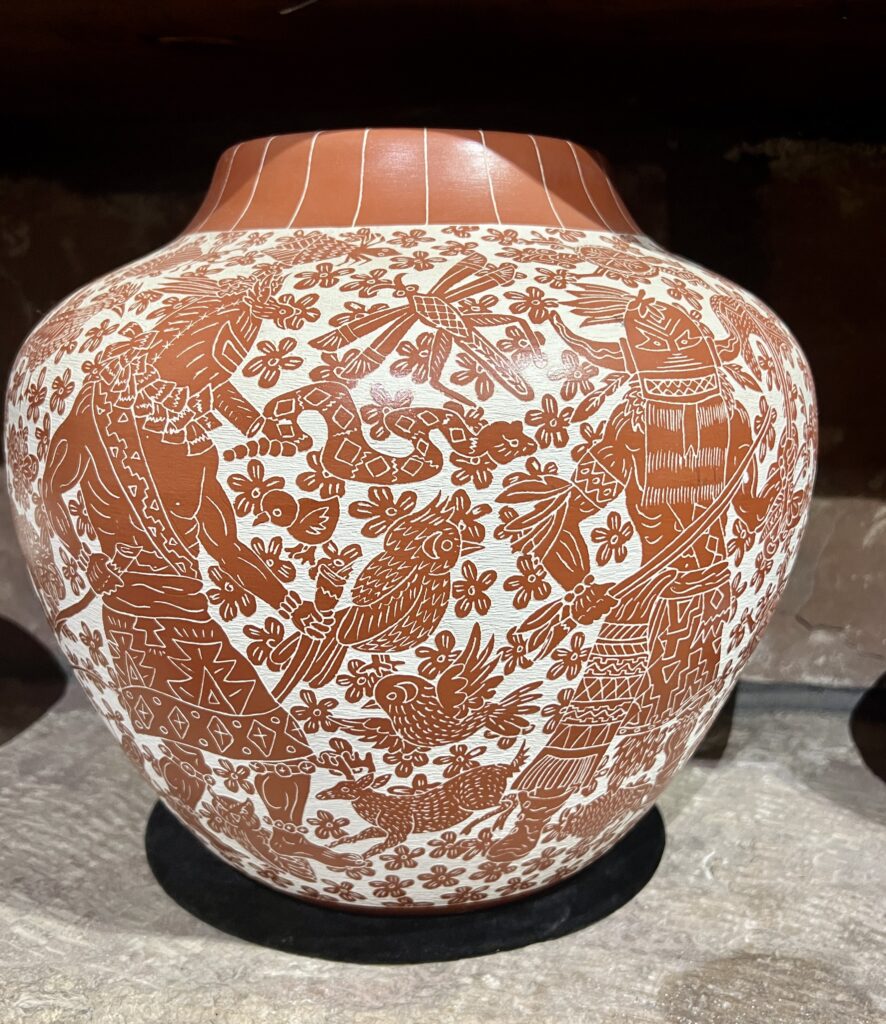
Visions from the past at Cameron’s Gallery Trading Post
My mom’s discovery of the history of a Hopi bracelet she wears daily was a highlight of our trip. In her words, she tells of her extraordinary experience at Cameron Trading Post:
It was February or March when my Hopi bracelet began talking to me. I have worn it most every day and night since I purchased it in 1959 at the Grand Canyon National Park. It is my signature. I often wondered about the Hopi artist who stamped his crossed arrow signature to the inside of the inlay silver cuff bracelet. Maybe this trip was my opportunity to find the mystery artist. I struck gold in the Cameron Trading Post. Alan, an expert in Hopi jewelry, took my bracelet and, with a magnifying glass, looked at the marking inside. He then produced a book about Hopi silver, and there it was! Wallie Sekayumptewa of the Reed clan in Hotevilla-Oraibi Shungopavi, 1948. Wallie was enrolled in a class on Second Mesa, for WW II veterans to learn silver smithing, which became his life-long occupation. Since I have worn this piece every day for many years, I now feel a kinship with those who inhabited our land centuries ago. This was the highlight of the trip for me! Mystery solved.
Further north, now on Highway 60, Monument Valley looms in the distance. To our right, a carved statue of a woman rises above the mesa. She isn’t really carved, but the red stone rocks resemble a Navajo woman with her full-length dress and long hair in a bun. I can’t take my eyes off her but must watch the road. The towering buttes come closer and closer. My mom says one cluster is a family of brothers and sisters. Some giants stand alone, commanding the spotlight; others are an organized lineup. We pull over and snap photos under a deep blue sky and perfectly formed clouds of white puffs. Dazzling and dizzying, the intense contrasted colors seem painted—but by whom? No wonder I find inspiration here in an uncluttered landscape of nature’s beauty.


Windblown at Monument Valley.
We veer east and connect to Highway 160, the Najavo Trail. This route will take us to Chinle and into the heart of Navajo country. Chinle and Canyon de Chelly is our base for two days as we explore nearby trading posts. I have always admired the tightly woven, muted greys, creams, and blacks of the Two Grey Hills Navajo rugs. Located in Newcomb, New Mexico, just across the Arizona state line, the trading post is about as far off the beaten track as possible. This isolated stop has served as a general store and community center for Navajos and a few determined tourists like us for over one hundred years. The drive from Chinle to Newcomb is worth it alone, climbing high into the mountains with gorgeous pine views before dropping into the barren and flat desert. We had studied the roads, and just when we thought we were lost, Two Grey Hills appears, looking deserted with nothing near for miles except for wild horses and wandering reservation dogs. I begin to worry when I notice no cars in the parking lot, and on closer inspection, a sign on the door says the owner could be reached by phone if we wanted to visit. I call the number, and a pleasant man says he was in Farmington and would be back in three hours and open the rest of the week. Unfortunately, this would not work for us, so I thank him, and we retrace our journey back up the mountains to Thunderbird Lodge. I hope to return next year to see this icon establishment.


Two Grey Hills Trading Post and wandering visitors.
I rise early at the Thunderbird to catch the sunrise over the canyon and experience pre-dawn activities. A hint of soft pastel streaks across the sky. The still cool air smells of pine and scrub brush and hay. A few crows caw out a hello and are joined by songbirds announcing the start of a new day. The world wakes up as the clouds transition to deeper yellow and pink. I spot a light-colored horse resting in a pasture. She sees me admiring her and stands up, shaking off the night, her mane swaying from side to side. Two dogs appear out of nowhere and trot down the dirt road toward the Thunderbird; I assume looking for breakfast.


Mom and I share a blue corn pancake in the lodge café and discuss our day. Instead of heading south into Zuni territory, we alter our route and point toward Ganado, home of Hubbell Trading Post, and then travel up to Second Mesa. I love how we both are spontaneous and don’t feel we must stick to a pre-arranged plan. Note: The trading post at the Thunderbird Lodge is fantastic! We found many artifacts (we had to have 😍) at very reasonable prices. Yes, we collect Native American art with abandon.


The drive south is a straight line ahead, with red buttes dotting the landscape. In an hour, we drive down a long dirt road and arrive at an old stone building, part of which is the trading post. Don Lorenzo Hubbell founded the post in 1878 to supply Navajos with needed goods. The entrance is almost hidden on one side of the building, while the rest of the structure houses Hubbell’s living quarters, stables, a repair shop, and more. We slip through the wooden door and enter a room filled with curios, some handcrafted and some tourist souvenirs. Another door leads into a room with the good stuff—cases of sterling silver jewelry mostly from local artists, pottery, sandpaintings, and stunning rugs, all woven with 100% wool. The standards are high, as is the quality. We ogle over the earrings and meet Wallace, the store’s curator, whose descendants have been closely associated with the Hubbells for over a century. Wallace knows who made every piece of jewelry, who weaves the rugs, and who creates the paintings. His close ties to the Navajo community make for fascinating conversation. Just meeting him is worth the trip to Ganado. We each purchase two pairs of stunning handmade earrings and a few other small gifts for friends before we drag ourselves out. Of all the trading posts, this is a highlight and oozes with history. Be sure to put it on your itinerary.


Historic Hubbel Trading Post
After leaving Ganado, we drive 7,200 feet skyward to First, Second, and Third Mesas. The reservation spans 1.5 million acres and is home to twelve villages of many Hopi artists and agrarians. The Hopi Cultural Center is but a small representation of Hopi life and history, but the old photographs lining the gallery tell the Hopi story. Next door to the Cultural Center is an abandoned trade school where silversmiths learned their art. We feel confident this is where Wallie learned to create fine jewelry, like my mom’s bracelet.
Nearing the end of our travels, and having purchased our share of Native American art, decide to make the short 100-mile drive toward Winslow on the famous Route 66. Cruising the main street without a hotel reservation, we search for accommodations and follow the railroad tracks almost to the end when Mom says, “Stop here. Let’s check this place out.”


The sign said La Posada, and little did we know what a treat we were in for. The hotel was originally a Harvey House built by the Santa Fe Railway and the Harvey family to service train passengers and resolved to be the finest hotel in the Southwest. It has undergone many transformations since its beginnings in 1927, but now La Posada brags gorgeous gardens, rooms decorated with antique furniture, and a hacienda-style dining room serving exquisite food. Even without a reservation, we get a room. Lucky us. After settling in, we head to the Martini Bar for a cocktail before dinner. I watch the bartender pour ounces of gin into a generous martini glass topped with bleu cheese olives. It’s probably the best dirty martini I’ve ever had. We take our martinis into the Spanish-style Turquoise Room to order appetizers to help subdue the mighty strong drink. Our favorite, fried calamari, is on the menu, and we also order corn pudding-stuffed squash blossoms in a mild chile sauce. The hearty portions are plenty to account for dinner.


The best part—we step just outside onto the back patio, where we have a front-row seat to watch the passing trains. As the sun sets, we ease into the click-clack of the wheels, and everything seems right in our worlds.


Breakfast the following day is nothing short of amazing. The Corn Maiden’s Delight of warm, creamy polenta, topped with poached eggs, spinach, and fire-roasted tomatoes drizzled in salsa, is a prize winner. I want to try everything on the menu. We would like to stay for many days.

Before leaving, we visit their trading post/gift shop—another hidden gem. Carefully curated works of art, many from local craftspeople, stunning jewelry, and an extensive collection of fetishes puts this on my list of must-visits when in the area.
It was a memorable trip indeed with my beautiful, adventurous mom. Same time next year?
“Seek wisdom, not knowledge. Knowledge is of the past, wisdom is of the future.” Native American Proverb
Ciao for now,


A few months ago, I woke up and realized how much I missed writing this blog. My editing newsletter took its place for a while, but it was time to separate the two. This blog is for pure fun and allows me to release my inner spirit for the joy of it.
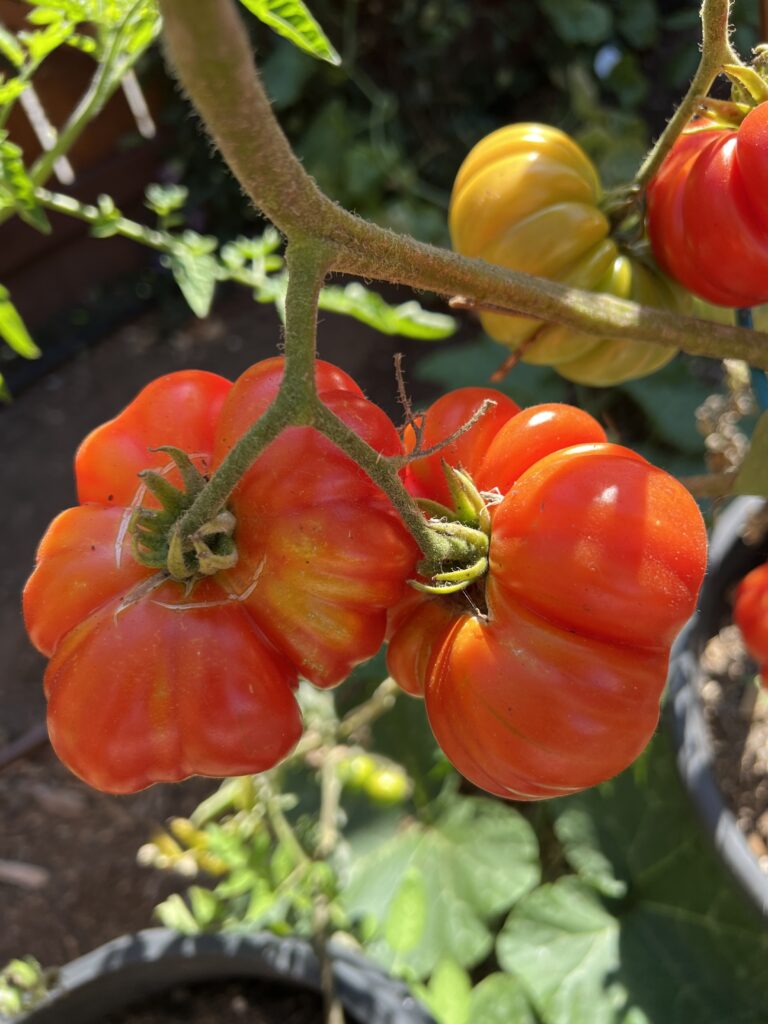


It’s summer love in the Knight Oasis this August. My garden has had a workout! I loaded the middle box with green beans, which are now all harvested and many frozen for future use. I’ve replaced them with yellow zucchini, parsley, carrot, and basil seeds. The herbs, especially the basil, sport larger and more aromatic leaves in the late summer and early fall. I’ll have a pesto party in October! My friend, John, gifted me a grapevine, now growing up a new trellis, and two butternut squash seedlings, which are taking over the ground space behind my beds.
Every year, I like to try to plant something I’ve never done before, and this year, it’s hard squash. My front bed is seeded with acorn, delicata, and red kuri squashes for a November harvest and winter of good eating. The back bed is lush with zucchini, Kellogg, Costoluto Genovese, and Sungold cherry tomatoes. Yesterday, I spied and ate the first two ripe figs of the summer!
The kitchen has been calling my name, but not for my usual canning of tomatoes and jamming of fruits. The bright flavors of Adele’s Caponata are the perfect use of my garden’s harvest. Make a batch and keep it on hand for easy entertaining. I’ve served it as an appetizer with crostini, on a toasted baguette for lunch, and stirred it into pearled couscous for an easy dinner. What are you making with your garden produce this summer?
We celebrated my mom’s 93rd birthday with a small gathering, and I made a super easy and delicious ginger-mint shrimp dish from New York Times Cooking. It’s perfect for a crowd, and there were no leftovers! For dessert, I whipped up a batch of mini pavlovas, her favorite, and instead of my usual lemon curd filling, I churned two ice creams: salted caramel and fresh peach. David Lebovitz’s book, The Perfect Scoop, delivered on point with his salted caramel sauce that I swirled into crème fraiche ice cream. Buonissimo!


Celebrating my mom with a birthday pavlova stuffed with homemade ice cream, with a drizzle of caramel sauce, and sauteed peaches.
Because tomatoes and zucchini dominate my garden, I created this easy caprese-ish recipe. It’s my answer to the perfect summer dinner.
I’m so glad to be back! In next month’s blog, I will take you on a road trip to northern Arizona, including a jeep ride deep in the canyons of Canyon de Chelly. The experience of a lifetime!
That beautiful season, the Summer!
Filled was the air with a dreamy and magical light;
and the landscape
Lay as if new created in all the freshness of childhood.
– Henry Wadsworth Longfellow
A late summer garden has a tranquility found no other time of the year.
William F. Longgood
Ciao for now,
Bonjour mes amies! To celebrate my friend, Liz’s birthday, we dined in a tiny restaurant with a downstairs cave or wine cellar. So intimate, uplit to create a warm glow, Le Sixieme Sens was about to become one of my most memorable meals ever. The combination of rustic stone, bright green place settings, and buddhas somehow all work together to create an ambiance that I had never experienced before.


re.

Our server, Sebastian, a quiet gentleman with a wry smile, answered our questions and guided us through the menu. We began with a Kir Royale, champagne and cassis, served with salted peanuts and pistachios. Sebastian suggested we try a local red wine, from Carcassonne, a 2008 Chateau Sesguieres Cabardes, soft and dark berries.

I chose the Le Menu, meaning a meal at a fixed price (prix fixe) which includes three courses. The first course was a salade of duck breast with a slice of foie gras ( I know, it is so politically incorrect to eat this stuff) but we are in France and the French are proud of their traditions. I had not eaten foie gras for 33 years and enjoyed every bite of this creamy pate.
The main course consisted of a trio of seafood, prawns, salmon and a local seabass type fish, lightly grilled with a parsley butter sauce and served with angel hair pasta.
My companions all had the beef tenderloin with red wine or mushroom sauce. Enough for three hungry people!

Dessert was a slice of one of my French favorites, Tarte Tatin, a carmelized apple tart with puff pastry crust. This was so charmingly served with a small glass jar of creamy, cold, intensely flavored vanilla ice cream.

So impressed with our dinners, we profusely thanked our host, who it turned out was the chef and owner of Le Sixieme Sens. Lionel gave us all kisses and was pleased we had such a fabulous experience. He offered to make us a special dinner of our request later on this week. We promised we would do some research and come up with something delicious and challenging for him to make. What will he create? Stay tuned!
The seemingly endless jet lag and lack of wifi until today have stalled this blog—but not for long! I am still figuring out how to add the correct accent marks to the French words so please forgive their absence for now.
We arrived in Toulouse Friday night, then traveled to Carcassonne Saturday afternoon. This medieval ville is a fortified French town in the region of Languedoc and Roussillon. High on a hilltop is perched the older, Cite de Carcassonne, a fairy-tale like castle, settled as far back as the sixth century BC by Romans and now a UNESCO World Heritage Site. Below the Cite lies the ville of Carcassonne, a bastide and beautiful walled city in its own right.
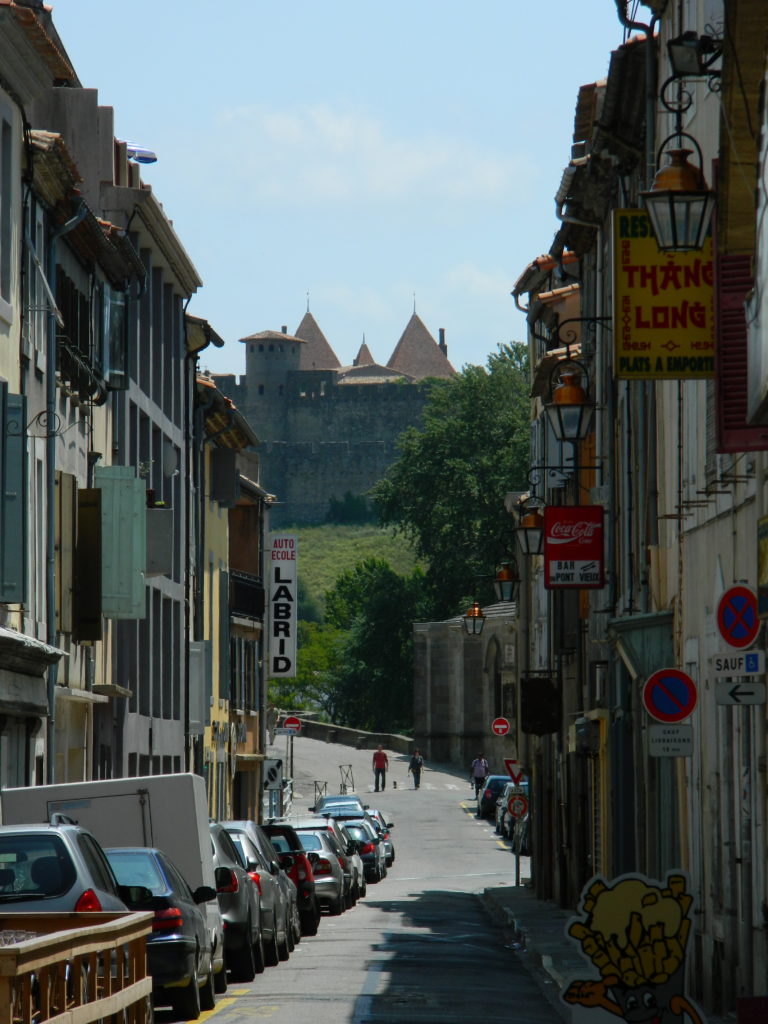
Carcassonne’s lively energy is evident in the many colorful cafes and bistros that crowd its place, or plaza. Lured by the smell of intoxicating spices coming from a tiny Morocan restaurant which was closed, we curiously peered through the window to see bright orange walls and about four small tables. The owner, Nibil, noticed us and came out to enthusiastically invite us in through the back door. Once inside, he introduced us to his wife, the chef, who creates all the Moroccan dishes with fresh ingredients daily. Excited to share his love of food and people with us and as a sign of friendship, he offered us a small glass of Moroccan white wine. We promised to return for dinner one night this week. Meeting the real people who live here and getting the behind-the-scene tours is what life is all about. I’ll take lots of photos!
These photos are a snapshot of this pretty ville.


The markets are closed today and tomorrow for a holiday so I can’t get my fix until Tuesday. More on food and the fabulous dinner we had last night later…
As I begin this blog, I am reminded of many of my life’s journeys that have led me to this present moment in time. My dream is to write about food, share recipes, and get to the heart and soul of the impact food has on our lives. Food drives memories, and cooking is a way to show our love. So how has food influenced your life? Food has always been a part of my “journeys” dictating travels, social events, even friendships. Today, I share my youthful new garden and will follow its journey of growth. Weekly, I will document its maturity and create recipes which highlight each vegetable’s unique spirit. I know I will be surprised by its abundance of green when I return in three weeks. Until then, on to Southern France to savor the flavors!