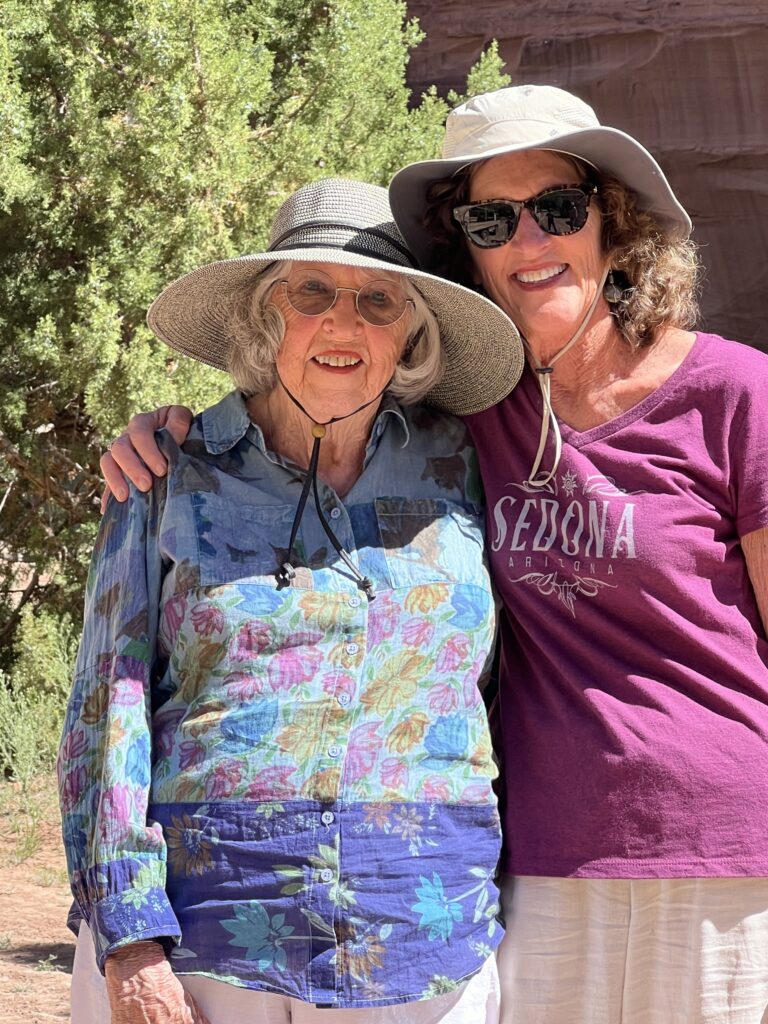
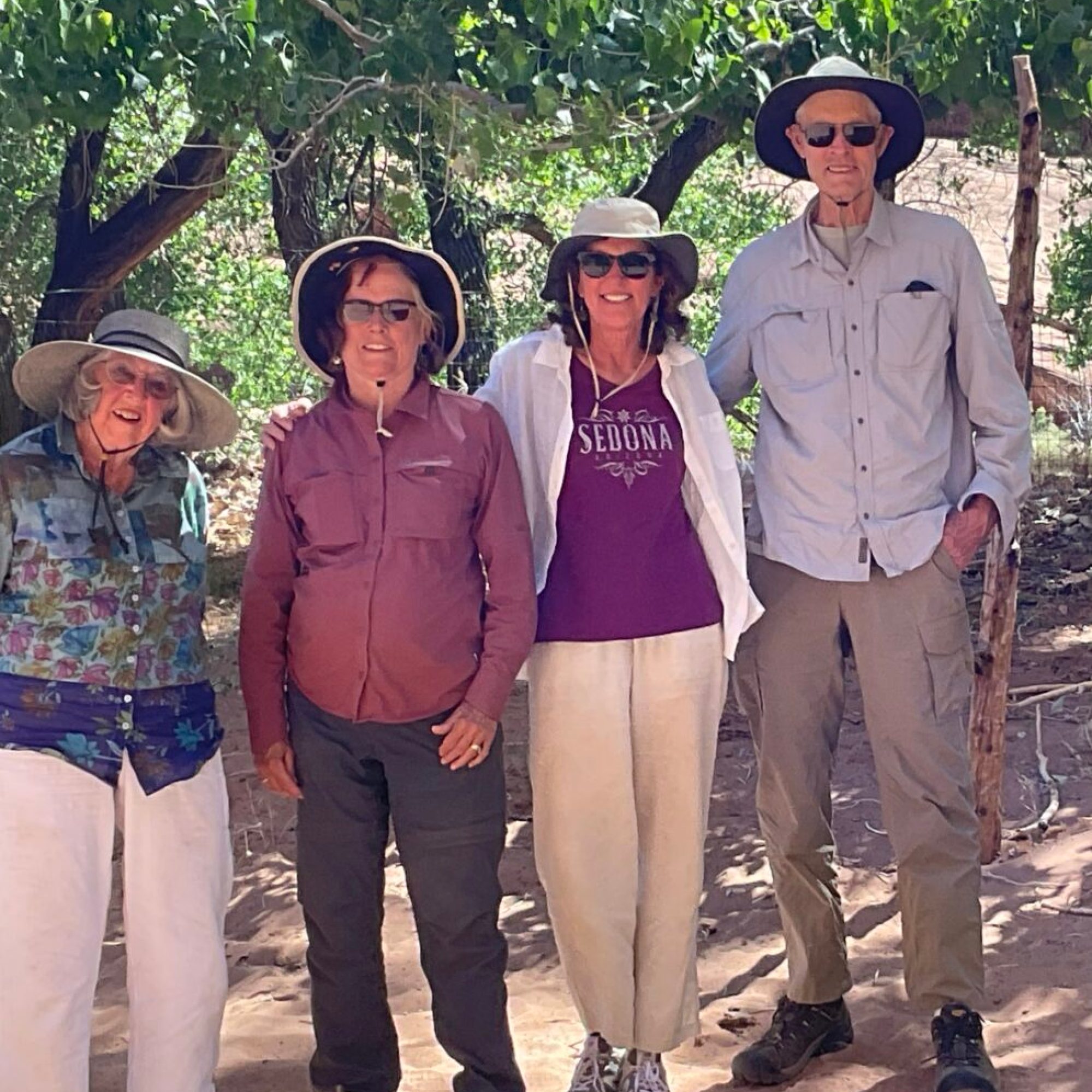
This post continues my southwest road trip in June with my mom, planned around trading posts and Canyon de Chelly. We discovered many new sights in our six days and are discussing another road trip next May!
After a night in Flagstaff, the adventure begins as we head north on Highway 89 along dusty roads with views of tall, striated red rock and the occasional Navajo homestead. Our intention to visit old trading posts is disappointing. Many posts marked on the map turn out to be deserted, boarded up, and standing alone in the vast expanse of wide-open country. A lower story for selling goods, an upstairs home, and a corral for horses and sheep—all abandoned. This scene is played out many times along our route. I wondered if COVID had shut off tourism, forcing closures and sending tourists and locals to the bigger cities and posts.

Our first stop, Cameron, is a significant trading post with a sister gallery next door. The gallery houses exquisite Navajo rugs—some with price tags of $40,000—large kachinas, pawned jewelry, beaded knife sheaths, and authentic deerskin outfits. The gallery is more like a museum and laid out like a house with small rooms of artistic work for sale, most likely for serious collectors. This gallery is a true gem, an appreciation and tribute to Native American art, old and new.


Do not miss this gallery when you travel through Navajo country.

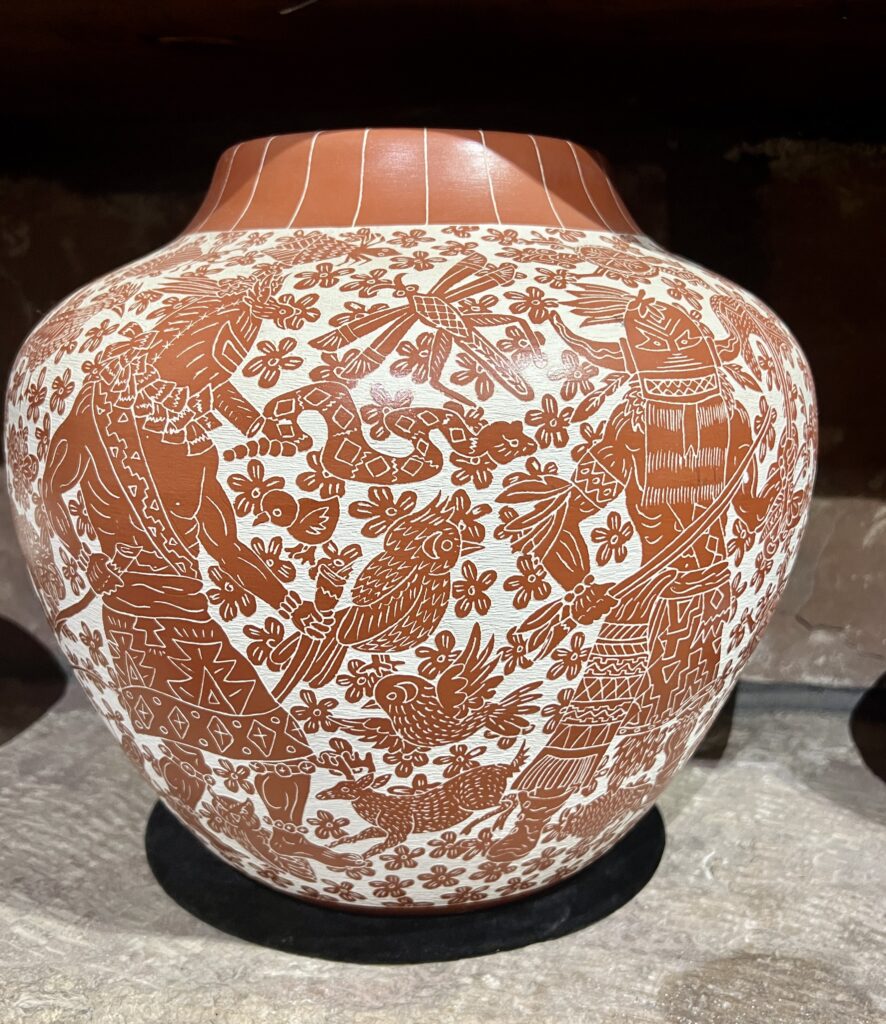
Visions from the past at Cameron’s Gallery Trading Post
My mom’s discovery of the history of a Hopi bracelet she wears daily was a highlight of our trip. In her words, she tells of her extraordinary experience at Cameron Trading Post:
It was February or March when my Hopi bracelet began talking to me. I have worn it most every day and night since I purchased it in 1959 at the Grand Canyon National Park. It is my signature. I often wondered about the Hopi artist who stamped his crossed arrow signature to the inside of the inlay silver cuff bracelet. Maybe this trip was my opportunity to find the mystery artist. I struck gold in the Cameron Trading Post. Alan, an expert in Hopi jewelry, took my bracelet and, with a magnifying glass, looked at the marking inside. He then produced a book about Hopi silver, and there it was! Wallie Sekayumptewa of the Reed clan in Hotevilla-Oraibi Shungopavi, 1948. Wallie was enrolled in a class on Second Mesa, for WW II veterans to learn silver smithing, which became his life-long occupation. Since I have worn this piece every day for many years, I now feel a kinship with those who inhabited our land centuries ago. This was the highlight of the trip for me! Mystery solved.
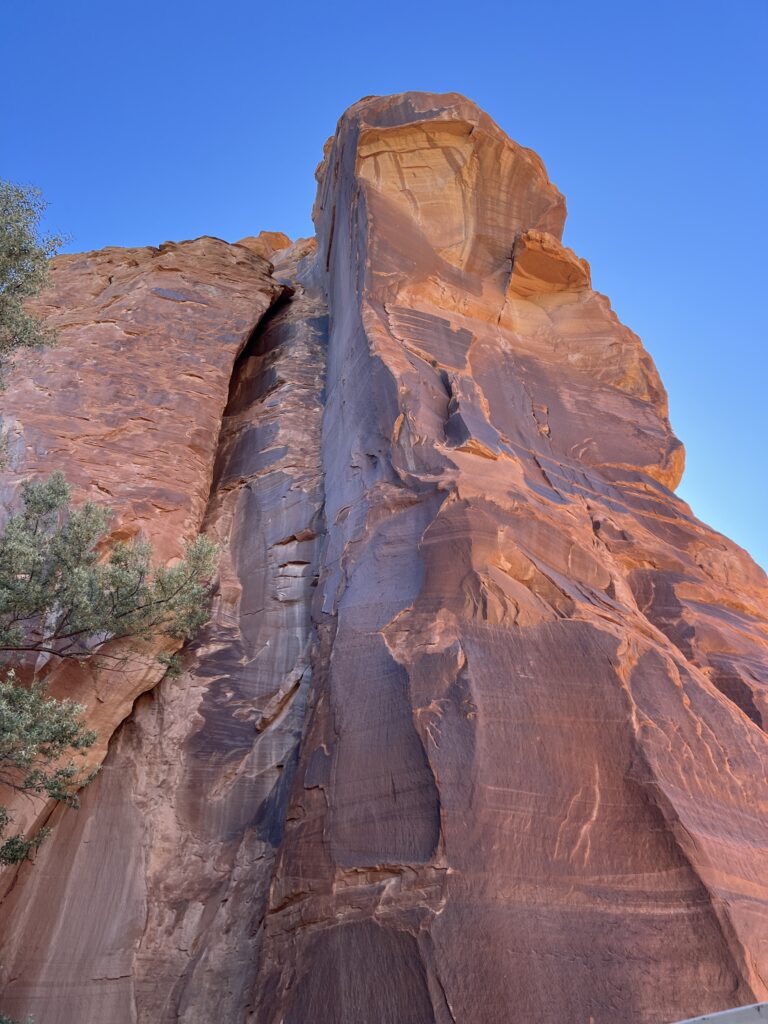
Further north, now on Highway 60, Monument Valley looms in the distance. To our right, a carved statue of a woman rises above the mesa. She isn’t really carved, but the red stone rocks resemble a Navajo woman with her full-length dress and long hair in a bun. I can’t take my eyes off her but must watch the road. The towering buttes come closer and closer. My mom says one cluster is a family of brothers and sisters. Some giants stand alone, commanding the spotlight; others are an organized lineup. We pull over and snap photos under a deep blue sky and perfectly formed clouds of white puffs. Dazzling and dizzying, the intense contrasted colors seem painted—but by whom? No wonder I find inspiration here in an uncluttered landscape of nature’s beauty.


Windblown at Monument Valley.
We veer east and connect to Highway 160, the Najavo Trail. This route will take us to Chinle and into the heart of Navajo country. Chinle and Canyon de Chelly is our base for two days as we explore nearby trading posts. I have always admired the tightly woven, muted greys, creams, and blacks of the Two Grey Hills Navajo rugs. Located in Newcomb, New Mexico, just across the Arizona state line, the trading post is about as far off the beaten track as possible. This isolated stop has served as a general store and community center for Navajos and a few determined tourists like us for over one hundred years. The drive from Chinle to Newcomb is worth it alone, climbing high into the mountains with gorgeous pine views before dropping into the barren and flat desert. We had studied the roads, and just when we thought we were lost, Two Grey Hills appears, looking deserted with nothing near for miles except for wild horses and wandering reservation dogs. I begin to worry when I notice no cars in the parking lot, and on closer inspection, a sign on the door says the owner could be reached by phone if we wanted to visit. I call the number, and a pleasant man says he was in Farmington and would be back in three hours and open the rest of the week. Unfortunately, this would not work for us, so I thank him, and we retrace our journey back up the mountains to Thunderbird Lodge. I hope to return next year to see this icon establishment.


Two Grey Hills Trading Post and wandering visitors.
I rise early at the Thunderbird to catch the sunrise over the canyon and experience pre-dawn activities. A hint of soft pastel streaks across the sky. The still cool air smells of pine and scrub brush and hay. A few crows caw out a hello and are joined by songbirds announcing the start of a new day. The world wakes up as the clouds transition to deeper yellow and pink. I spot a light-colored horse resting in a pasture. She sees me admiring her and stands up, shaking off the night, her mane swaying from side to side. Two dogs appear out of nowhere and trot down the dirt road toward the Thunderbird; I assume looking for breakfast.


Mom and I share a blue corn pancake in the lodge café and discuss our day. Instead of heading south into Zuni territory, we alter our route and point toward Ganado, home of Hubbell Trading Post, and then travel up to Second Mesa. I love how we both are spontaneous and don’t feel we must stick to a pre-arranged plan. Note: The trading post at the Thunderbird Lodge is fantastic! We found many artifacts (we had to have 😍) at very reasonable prices. Yes, we collect Native American art with abandon.


The drive south is a straight line ahead, with red buttes dotting the landscape. In an hour, we drive down a long dirt road and arrive at an old stone building, part of which is the trading post. Don Lorenzo Hubbell founded the post in 1878 to supply Navajos with needed goods. The entrance is almost hidden on one side of the building, while the rest of the structure houses Hubbell’s living quarters, stables, a repair shop, and more. We slip through the wooden door and enter a room filled with curios, some handcrafted and some tourist souvenirs. Another door leads into a room with the good stuff—cases of sterling silver jewelry mostly from local artists, pottery, sandpaintings, and stunning rugs, all woven with 100% wool. The standards are high, as is the quality. We ogle over the earrings and meet Wallace, the store’s curator, whose descendants have been closely associated with the Hubbells for over a century. Wallace knows who made every piece of jewelry, who weaves the rugs, and who creates the paintings. His close ties to the Navajo community make for fascinating conversation. Just meeting him is worth the trip to Ganado. We each purchase two pairs of stunning handmade earrings and a few other small gifts for friends before we drag ourselves out. Of all the trading posts, this is a highlight and oozes with history. Be sure to put it on your itinerary.


Historic Hubbel Trading Post
After leaving Ganado, we drive 7,200 feet skyward to First, Second, and Third Mesas. The reservation spans 1.5 million acres and is home to twelve villages of many Hopi artists and agrarians. The Hopi Cultural Center is but a small representation of Hopi life and history, but the old photographs lining the gallery tell the Hopi story. Next door to the Cultural Center is an abandoned trade school where silversmiths learned their art. We feel confident this is where Wallie learned to create fine jewelry, like my mom’s bracelet.
Nearing the end of our travels, and having purchased our share of Native American art, decide to make the short 100-mile drive toward Winslow on the famous Route 66. Cruising the main street without a hotel reservation, we search for accommodations and follow the railroad tracks almost to the end when Mom says, “Stop here. Let’s check this place out.”


The sign said La Posada, and little did we know what a treat we were in for. The hotel was originally a Harvey House built by the Santa Fe Railway and the Harvey family to service train passengers and resolved to be the finest hotel in the Southwest. It has undergone many transformations since its beginnings in 1927, but now La Posada brags gorgeous gardens, rooms decorated with antique furniture, and a hacienda-style dining room serving exquisite food. Even without a reservation, we get a room. Lucky us. After settling in, we head to the Martini Bar for a cocktail before dinner. I watch the bartender pour ounces of gin into a generous martini glass topped with bleu cheese olives. It’s probably the best dirty martini I’ve ever had. We take our martinis into the Spanish-style Turquoise Room to order appetizers to help subdue the mighty strong drink. Our favorite, fried calamari, is on the menu, and we also order corn pudding-stuffed squash blossoms in a mild chile sauce. The hearty portions are plenty to account for dinner.


The best part—we step just outside onto the back patio, where we have a front-row seat to watch the passing trains. As the sun sets, we ease into the click-clack of the wheels, and everything seems right in our worlds.


Breakfast the following day is nothing short of amazing. The Corn Maiden’s Delight of warm, creamy polenta, topped with poached eggs, spinach, and fire-roasted tomatoes drizzled in salsa, is a prize winner. I want to try everything on the menu. We would like to stay for many days.

Before leaving, we visit their trading post/gift shop—another hidden gem. Carefully curated works of art, many from local craftspeople, stunning jewelry, and an extensive collection of fetishes puts this on my list of must-visits when in the area.
It was a memorable trip indeed with my beautiful, adventurous mom. Same time next year?
“Seek wisdom, not knowledge. Knowledge is of the past, wisdom is of the future.” Native American Proverb
Ciao for now,